
TROYAK EXECUTIVE TEAM is informing all members, colleagues, collectors, and Polonia at large, that Club meetings taking place at John Paul II Polish Cultural Centre, 4300 Cawthra Rd. (just south of Hwy. 403), Mississauga, Ontario. The new members are always welcome. www.polishculturalcentre.ca
ADRES SPOTKAÑ KLUBOWYCH ! Zarząd Główny Klubu “Troyak” informuje wszystkich członków kolekcjonerów, sympatyków oraz całą Polonię, że spotkania klubowe odbywają się w Polskim Centrum Kultury im. Jana Pawła II, przy 4300 Cawthra Rd. (na południe od autostrady 403), Mississauga, Ontario. Zapraszamy nowych członków do prężnego. Klubu “Troyak”. www.polishculturalcentre.ca

“TROYAK” CLUB NEXT MEETINGS …
NASTĘPNE SPOTKANIA KLUBU “TROYAK” …
Sunday 21st June 2026 @ 4:30 p.m.
July & August 2026 –
Summer break … Letnie wakacje …

TROYAK CLUB @
Roncesvalles Polish Festival 2026
Saturday, September 19th
Sunday, September 20th, 2026
https://polishfestival.ca www.kazimierz.org

St. Casimir’s Church Parish Hall …
156 Roncesvalles Ave. Toronto, Ontario
Displays of Coins, Stamps, Collectibles
by Troyak Club Members.
Roncesvalles Polish Festival
www.troyakclub.com
27th September 2026
25th October 2026
29th November 2026
December 2026 … Happy Holidays!
Europa –
70 lat emisji znaczków pocztowych EUROPA
Europe –
70th Anniversary of EUROPA stamp
www.poczta-polska.pl
27-04-2026 … Nominał znaczka: 10.00 zł … Autor grafiki tytułu emisji: Klaus Welp, autor projektu koperty: Joanna Fleszar-Haspert; Ilość znaczków w emisji: 1; Format znaczka: 31,25 x 43 mm; Technika druku / Papier: Offset / fluorescencyjny; Nakład: 84 000 szt.; Ilość znaczków w arkuszu: 12 znaczków w układzie tête-bêche; Format koperty FDC: 162 mm x 113 mm.
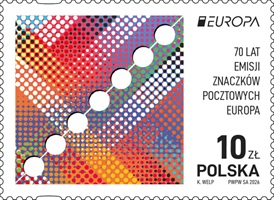
Data emisji: 27-04-2026 … W 2026 roku przypada 70. rocznica pierwszej wspólnej emisji znaczków pocztowych EUROPA, jednego z najważniejszych i najbardziej rozpoznawalnych projektów w historii europejskiej filatelistyki. Tegoroczna emisja została przygotowana w ścisłej współpracy z PostEurop i ma charakter wspólnego projektu graficznego, identycznego dla wszystkich administracji pocztowych uczestniczących w emisji.
Na znaczku przedstawiono grafikę autorstwa Klausa Welpa z Finlandii, wyłonioną w drodze międzynarodowego konkursu PostEurop na znak graficzny honorujący 70 lat emisji znaczków EUROPA. Projekt łączy w sobie abstrakcyjne i symboliczne elementy: ***ukośna, przerywana linia symbolizuje zarówno perforację znaczka, jak i rozwój oraz postęp współpracy w ramach PostEurop, ***siedem kropek połączonych linią prostą odnosi się do 70 lat zjednoczonego wysiłku europejskich operatorów pocztowych, ***przenikające się gradienty kolorystyczne oraz kropkowane struktury tła tworzą żywą, dynamiczną kompozycję, inspirowaną kolorami flag państw europejskich.
Całość symbolizuje pokój, jedność, współpracę oraz znaczenie niezawodnych systemów komunikacji we współczesnym, zmiennym świecie. Zwycięski projekt stworzył Klaus Welp, który podkreśla, że inspiracją dla jego pracy była rosnąca potrzeba pokoju, jedności oraz silnego ducha wspólnoty, a także rola poczty jako fundamentalnego filaru demokracji, zapewniającego obywatelom bezpieczeństwo i łączność. Projekt powstał we współpracy z Tommim Kantolą, kierownikiem ds. projektowania w Posti, kontynuując wieloletnią i owocną współpracę obu twórców.
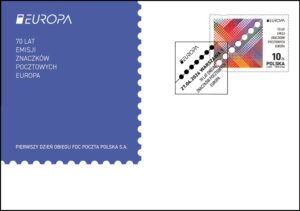
27-04-2026 … Denomination: stamp: 10.00 PLN … Author of the issue title graphic: Klaus Welp; author of the envelope design: Joanna Fleszar – Haspert; Number of stamps in issue: 1; Stamp size: 31,25 x 43 mm; Paper: Fluorescent; Printing techniques: Offset; Sales sheet: 12 stamps in a tête-bêche arrangement; Print run: 84 000 pcs; FDC size: 162 mm x 113 mm.
Issue date: 27-04-2026 … In 2026, the EUROPA issue celebrates the 70th anniversary of the first joint EUROPA stamp issue, one of the most important milestones in European philately. The 2026 EUROPA issue was created in close cooperation with PostEurop and features a common graphic design shared by all participating postal administrations.
The stamp depicts the winning graphic design by Klaus Welp from Finland, selected through an international PostEurop competition. The design combines abstract and symbolic elements: ***a diagonal dotted line, symbolizing both stamp perforation and the progressive work of PostEurop, ***seven dots connected by a straight line, representing seventy years of united effort by European postal operators, ***interwoven color gradients and dotted textures, inspired by the colors of European national flags and expressing unity and diversity.
The design reflects the values of peace, cooperation, reliable communication and democratic stability in today’s complex world. The background of the sheet is rendered in cool blue tones with a subtle dotted pattern. At the top appears the inscription: “70 YEARS OF EUROPA POSTAGE STAMPS” The bottom margin features the official EUROPA logo, a barcode and a QR code linking to additional information.
Niezależny bank centralny –
Rezerwy złota NBP
www.nbp.pl
Poprzez serię monet „Niezależny bank centralny” chcemy ukazać mechanizmy stojące za stabilnością polskiej gospodarki – od rezerw złota po niezależność polityki pieniężnej – które w warunkach globalnych zawirowań stanowią fundament bezpieczeństwa ekonomicznego państwa– mówi prof. Adam Glapiński, Prezes NBP.
Moneta o nominale 500 zł została wykonana ze złota o próbie Au 999,9, ma wymiary 35,00 x10,0x4,8 mm i masę 31,10 g. Jej nakład wynosi do 1000 sztuk. Moneta o nominale 100 zł została wykonana ze srebra o próbie Ag 999 z zastosowaniem matowania laserowego i wybłyszczenia reliefu, ma cylindryczny kształt i wymiary 34,00 mm (średnica) x 32,80 mm oraz masę 311,00 g. Jej nakład wynosi do 1000 sztuk.
Na rewersie monety złotej znajdują się: jej tytuł, próba oraz znak graficzny NBP, a na awersie widnieje stylizowany wizerunek fragmentu drzwi skarbcowych, nominał 500 zł, rok emisji oraz wizerunek orła ustalony dla godła Rzeczypospolitej Polskiej.
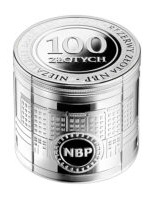
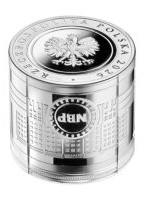
Na rewersie monety srebrnej widnieją: nominał 100 zł oraz napis „NIEZALEŻNY BANK CENTRALNY – REZERWY ZŁOTA”. Na awersie znajdują się: napis „RZECZPOSPOLITA POLSKA”, rok emisji oraz wizerunek orła ustalony dla godła Rzeczypospolitej Polskiej. Na powierzchni bocznej monety umieszczono element graficzny przedstawiający siedzibę NBP w Warszawie – budynek ze skarbcem i sztabami złota oraz wizerunek wejścia do głównej sali operacyjnej dawnego Banku Polskiego SA, usytuowanego przy ul. Bielańskiej w Warszawie.
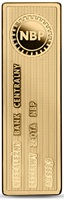
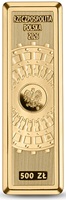
Monetę złotą o nominale 500 zł będzie można nabyć we wszystkich Oddziałach Okręgowych NBP i w sklepie internetowym Kolekcjoner w cenie: 22 000 zł. Moneta srebrna o nominale 100 zł będzie dostępna w cenie 9500 zł we wszystkich Oddziałach Okręgowych NBP. Narodowy Bank Polski zgodnie z zapisami ustawy o NBP jest zobowiązany do gromadzenia rezerw dewizowych. Złoto stanowi ważną ich część.
Obecnie polskie rezerwy złota wynoszą 580 ton, co plasuje Polskę na 12. miejscu wśród banków centralnych świata. Nasze złoto jest przechowywane w skarbcach: Banku Anglii w Londynie, Systemu Rezerwy Federalnej w Nowym Jorku oraz Narodowego Banku Polskiego. Dywersyfikacja miejsc przechowywania złota ma na celu ograniczenie ryzyka geopolitycznego, którego konsekwencją mogłaby być utrata zasobów kruszcu lub ograniczenie możliwości swobodnego dysponowania nim.
Złoto znajdujące się w zasobach NBP spełnia wymagania określone przez restrykcyjny standard jakości London Good Delivery, wyznaczany przez Londyńskie Stowarzyszenie Rynku Kruszców (London Bullion Market Association). Oznacza to, że sztaby należące do NBP mają odpowiednią próbę, precyzyjne oznakowanie oraz odpowiednie wymiary i masę. Standard ten gwarantuje łatwość obrotu złotem na międzynarodowych rynkach.
Złoto – jako jeden z najcenniejszych metali szlachetnych – od wieków jest postrzegane jako atrakcyjny i niezawodny środek przechowywania wartości. Wynika to z jego cech fizykochemicznych: ciągliwości, kowalności oraz odporności na korozję. Te walory sprawiają, że jest ono surowcem trwałym i praktycznie niezniszczalnym. Wartość złota pozostaje w dłuższym czasie zasadniczo niezależna od koniunktury i zaburzeń gospodarczych. Wymienione czynniki powodują, że jest postrzegane jako tzw. bezpieczna przystań, co sprawia, że jego wartość zazwyczaj rośnie w okresach niepewności i kryzysów. Jednocześnie kruszec charakteryzuje się stosunkowo niską korelacją z innymi aktywami, a zwłaszcza z dolarem amerykańskim, główną walutą rezerwową NBP. To z kolei ogranicza ryzyko finansowe związane z utrzymywaniem rezerw, czyli zmienność wartości rezerw dewizowych wywołaną czynnikami rynkowymi.
W styczniu 2026 r. Narodowy Bank Polski poinformował o planie dalszego zwiększenia rezerw złota do poziomu 700 ton. Własna waluta – złoty, rezerwy dewizowe, w tym znaczny zasób złota, oraz niezależny bank centralny stanowią wspólnie jeden z fundamentów wiarygodności polskiej gospodarki. Dzięki temu NBP może prowadzić suwerenną politykę pieniężną służącą utrzymaniu stabilności makroekonomicznej.
Independent central bank –
NBP gold reserves
www.nbp.pl
Face value: 500 zł … Metal: Au 999.9/1000; Finish: mirror/regular, laser matting, relief polishing; Dimensions: 35.0 x 10.0 x 4.8 mm; Weight: 31.10 g; Edge (side): plain; Mintage: up to 1000 pcs; Design: Paweł Pietras.
Reverse side (back): at the top, the graphic symbol of the National Bank of Poland, below, vertically, the inscription: NIEZALEŻNY BANK CENTRALNY / RESERWY ZŁOTA NBP / Au 999.9, arranged in letters at a 90° angle.
Front side (obverse): in the centre, on a stylised image of a fragment of a vault door, an image of the eagle established as the state emblem of the Republic of Poland, under the eagle, on the right, the mint mark: m / w. At the top, the inscription: RZECZPOSPOLITA / POLSKA / 2026, at the bottom, the inscription: 500 ZŁ.
Face value: 100 zł … Metal: Ag 999.; Finish: mirror/regular, cylindrical shape, laser matting, relief polishing; Dimensions: Ø 34.00 x 32.80 mm; Weight: 311.00 g; Edge (side): plain; Mintage: up to 1000 pcs; Design: Urszula Walerzak.
Reverse side (back): in the center, an inscription: 100 / ZŁOTYCH surrounded by two circles. Along the rim, from the left upwards, an inscription: NIEZALEŻNY BANK CENTRALNY – REZERWY ZŁOTA NBP (NBP Gold Reserves), at the bottom a pearl.
Front side (obverse): in the centre, an image of the eagle established as the state emblem of the Republic of Poland, surrounded by two circles, under the eagle, on the right, the mint mark: m / w. In the rim, from the left upwards, an inscription: RZECZPOSPOLITA POLSKA 2026, at the bottom a pearl.
Edge (side): A graphic element depicting the headquarters of the National Bank of Poland on Świętokrzyska Street in Warsaw, containing the logo of the National Bank of Poland and an image of the entrance to the main operating hall of the former Bank Polski SA building on Bielańska Street in Warsaw. Columns flank the images of the headquarters and entrance, and a decorative element is located between the columns.
Narodowy Bank Polski has announced that silver and gold collector coins “NBP’s Gold Reserves” of the series “Independent Central Bank” devoted to key aspects of the central bank’s operations Through the “Independent Central Bank” coin series, we want to show the mechanisms behind the stability of the Polish economy – from gold reserves to the independence of monetary policy – which, in times of global turmoil, constitute the foundation of the country’s economic security says Prof. Adam Glapiński, Governor of Narodowy Bank Polski.
The coin with a face value of 500 złoty is made of 999.9 purity gold, has dimensions of 35.00 x 10.0 x 4.8 mm and weighs 31.10 grams. It has been minted in up to 1,000 pieces. The coin with a face value of 100 złoty made of 999 purity silver has been minted in cylindrical shape with the use of laser matting and reverse proof. It measures 34.00 mm (diameter) x 32.80 mm and weighs 311.00 grams. It has been minted in up to 1,000 pieces.
The reverse of the gold coin features its title, purity and NBP logo. On the obverse we can see a stylised image of a fragment of the vault doors, face value 500 zł, year of issue and the image of the Eagle established as the state emblem of the Republic of Poland.
The reverse of the silver coin features the face value 100 zł and the inscription “INDEPENDENT CENTRAL BANK – GOLD RESERVES”. On the obverse there is the inscription “RZECZPOSPOLITA POLSKA” (Republic of Poland), the year of issue and the image of the Eagle established as the state emblem of the Republic of Poland. The edge surface of the coin bears a graphic element representing NBP’s head office in Warsaw – the building, the vault and gold bars, and an image of the entrance to the main banking hall of the former Bank Polski SA, located in Bielańska Street in Warsaw.

The gold coins, with a face value of 500 złoty, are sold at all the NBP regional branches and in the NBP online shop Kolekcjoner at the price of PLN 22,000. The silver coins, with a face value of 100 złoty, are sold at all the NBP regional branches at the price of PLN 9500. In accordance with the provisions of the Act on Narodowy Bank Polski (NBP), NBP is required to accumulate foreign exchange reserves. Gold constitutes an important part of these reserves.
Currently, Poland’s gold reserves amount to 580 tonnes ranking Poland 12th, among the world´s central banks. Our gold is stored in the vaults of the Bank of England in London, the Federal Reserve System in New York and Narodowy Bank Polski. The aim of diversifying the locations where gold is stored is aimed to reduce geopolitical risk, which could result in the loss of gold reserves or restrictions on the ability to dispose of them freely. The gold stored at NBP meets the requirements of the restrictive London Good Delivery quality standard set by the London Bullion Market Association. This means that the bars belonging to NBP have the appropriate fineness, precise marking, and the correct dimensions and weight. This standard ensures the ease of trading gold on international markets.
Gold – as one of the most valuable precious metals – has been considered an attractive and reliable store of value for centuries. This is due to its physicochemical properties: ductility, malleability and corrosion resistance. These qualities make it a durable and virtually indestructible raw material. The value of gold remains largely independent of economic conditions and turmoil over the long term. These factors cause it to be perceived as a safe haven asset, which typically boosts its value in times of uncertainty and crisis. At the same time, gold exhibits a relatively low correlation with other assets, particularly with the US dollar, the main reserve currency of NBP. This, in turn, reduces the financial risk associated with holding reserves, i.e. fluctuations in the value of foreign exchange reserves caused by market factors. In January 2026, Narodowy Bank Polski announced plans to further increase its gold reserves to 700 tones. The national currency – the złoty, gold reserves and an independent central bank together form one of the foundations of the Polish economy. This allows NBP to pursue a sovereign monetary policy aimed at maintaining macroeconomic stability.
Sugar Shacks (2026):
booklet of 6 Permanent™ stamps
www.canadapost.ca
Maple taffy in sticky little hands. The lively strains of a fiddle playing and spoons tapping. The comforting taste of hot pea soup. This spring, just as the scents, sounds and tastes of the season come to life at sugar shacks, Canada Post is issuing two stamps in the form of maple syrup cans. Booklet of 6 Permanent™ domestic rate stamps, issued March 19, 2026. This issue also includes an Official First Day Cover and a Postage Paid Postcard.
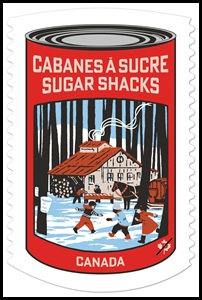
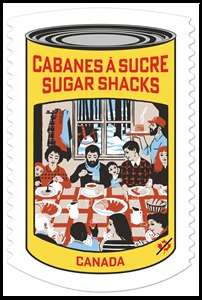
About sugar shacks … The sweet smell of maple taffy on a fresh bed of snow. The mouth-watering flavours of salty pea soup and tender maple-glazed ham. The strains of a fiddle and the clack of spoons playing a spirited reel. Horse-drawn sleigh rides and singing. The vibrant sights, sounds and scents of the sugaring-off season come to life at sugar shacks across Quebec around springtime. Traditions surrounding the temps des sucres are such an integral part of Québécois culture and identity, they have been designated part of the province’s intangible heritage.
The festive celebrations date back nearly two centuries – but maple syrup itself is far older than that. The Indigenous Peoples of the Eastern Woodlands had been collecting the sap of the sugar maple and boiling it to create delicious syrup and sugar long before European settlements. They shared their knowledge with early French colonists, who adopted and later adapted their methods. Today, Quebec produces more than 90 per cent of Canada’s maple syrup. Although some commercial production is automated, many sugar shacks still use artisanal techniques that give visitors a true tap-to-table experience.
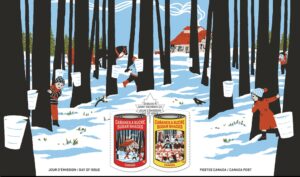
About the design … The stamps and booklet are the work of illustrator Gérard DuBois and graphic design firm Paprika. Inspired by popular, commercial and advertising art from the 1940s and 1950s, the illustrations evoke colourful scenes of people enjoying shared meals and time outside. They portray the sugar shack as a place of gathering, enjoyment and tradition. Stamp Designer: Paprika; Stamp Illustrator: Gérard DuBois; Quantity Produced 130,000; Issue Date: March 19, 2026.
The stamps and OFDC are the work of illustrator Gérard DuBois and graphic design firm Paprika. Cancellation Site: Saint-Georges, Quebec; Stamp Designer: Paprika; Stamp Illustrator: Gérard DuBois; Quantity Produced: 6,000; Issue Date: March 19, 2026.
$50 Fine Silver Coin –
Maple Leaves in Motion
www.mint.ca
Year after year, Maple Leaves in Motion presents creative art and tech pairings that add new visual interest to the familiar sight of a proud maple leaf. For 2026, we’ve opted for a classic look to mark the 30th anniversary of the maple tree’s designation as Canada’s national arboreal emblem. On the coin’s reverse, the largest leaf is plated with rose gold, while the three smaller leaves—one for each decade of the maple tree’s reign as an official emblem—are highlighted with yellow gold. And behind it all, the holograph-like pattern creates the illusion of motion whenever its micro maples catch the light. Canada’s maple leaf, standing proud in yellow and rose gold.
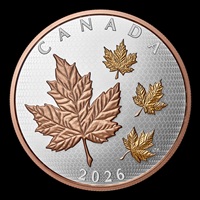
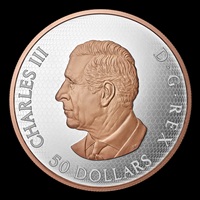
Face Value: $50 … Composition: 99.999% pure silver with selective gold plating; Mintage: 2,000; Weight: 157.6 g; Diameter: 65.25 mm; Edge: Serrated; Finish: Proof; Artist: Lisa Thomson-Khan (reverse), Steven Rosati (obverse); Packaging: Red lacquer wood case and black beauty box.
DID YOU KNOW? … Ten maple species (g. Acer) occur naturally in Canada, which produces roughly 70% of the world’s supply of maple syrup.
Designed by Canadian artist Lisa Thomson-Khan, your coin’s reverse features four traditionally engraved maple leaves—a large one plated with rose gold, and three smaller ones plated with yellow gold—backed by a laser-engraved maple leaf field pattern. The pattern repeats on the obverse, which features the rose gold-plated effigy of His Majesty King Charles III by Canadian artist Steven Rosati.
Lisa Thomson-Khan, Artist … “The design was created to highlight the natural beauty of Canada’s iconic symbol, the maple leaf. The large central leaf shows the intricate veining and delicate structure of the subject while standing tall and proud, exemplifying strength and resilience. The three smaller leaves were drawn in various positions to depict movement, the way the leaves would sway in the breeze or even their final graceful descent in the fall.”
Konrad Wachelko, 3D Artist-Engraver … “The relief is higher on the large leaf, with the three smaller ones sitting a little lower to create a sense of distance and make the more prominent one appear closer to the viewer. With any art medium, sometimes you need to play up certain features since nature can be a bit more nuanced; that’s the case with the leaf’s subtle vein texture that becomes most noticeable in the fall. We wanted to create something that looks realistic, and though easily missed, finer details like the smaller vein structure can make a big visual impact—it’s a fine balance.”
2026 Specimen Set – Barn Owl
www.mint.ca
The barn owl is one of the most widely distributed bird species in the world, but in Canada, its future is far from secure. Restricted to southwestern regions of British Columbia and Ontario, where winters are milder, Canada’s barn owls face significant threats from road mortality, climate change and habitat loss—in fact, the smaller, endangered Eastern population is estimated at possibly fewer than a handful of breeding pairs. The pale owl with the heart-shaped face is the featured star of the 2026 Specimen Dollar, which serves as both tribute and testament. It is a celebration of the barn owl’s ghostly elegance, and a hopeful reminder that with care, habitat protection and conservation, the barn owl can continue to grace our landscapes and stir twilight with its silent flight. Highlighting the plight of the barn owl.
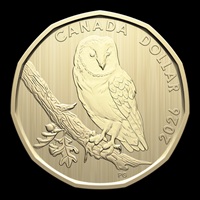
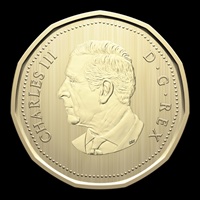
Face Value: $1 … Composition: Brass-plated steel; Mintage: 30,000; Weight: 6.27 g; Diameter: 26.5 mm; Edge: Plain; Finish: Specimen; Artist: Pierre Girard (reverse), Steven Rosati (obverse); Packaging: Book-style packaging with removable lens.
DID YOU KNOW? … The barn owl needs mild winters and grassland habitats—open fields, farmlands and meadows—in order to survive. As wooden farm buildings are replaced with more modern (and often bird-proof) structures, there has been a decline in suitable sites for this cavity nester. The loss of foraging habitats due to urbanization and agricultural intensification further impacts the barn owl, leading to increased road mortality as it takes to hunting prey along roadways at night.
The reverse of the set-exclusive Specimen Dollar is by Canadian artist Pierre Girard, whose design highlights the majestic features of the barn owl (Tyto alba). Considered an endangered species both federally and provincially in Ontario, the nocturnal raptor is shown perched on an oak branch that provides an elevated vantage point. The obverse features the effigy of His Majesty King Charles III by Canadian artist Steven Rosati.
Pierre Girard, Artist … “The barn owl has always captivated me—with its ghostly presence, it feels like a creature lifted straight from a fantasy tale. Its elegance and quiet beauty make it one of the most enchanting birds I know.”
Konrad Wachelko, Engraver-3D Artist … “Since the Specimen Dollar features a low-relief design, it’s important to capture every artistic nuance during the modelling stage, while still allowing space for later finishes like frostings and polishing. I especially enjoyed working on the owl’s face, adding delicate strokes to suggest the texture of feathers and even sculpting a tiny glint in each eye. It’s a subtle touch, no more than four hairs thick, but it makes a surprisingly strong impact on the coin.”
Tall Ships: Ketch Rig –
Pure Gold Coin
www.mint.ca
From riverbanks to horizons: Learn about the Tall Ship workhorse of the St. Lawrence. The fifth coin in our Tall Ships series offers another window into the past, capturing both a ship at work and the people whose lives were tied to the waters of the St. Lawrence. Throughout the St. Lawrence Valley, the St. Lawrence sailing schooner or ketch typically carried goods, families and stories between riverside villages, evolving over centuries to master the river’s varied navigation conditions. With their flat bottoms and adapted rigging, these sailboats became symbols of community and ingenuity, embodying the spirit of a maritime culture that shaped both Quebec’s identity and Canada’s broader nautical heritage. Tall Ships #5: A two-masted workhorse of water and wind.
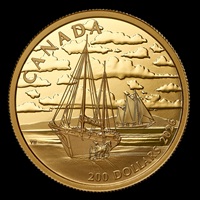
Face Value: $200 … Composition: 99.999% pure gold; Mintage: 800; Weight: 15.43 g; Diameter: 29 mm; Edge: Serrated; Finish: Proof; Artist: Yves Bérubé (reverse), Steven Rosati (obverse); Packaging: Black clamshell with black beauty box.
DID YOU KNOW? … For more than two centuries, communities along the St. Lawrence Valley built such ships as the ketch to serve their transportation and communication needs. Valued for their stability, strength, and ease of handling in varied winds, these vessels carried a tall mainmast and a shorter mizzenmast. Their flat bottoms allowed them to remain perfectly vertical when running aground at low tide, which facilitated access for loading and unloading goods—as depicted on this coin.
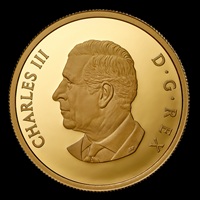
The reverse design by Canadian artist Yves Bérubé features two views of a ketch: under sail in the distance, and aground at low tide in the foreground. A horse-drawn wagon takes on logs, unloaded from amidships of the beached ketch, which waits for the tide’s return to carry it onward. The obverse features the effigy of His Majesty King Charles III by Canadian artist Steven Rosati.
Yves Bérubé, Artist … “This design gave me pause to reflect on the history of my own family—a generation of captains, sailors and shipowners who sailed this very type of vessel, some even losing their lives at sea. These pioneers of the waterways contributed to the vast marine heritage of our country. I personally witnessed the end of this form of navigation, around 1975, navigation once known as ‘cabotage.’ This design is important to me as a way to provide a pictorial commemoration of my ancestors and the hard life of that era.”
Julien Duguay, 3D Artist-Engraver … “This is my first Tall Ships coin and I had the pleasure of working with Mr. Bérubé’s beautiful artwork. Sculpting the cart and horse over the ship was a challenge, especially when balancing relief heights and perspective. I hope collectors enjoy this distinctive design, because it’s not every day you see a horse near a ship!”
The Jack Pine by Tom Thomson –
1 kilo Pure Gold Coin
www.mint.ca
In creating The Jack Pine (1916-17), Tom Thomson wasn’t merely painting a tree—he was expressing the spiritual essence, beauty and strength of the Canadian wilderness. Over a century later, that image still resonates, reminding us of the enduring relationship between Canadians and the land.
In shimmering 99.99% pure gold, The Jack Pine glows like a memory of sunset. While colour is central to Thomson’s legacy, this kilo-sized coin’s monochromatic format draws attention to the artist’s dynamic composition, shapes, even his expressive brushwork. The absence of colour doesn’t diminish the impact: it deepens it, shifting the emphasis from the hues of Canada to the enduring shape of its natural spirit. From paint to metal, an enduring landscape reimagined.
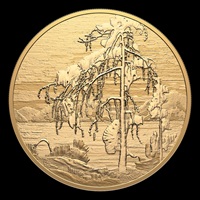
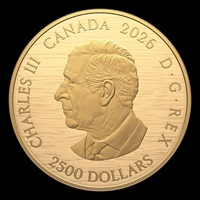
Face Value: $2,500 … Composition: 99.999% pure gold; Mintage: 75; Weight: 1006.1 g; Diameter: 101.6 mm; Edge: Serrated; Finish: Proof; Artist: Tom Thomson (reverse), Steven Rosati (obverse); Packaging: Wood case with black beauty box.
DID YOU KNOW? … Tom Thomson is considered a spiritual forerunner of Canada’s famed Group of Seven—he died three years (July 1917) before the group’s formation in 1920. Thomson’s work laid much of the stylistic groundwork for the Group of Seven, who shared his vision of a uniquely Canadian art style that celebrated Canada’s landscapes, framing them as central to our national identity.
Your coin’s reverse features an engraved interpretation of one of Canada’s most well-known paintings, The Jack Pine by Canadian artist Tom Thomson (1877-1917). A lone, windswept pine is shown rising from rocky ground, silhouetted against a sunset over a lake in the Ontario wilderness. The obverse features the effigy of His Majesty King Charles III by Canadian artist Steven Rosati.
Angie Littlefield, author of Tom Thomson’s Fine Kettle of Friends …“The Jack pine thrives in poor soils, releases its seeds through fire, is drought-tolerant, often stands as the lonely remnant of logging, and adapts its shape to the prevailing winds. Tom Thomson and the Jack pine represent ruggedness in the Canadian imagination. Thomson painted sketches for The Jack Pine in 1916 while a fire ranger following the Booth Company lumber drive down the Petawawa River. While he was in service to protect the forest, he watched giant trees fall, and he painted a survivor. Thomson’s rendering of a strong tree against a distant, dark shore is one of Canada’s most widely recognized and reproduced artworks. The Jack Pine invites the viewer to participate in a conversation about why it is iconic.”
Suzanne Kasnakian, Product Manager …“With only 75 pieces in existence, this limited-edition work of art serves as a rare tribute to a national treasure. It’s an honour to help preserve and celebrate such a powerful symbol of Canada’s natural beauty and artistic legacy through the artistry of coin design.”
Alex Tirabasso, 3D Artist-Engraver … “The Jack Pine coins fall into their own category as a reinterpretation of a famous painting that stays as true as possible to the original. The challenge for me was to use the painting’s ensemble of texture, colours and shapes to create a low-relief 3D sculpture engraved onto a small coin—and to make it look good. While sculpting this in my 3D software, I respected all the abstract paint brush strokes used in the trees, sky and water, and tried to visualize how the foreground would stand out from the sky and background water. Interpreting Tom Thomson’s colourful scene using only the tools of an engraver was an interesting challenge for me. I used relief, texture and frosting (shininess vs. frosting) to convey what the artist expressed using colour, all while staying true to the nature of the painting.”
$30 Fine Silver Coin …
The Jack Pine by Tom Thomson
www.mint.ca
A fine silver tribute to Tom Thomson’s masterwork. In creating The Jack Pine (1916-17), Tom Thomson wasn’t merely painting a tree—he was expressing the spiritual essence, beauty and strength of the Canadian wilderness. Over a century later, that image still resonates, reminding us of the enduring relationship between Canadians and the land.
Rendered here in 99.99% pure silver, The Jack Pine takes on a brighter, more contemporary tone. The mirror finish shifts focus to the fine engraving, catching the light in a way that animates the landscape’s textures and contours. The absence of colour doesn’t diminish the impact: it deepens it, shifting the emphasis from the hues of Canada to the enduring shape of its natural spirit. The Jack Pine: Where iconic landscape meets sculptural design.
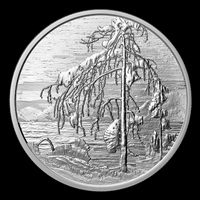
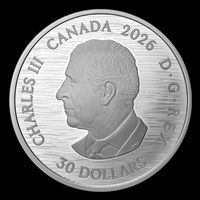
Face Value: $30 … Composition: 99.999% pure silver; Mintage: 4,000; Weight: 62.69 g; Diameter: 50 mm; Edge: Serrated; Finish: Proof; Artist: Tom Thomson (reverse), Steven Rosati (obverse); Packaging: Black clamshell with black beauty box.
DID YOU KNOW? … While the original tree is believed to be gone, the real-life setting for The Jack Pine is Carcajou Bay on Grand Lake, in Ontario’s Algonquin Park. The artist first produced a small oil-on-panel sketch that was painted on-site in 1916, before adapting it to a larger oil-on-canvas painting in his Toronto studio during the winter months. The painting was completed in early 1917, just a few months before his death.
Your coin’s reverse features an engraved interpretation of one of Canada’s most well-known paintings, The Jack Pine by Canadian artist Tom Thomson (1877-1917). A lone, windswept pine is shown rising from rocky ground, silhouetted against a sunset over a lake in the Ontario wilderness. The obverse features the effigy of His Majesty King Charles III by Canadian artist Steven Rosati.
Angie Littlefield, author of Tom Thomson’s Fine Kettle of Friends … “Thomson sketched The Jack Pine in 1916 while working as a fire ranger along the Booth Company lumber drive on the Petawawa River. As he protected the forest, he watched giant trees fall and painted a lone survivor. His image of a strong tree against a dark, distant shore is among Canada’s most recognized artworks. The Jack Pine invites viewers to reflect on its iconic status.”
Suzanne Kasnakian, Product Manager … “As the product manager, it has been a true privilege to work on The Jack Pine by Tom Thomson. Translating one of Canada’s most iconic artworks into a finely engraved silver coin demanded immense care, collaboration, and craftsmanship. I’m incredibly proud to have played a part in bringing this vision to life.”
Alex Tirabasso, 3D Artist-Engraver … “The Jack Pine coins fall into their own category as a reinterpretation of a famous painting that stays as true as possible to the original. The challenge for me was to use the painting’s ensemble of texture, colours and shapes to create a low-relief 3D sculpture engraved onto a small coin—and to make it look good. While sculpting this in my 3D software, I respected all the abstract paint brush strokes used in the trees, sky and water, and tried to visualize how the foreground would stand out from the sky and background water. Interpreting Tom Thomson’s colourful scene using only the tools of an engraver was an interesting challenge for me. I used relief, texture and frosting (shininess vs frosting) to convey what the artist expressed using colour, all while staying true to the nature of the painting.”
$20 Fine Silver Coin Commemorating
Black History: Adinkra Symbols
www.mint.ca
From cloth to coin: Symbols of respect, peace, nature, community, diversity. Originating from the Akan people of Ghana, Adinkra symbols hold deep meanings tied to values, proverbs, and historical wisdom. For many Black Canadians, especially those with roots in West Africa, this complex visual language serves as an anchor to a rich ancestral heritage that predates colonialism. Each symbol represents concepts such as respect (Mekyia Wo), peace (Mpatapo), and community (Nkonsonkonson) —themes that resonate strongly within Canadian Black History, where stories of migration, resistance, and cultural survival are central. Rooted in African heritage and Black identity, the Adinkra symbols featured on the 2026 Commemorating Black History coin are not simply juxtaposed with Canadian values—they embody and affirm them, revealing a shared language of unity and human connection. Visual language, ancestral wisdom. Celebrate Black History Month.
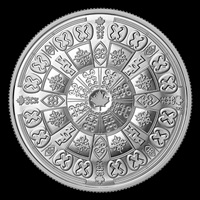
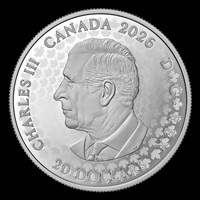
Face Value: $20 … Composition: 99.999% pure silver; Mintage: 5,000; Weight: 31.39 g; Diameter: 38 mm; Edge: Serrated; Finish: Proof; Artist: Kwame Delfish (reverse), Steven Rosati (obverse); Packaging: Black clamshell with black beauty box.
DID YOU KNOW? … The word Adinkra can carry different meanings depending on the context, but in the Twi language of the Asante people of Ghana, it means “farewell” or “goodbye.” Adinkra is also the name of a traditional cloth, originally worn at funerals to honour the passing of a loved one into the afterlife. Over time, Adinkra symbols—once stamped mainly on cloth—have found their way into architecture, ceramics, jewellery, and more. Their meanings continue to grow and adapt as artists and communities around the world reinterpret them in new ways.
The reverse design by Canadian artist Kwame Delfish features three concentric rings of traditional Adinkra motifs encircling a central maple leaf representing Canada. The innermost ring consists of a repeating vertical pairing of two Mpatapo symbols, the peace knot of reconciliation. A second ring features a repeating sequence of four Adinkra symbols (clockwise from top): the Asase ye Duru (“the Earth has weight”) symbol representing the divinity of Mother Earth, the Funtunfunefu Denkyemfunefu (“Siamese crocodiles”) symbol of unity in diversity, and the Mekyia Wo (“I salute you”) symbol of respect and greeting, followed again by Funtunfunefu Denkyemfunefu.
The outermost ring is anchored at the cardinal points by the maple leaf atop two Mpatapo symbols, echoing the innermost layer, while each quadrant displays the Asase ye Duru symbol flanked by two Nkonsonkonson (“chain link”) symbols representing unity and human relations, creating a sense of community and connectedness. The obverse features a maple leaf pattern and the effigy of His Majesty King Charles III by Canadian artist Steven Rosati.
Kwame Delfish, Artist … “As an artist of Caribbean descent, I am deeply connected to the Adinkra symbols and the ancestral wisdom they carry from West Africa. Each symbol speaks to values of strength, unity, and purpose that continue to guide our communities today. Initially, I envisioned this design in a square arrangement to pay homage to the Adinkra cloth from which these symbols derived. However, as the design evolved, it became clear the circular arrangement would mirror the continuity of culture, connection, and collective resilience.”
Collector’s Edition Non-Circulation Coin Set –
50th Anniversary of the Royal Canadian Mint –
Winnipeg
www.mint.ca
Join us in celebrating the 50th anniversary of our Winnipeg facility! A distinguished tribute, this set of non-circulation pieces—coins designated as collectibles, so they’re not meant to be found in your pocket change—honours Canada’s iconic coinage, as well as the place where these national symbols are expertly struck. It features Canada’s six coin denominations, with the classic $2 piece replaced by a special Toonie anniversary edition. On each coin’s obverse, the “W” mint mark is the identifying symbol of our Winnipeg facility, which produces Canadian circulation coins—and those of many other countries—since 1976; it also represents the innovative spirit and craftsmanship that have defined half a century of Canadian coin production. Marking a milestone with the “W” mint mark. Mintage: 50,000; Finish: Brilliant uncirculated Packaging: Presentation folder.
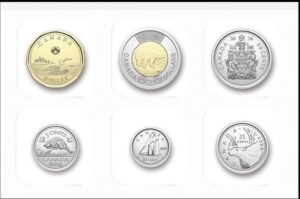
2 dollars … CompositionOuter ring: Nickel-plated steel, Inner core: Three-ply brass finish plated aluminum bronze; Weight6.99 g; Diameter28 mm; EdgeInterrupted serrations; ArtistBrent Townsend (reverse), Steven Rosati (obverse)
1 dollar … CompositionThree-ply brass plated steel; Weight6.27 g; Diameter26.5 mm; EdgePlain; ArtistRobert-Ralph Carmichael (reverse), Steven Rosati (obverse)
50 cents … CompositionThree-ply nickel finish plated steel; Weight6.9 g; Diameter27.13 mm; EdgeReeded; ArtistCathy Bursey-Sabourin (reverse), Steven Rosati (obverse)
25 cents … CompositionThree-ply nickel finish plated steel; Weight4.44 g; Diameter23.88 mm; EdgeReeded; ArtistEmanuel Hahn (reverse), Steven Rosati (obverse)
10 cents … CompositionThree-ply nickel finish plated steel; Weight1.75 g; Diameter18.03 mm; EdgeReeded; ArtistEmanuel Hahn (reverse), Steven Rosati (obverse)
5 cents … CompositionThree-ply nickel finish plated steel; Weight3.95 g; Diameter21.2 mm; EdgePlain; ArtistG. E. Kruger Gray (reverse), Steven Rosati (obverse)

DID YOU KNOW? … Since 1976, Canadian circulation coins have been minted at our high-tech, high-volume Winnipeg facility. In addition to Canadian currency, it has also produced billions of coins for more than 80 countries worldwide, a proud achievement represented by the Parade of Flags that welcomes visitors to the pyramid-shaped building.
Dancing Ammolite: Elements of Nature –
Fire – Fine Silver Coin
www.mint.ca
The third Dancing Ammolite coin celebrates Fire, the fundamental element that symbolizes energy, brings warmth, sparks creativity, and ignites passion! Fire may blaze or glow, but its true magic lies in the way it flickers with life; that hypnotic rhythm—the way the flames sway—inspired the sculpted flame-lines that curve around your coin’s ammolite centrepiece. Suspended in a delicate dance and quivering with every movement, the Canadian-mined gemstone shimmers with hints of red light, as if lit from within, mirrored by the gold accents that complete this tribute to Fire in motion. Third coin in our elemental-themed series.
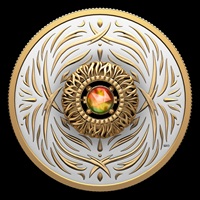
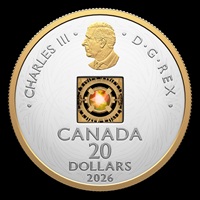
Face Value: $20 … Composition: 99.999% pure silver with selective yellow gold plating and an ammolite gemstone; Mintage: 900; Weight: 20.86 g; Diameter: 36.07 mm; Edge: Serrated; Finish: Proof; Artist: Mariya Olshevska (reverse), Steven Rosati (obverse); Packaging: Black clamshell with graphic beauty box.
DID YOU KNOW? … ***As an elemental force, Fire represents the intense heat and pressure of Earth’s interior that, over millions of years, helped transform fossilized ammonite shells into organic gemstones. ***An ammolite’s colours come from interference of light reflecting off the different layers of aragonite crystals within the shell, with thinner layers producing shorter wavelengths (blues and violets), and thicker layers reflecting longer wavelengths—specifically, the red hues seen here.
Enhanced with gold plating, the reverse design by Canadian artist Mariya Olshevska features engraved abstract forms inspired by the rhythmic qualities of Fire. Like the flickering flames of a bonfire, the curving lines dance around the 5 mm round ammolite at the heart of this design. The organic gemstone, which was ethically sourced from Alberta’s Bearpaw Geological Formation, is set in a 3D mount fashioned by Canadian-owned and -operated jewellery manufacturer Beverly Hills Jewellers; the yellow gold-plated setting allows the suspended gemstone to “dance” at the slightest movement of the coin base. The obverse features a stylized version of the engraved reverse, as well as the gold-plated effigy of His Majesty King Charles III by Canadian artist Steven Rosati.
Mariya Olshevska, Artist … “Fire is volatile and expressive, delicate and powerful; it can change its form and meaning depending on how you look at it. Bonfires have always fascinated me, shifting from soft flickers to roaring flame in the blink of an eye. Fire’s rhythmic qualities inspired the abstract representation seen here, with the expressive fire shapes conveying movement, energy and power as they dance and cascade down like clusters of fireworks.”
Multilayered Bluenose –
Fine Silver Coin
www.mint.ca
The follow-up to 2025’s Multilayered Beaver, this large-format 99.99% pure silver coin elevates Emanuel Hahn’s 10-cent Bluenose coin design, transforming it into an immersive scene through the magic of Multilayered Engraving. While several key details—including a new, symbolic wave pattern—are engraved onto the upper surface like a typical coin, cut-outs expose a secondary layer of art beneath, adding visual depth to this familiar seascape. Second circulation-themed Multilayered coin.
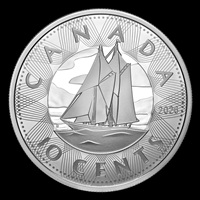
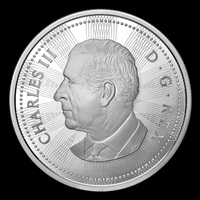
Face Value: 10 cents … Composition: 99.999% pure silver; Mintage: 1,750; Weight: 111.65 g; Diameter: 55 mm; Edge: Serrated; Finish: Proof; Artist: Emanuel Hahn/RCM Engravers (reverse), Steven Rosati (obverse); Packaging: Black clamshell with black beauty box.
DID YOU KNOW? … Launched on March 26, 1921, Bluenose is Canada’s most celebrated ship. The Nova Scotian fishing boat captured the 1921 International Fishermen’s Cup for Canada in her first season at sea, and remained undefeated in the 1922, 1931 and 1938 series (the 1923 series was ruled “no contest”).
A re-imagining of Canada’s 10-cent circulation coin as multilayered art, the reverse features the words “CANADA”, “10 CENTS” and “2026” engraved on the top plate, with a cut-out revealing a partly cloudy sky engraved on the interior surface, while Emanuel Hahn’s iconic rendering of Bluenose at sea appears to float above it. Curvilinear patterns, each composed of 10 interlaced lines symbolizing 10 cents, appear on the reverse’s top plate and on the obverse, which features the effigy of His Majesty King Charles III by Canadian artist Steven Rosati.
Yiyi Yang, Research Engineer … “As we continue the journey of the Multilayered series, we strive to perfect our technology at every step. With this latest piece, we faced not only the inherent challenges of Multilayered Engraving but also new complications from a more challenging design. Transforming the Bluenose design into a multidimensional form while maintaining our high quality standards proved particularly demanding. Through the collaborative efforts of our Engraving, Engineering and R&D teams, we are proud to present this newest addition to our ever-popular series.”
Steven Stewart, 3D Artist – Engraver … “By incorporating the multilayered technology into the circulation coin designs, we’re bringing new depth and dimension to familiar images. It’s always fun to merge traditional Canadian iconography with modern approaches to minting. I think this series offers collectors a truly engaging experience.”