
TROYAK EXECUTIVE TEAM is informing all members, colleagues, collectors, and Polonia at large, that Club meetings taking place at John Paul II Polish Cultural Centre, 4300 Cawthra Rd. (just south of Hwy. 403), Mississauga, Ontario. The new members are always welcome. www.polishculturalcentre.ca
ADRES SPOTKAÑ KLUBOWYCH ! Zarząd Główny Klubu “Troyak” informuje wszystkich członków kolekcjonerów, sympatyków oraz całą Polonię, że spotkania klubowe odbywają się w Polskim Centrum Kultury im. Jana Pawła II, przy 4300 Cawthra Rd. (na południe od autostrady 403), Mississauga, Ontario. Zapraszamy nowych członków do prężnego. Klubu “Troyak”. www.polishculturalcentre.ca

“TROYAK” CLUB NEXT MEETINGS …
NASTĘPNE SPOTKANIA KLUBU “TROYAK” …
Sunday 31st May 2026 @ 4:30 p.m.

21st June 2026
July & August 2026 –
Summer break … Letnie wakacje …
TROYAK CLUB @
Roncesvalles Polish Festival 2026
Saturday, September 12th
Sunday, September 13th, 2026
https://polishfestival.ca www.kazimierz.org

St. Casimir’s Church Parish Hall …
156 Roncesvalles Ave. Toronto, Ontario
Displays of Coins, Stamps, Collectibles
by Troyak Club Members.
Roncesvalles Polish Festival
www.troyakclub.com
27th September 2026
25th October 2026
29th November 2026
December 2026 … Happy Holidays!
XIV Zimowe Igrzyska Paralimpijskie
Mediolan-Cortina 2026
www.poczta-polska.pl
06-03-2026 … Nominał znaczka: beznominałowy … Autor projektu: Roch Stefaniak; Ilość znaczków w emisji: 1; Format znaczka: 43 x 31,25 mm; Technika druku / Papier: Offset / fluorescencyjny; Nakład: 63 000 szt.; Ilość znaczków w arkuszu: 9; Format koperty FDC: 162 mm x 113 mm.
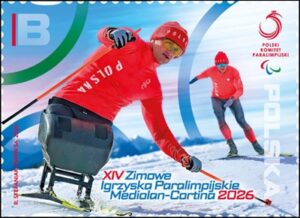
Data emisji: 06-03-2026 … Arkusik składa się z 9 znaczków pocztowych (układ 3×3), utrzymanych w dynamicznej, zimowej palecie barw – błękitach, bieli i czerwieni, nawiązujących do energii rywalizacji oraz oficjalnej identyfikacji wizualnej XIV Zimowych Igrzysk Paralimpijskich Mediolan–Cortina 2026. Na znaczku przedstawiono sylwetki paralimpijczyków reprezentujących paranarciarstwo biegowe – w trzech różnych formach tej samej dyscypliny. Emisja została przygotowana w oparciu o materiały zdjęciowe z sesji fotograficznej Bartłomieja Zborowskiego / PKPar.
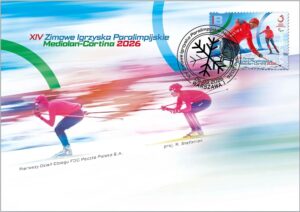
W grafice widoczni są członkowie Paralimpijskiej Reprezentacji Polski Mediolan–Cortina 2026: Krzysztof Plewa – startujący w pozycji siedzącej (sit‑ski); Witold Skupień – biegnący bez kijów w pozycji stojącej; na kopercie FDC: Aneta Kobryń biegnąca z przewodnikiem Bartłomiejem Puto Kompozycja podkreśla różnorodność paranarciarstwa biegowego, dynamikę ruchu oraz ducha sportowej rywalizacji. Datownik zawiera minimalistyczny motyw graficzny inspirowany ruchem narciarza wraz z nazwą emisji. W lewym górnym rogu każdego znaczka widnieje oznaczenie B, a po prawej – logo Polskiego Komitetu Paraolimpijskiego. W dolnej części nadrukowano nazwę emisji: „XIV Zimowe Igrzyska Paralimpijskie Mediolan–Cortina 2026”. Emisja powstała w ścisłej współpracy z Wnioskodawcą – Polskim Komitetem Paralimpijskim. Materiały zdjęciowe użyte w grafice emisji pochodzą od PKPar.

Paralympic Winter Games
Milan–Cortina 2026
www.poczta-polska.pl
06-03-2026 … Denomination: stamps without face value … Author of the stamp design: Roch Stefaniak; Number of stamps in issue: 1; Stamp size: 43 x 31,25 mm; Paper: Fluorescent; Printing techniques: Offset; Sales sheet: 9; Print run: 63 000 pcs; FDC size: 162 mm x 113 mm.
Issue date: 06-03-2026 … The sheet consists of 9 postage stamps arranged in a 3×3 layout, designed in a dynamic winter style dominated by blue, white and red tones – evoking the atmosphere of the XIV Paralympic Winter Games Milan–Cortina 2026. The stamp presents silhouettes of Para‑Nordic skiing athletes, showcasing three different techniques of the discipline. The issue is based on photographic materials from a session by Bartłomiej Zborowski / the Polish Paralympic Committee (PKPar).
The design features members of the Polish Paralympic Team Milan–Cortina 2026: Krzysztof Plewa – sit‑ski competitor; Witold Skupień – standing skier running without poles ; on the FDC: Aneta Kobryń running with her guide Bartłomiej Puto. On each stamp, the B denomination appears in the top left corner, while on the right side the Polish Paralympic Committee logo is displayed. The lower part contains the inscription: “XIV Paralympic Winter Games Milan–Cortina 2026”. The postmark features a simple, dynamic motif inspired by skier movement. The issue was created in close cooperation with the Polish Paralympic Committee, the applicant for the stamp. All photographic materials used in the artwork were provided by PKPar.
Hetmani Rzeczypospolitej – Jan Tarnowski
www.nbp.pl
Narodowy Bank Polski jest centralnym bankiem państwa odpowiadającym za politykę pieniężną i stabilność cen. Jego funkcje określa Konstytucja Rzeczypospolitej Polskiej i ustawa o NBP. NBP ma wyłączne prawo emisji pieniądza. Jako bank centralny nie prowadzi rachunków bankowych obywateli, nie przyjmuje od nich lokat, nie udziela kredytów. Prowadzi natomiast obsługę budżetu państwa, a także podmiotów sektora finansów publicznych. Gromadzi rezerwy walutowe państwa i zarządza nimi. Pełni funkcję banku banków, tworząc warunki do działania systemu bankowego. Jest również jednym z najważniejszych ośrodków naukowo-analitycznych w dziedzinie ekonomii i rynków finansowych.
Emisja wartości kolekcjonerskich stanowi okazję do upamiętniania ważnych historycznych rocznic i postaci oraz do rozwijania zainteresowań polską kulturą, nauką i tradycją. 11 marca 2026 roku Narodowy Bank Polski wprowadzaił do obiegu złotą monetę o nominale 500 zł oraz srebrną monetę o nominale 10 zł z serii „Hetmani Rzeczypospolitej” – „Jan Tarnowski”.
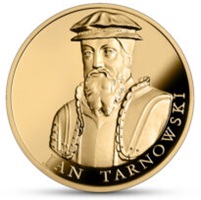
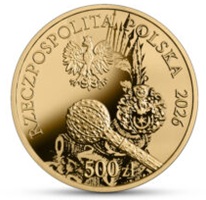
Nominał: 500 zł … metal: Au 999,9/1000 stempel: lustrzany, wysoki relief średnica: 32,00 mm masa: 31,10 g brzeg (bok): gładki nakład: do 800 szt. Projekt: Dobrochna Surajewska
Strona odwrotna (rewers): centralnie popiersie hetmana Jana Tarnowskiego. Wzdłuż dolnego brzegu półkolem napis: JAN TARNOWSKI.
Strona przednia (awers): u góry wizerunek orła ustalony dla godła Rzeczypospolitej Polskiej, pod orłem, po prawej stronie, znak mennicy: m / w. Poniżej orła, z prawej strony, herb Jana Tarnowskiego, z lewej strony buława oraz u dołu napis: 500 zł. Wzdłuż górnego brzegu półkolem napis: RZECZPOSPOLITA POLSKA 2026. W tle motyw dekoracyjny z elementów uzbrojenia, sztandarów i proporców.
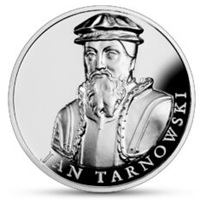
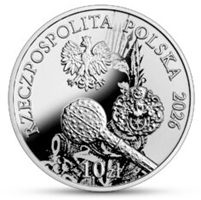
Nominał: 10 zł … metal: Ag 999/1000 stempel: lustrzany, wysoki relief średnica: 32,00 mm masa: 31,10 g brzeg (bok): gładki nakład: do 7000 szt. Projekt: Dobrochna Surajewska Emitent: NBP Na zlecenie NBP monety wyprodukowała Mennica Polska SA.
Strona odwrotna (rewers): centralnie popiersie hetmana Jana Tarnowskiego. Wzdłuż dolnego brzegu półkolem napis: JAN TARNOWSKI.
Strona przednia (awers): u góry wizerunek orła ustalony dla godła Rzeczypospolitej Polskiej, pod orłem, po prawej stronie, znak mennicy: m / w. Poniżej orła, z prawej strony, herb Jana Tarnowskiego, z lewej strony buława oraz u dołu napis: 10 zł. Wzdłuż górnego brzegu półkolem napis: RZECZPOSPOLITA POLSKA 2026. W tle motyw dekoracyjny z elementów uzbrojenia, sztandarów i proporców.
Na rewersach monety złotej i srebrnej został umieszczony wizerunek hetmana Jana Tarnowskiego. Na awersach – poza stałymi elementami monety: napisem „Rzeczpospolita Polska”, rokiem emisji, nominałem oraz wizerunkiem orła ustalonym dla godła Rzeczypospolitej Polskiej – widnieją także buława oraz herb Jana Tarnowskiego.
Jan Tarnowski był jednym z największych polskich wodzów epoki nowożytnej. Do historii przeszedł nie tylko jako hetman, lecz także polityk wielkiego formatu. Wierzył, że urodził się pod szczęśliwą gwiazdą. Niezwykła ambicja oraz miłość własna nie przysparzały mu jednak zwolenników i nierzadko doprowadzały do konfliktów z królem, sejmem i szlachtą. Aż pięciokrotnie składał buławę wielką koronną, co miało być formą presji na króla, by podjął korzystne dla Tarnowskiego decyzje. To w połączeniu z wyniosłością drażniło szlachtę. Jednocześnie podziwiano go za rozum, przenikliwość i osiągnięcia wojskowe i polityczne. Tarnowski wywodził się ze starego i znaczącego rodu. Po kądzieli był potomkiem sławnego rycerza Zawiszy Czarnego. Jego przeznaczeniem była służba wojskowa. Swoich umiejętności dowiódł w walkach z Tatarami, Moskwą i Turkami. Wojskowy talent pokazał w bitwie pod Orszą, stoczonej 8 września 1514 r. jako dowódca hufca rycerskiego. Zawiedziony brakiem spodziewanych nagród manifestacyjnie wyjechał z kraju.
Po podróży po Bliskim Wschodzie i Egipcie udał się do Portugalii. Zaciągnął się tam na służbę u króla Manuela I Szczęśliwego i walczył z Maurami. Zwiedził także Anglię, Francję, Niemcy i Czechy. Po powrocie do kraju związał swój los z armią i polityką. Brał udział w wojnie z zakonem krzyżackim. Następnie uczestniczył w walkach przeciwko Turkom na Węgrzech i Podolu. Buławę wielką koronną otrzymał 2 kwietnia 1527 r. Wtedy po raz pierwszy wyraźnie określono zakres władzy i obowiązków hetmana, któremu podporządkowano wszystkie wojska zaciężne.
Kunszt wojskowy zademonstrował w bitwie pod Obertynem rozegranej 22 sierpnia 1531 r. Stojąc na czele 5600 żołnierzy, pokonał ponad 17-tysięczną armię mołdawską hospodara Piotra Rareşa. Polski wódz po uszykowaniu taboru wytrzymał napór wroga, a następnie za pomocą kawalerii wyprowadził decydujący cios. Pokonani Mołdawianie zostawili na pobojowisku oprócz zabitych całą artylerię. Zdobyto wówczas także armaty utracone niegdyś przez Jana Olbrachta w wyprawie bukowińskiej. W 1534 r. hetman ruszył na nową wyprawę wojenną. Tym razem przeciwnikiem była Moskwa. Rok później zdobył silne twierdze Homel i Starodub.
Tarnowski z wielką zapobiegliwością gromadził swój majątek. Był także mecenasem kultury. W polityce zewnętrznej wielokrotnie zajmował opozycyjne stanowisko wobec dworu królewskiego i reprezentował stronnictwo prohabsburskie. Potrafił jednak stanąć przy władcy w sporze ze szlachtą, sprzeciwiając się nadawaniu jej zbytnich praw. Hetman zmodyfikował sposób organizacji, funkcjonowania i walki polskiej armii. Walczył z wykorzystaniem taboru, artylerii i piechoty, a następnie wyprowadzał śmiałe ataki kawaleryjskie. Był także pionierem zastosowania sztuki minerskiej. Swoje doświadczenia zawarł w pracy „Consilium rationis bellicae” („Rada sprawy wojennej”). Było to pierwsze i fundamentalne dzieło z dziedziny teorii wojskości, które wywarło wielki wpływ na staropolską sztukę wojenną. U swoich podkomendnych zyskał bezwzględny posłuch. Według Stanisława Orzechowskiego, hetmańskiego biografa, Tarnowskiego cechowała „trzeźwość, czujność, groza i rząd”. Cechy te połączone z odwagą i odniesionymi sukcesami stawiają go jako pierwszego w rzędzie wielkich polskich wodzów epoki nowożytnej, a o jego wyjątkowym uznaniu u współczesnych świadczy napisana przez Jana Kochanowskiego elegia „O śmierci Jana Tarnowskiego”. Informacja: Wojciech Kalwat.
Hetmans of the Polish–
Lithuanian Commonwealth
– Jan Tarnowski
www.nbp.pl
Narodowy Bank Polski is the central bank of the State, responsible for its monetary policy and price stability. The Bank’s functions are described in the Constitution of the Republic of Poland and the Act on NBP. NBP holds the exclusive right to issue the currency of the Republic of Poland. As the central bank, it does not provide accounts for the general public, accept deposits from or extend loans to individuals. It acts as a banker to the State budget and public sector entities. NBP also holds and manages the foreign exchange reserves of the State. Finally, it functions as a banker to banks, creating conditions for the operation of the Polish banking system. Narodowy Bank Polski is one of the most important research and analytical centres in the fields of economics and financial markets.
Issuing collector items is an occasion to commemorate important historic figures and anniversaries, as well as to develop the interest of the public in Polish culture, science and tradition. On 11 March 2026, Narodowy Bank Polski issued into circulation a gold coin with a face value of 500 złoty and a silver coin with a face value of 10 złoty of the series “Hetmans of the Polish-Lithuanian Commonwealth” – “Jan Tarnowski”.
Face value: 500 zł … Metal: Au 999.9/1000; Finish: proof, high relief; Diameter: 32.00 mm; Weight: 31.10 g; Edge (side): plain; Mintage: up to 800 pcs; Design: Dobrochna Surajewska.
Back side (reverse): centrally, the bust of hetman Jan Tarnowski. Along the bottom rim, a semi-circular inscription: JAN TARNOWSKI.
Front side (obverse): at the top, the image of the Eagle established as the state emblem of the Republic of Poland; below the Eagle, on the right, the Mint mark: m / w. Below the Eagle, on the right, Jan Tarnowski’s coat of arms; on the left, a mace and, at the bottom, the inscription: 500 zł. Along the upper rim, a semi-circular inscription: RZECZPOSPOLITA POLSKA (Republic of Poland) 2026. In the background, a decorative motif featuring elements of armour, banners and flags.
Face value: 10 zł … Metal: Ag 999/1000; Finish: proof, high relief; Diameter: 32.00 mm; Weight: 31.10 g; Edge (side): plain; Mintage: up to 7,000 pcs; Design: Dobrochna Surajewska; Issuer: Narodowy Bank Polski The coins, commissioned by Narodowy Bank Polski, were struck by Mennica Polska SA.
Back side (reverse): centrally, the bust of hetman Jan Tarnowski. Along the bottom rim, a semi-circular inscription: JAN TARNOWSKI.
Front side (obverse): at the top, the image of the Eagle established as the state emblem of the Republic of Poland; below the Eagle, on the right, the Mint mark: m / w. Below the Eagle, on the right, Jan Tarnowski’s coat of arms; on the left, a mace and, at the bottom, the inscription: 10 zł. Along the upper rim, a semi-circular inscription: RZECZPOSPOLITA POLSKA (Republic of Poland) 2026. In the background, a decorative motif featuring elements of armour, banners and flags.
The reverses of the gold and silver coins feature an image of Hetman Jan Tarnowski. Apart from the regular elements of the coin such as the inscription “Rzeczpospolita Polska” (Republic of Poland), year of issue, face value and the image of the Eagle established as the state emblem of the Republic of Poland, their obverses also bear the image of Jan Tarnowski’s mace and coat of arms.
Jan Tarnowski was one of the greatest Polish commanders of the modern era. He went down in the annals of history not only as a hetman, but also as a politician of great stature. Tarnowski believed that he was born under a lucky star. However, his extraordinary ambition and vanity did not win him many supporters and would often lead to conflicts with the king, the Sejm and the nobility. He resigned from the office of Grand Hetman of the Crown as many as five times, which was intended to put pressure on the king to make decisions reflecting Tarnowski’s interests. This, combined with his haughtiness, irritated the nobility. At the same time, he was admired for his intelligence, insight and military and political achievements. Tarnowski came from an old and distinguished family.
On his mother’s side, he was a descendant of the famous knight Zawisza Czarny. Military service was his destiny. He proved his skills in battles against the Tatars, Muscovites and Turks. Tarnowski demonstrated his military talent in the Battle of Orsha, fought on 8 September 1514, as commander of a unit of knights. Disappointed by the lack of expected rewards, he ostentatiously left the country. After travelling through the Middle East and Egypt, he left for Portugal. There, he enlisted in the service of King Manuel I of Portugal and fought against the Moors. He also toured around England, France, Germany and Bohemia. After returning to his homeland, Tarnowski cast his lot with the army and politics.
He fought in the war against the Teutonic Order and later joined the battles against the Turks in Hungary and Podolia. On 2 April 1527, Tarnowski received the Great Crown Mace. At that time, the scope of the hetman’s powers and duties, to whom all mercenary troops were subordinate, was clearly defined for the first time. He demonstrated his military prowess in the Battle of Obertyn on 22 August 1531. Commanding 5,600 soldiers, he defeated the Moldavian army of over 17,000 led by Prince Peter Rareş. After arranging his troops in a wagon fort formation, the Polish commander withstood the enemy’s pressure and then delivered a decisive blow with his cavalry. The defeated Moldavians left all their artillery on the battlefield, in addition to their dead. The cannons lost by Jan Olbracht during the Bukovina expedition were also recaptured at that time. In 1534, the hetman set out on a new military expedition. This time, the enemy was Moscow. A year later, he captured the strongholds of Homel and Starodub.
Tarnowski accumulated his wealth with great foresight. He was also a patron of culture. In foreign policy, he repeatedly took an oppositional stance towards the royal court and represented the pro-Habsburg faction. However, he was able to stand by the ruler in his dispute with the nobility, opposing the granting of excessive rights to them. The hetman modified the organisation, functioning and combat tactics of the Polish army. He fought using wagons, artillery and infantry, and then launched bold cavalry attacks. He also pioneered the use of mine techniques. Tarnowski recorded his experiences in his work Consilium rationis bellicae [Counsel on the Methods of War]. It was the first and fundamental work in the field of military theory which had a great influence on Old Polish warfare. He won unquestioning obedience of his subordinates. According to Stanisław Orzechowski, the hetman’s biographer, Tarnowski was ‘a man of sobriety and vigilance commanding fear and order’. These qualities, combined with personal courage and successes, place him at the forefront of the great Polish commanders of the modern era, and the exceptional recognition he enjoyed among his contemporaries is evidenced by Jan Kochanowski’s elegy O śmierci Jana Tarnowskiego [On the Death of Jan Tarnowski]. Info: Wojciech Kalwat.
Eid (2026): booklet of 6 Permanent™ stamps
www.canadapost.ca
This three-stamp issue commemorates the festivals of Eid al-Fitr and Eid al-Adha. Celebrated by Muslims all over the world – and by more than one and a half million Muslims in Canada – both events can last several days and include communal prayers and feasts, visits with family, gift giving and acts of charity. The design integrates stylized images of a maple leaf – a symbol of Canadian identity – into an Islamic pattern to reflect the cultural diversity and inclusivity of Canada and celebrate the significance of Eid for the Muslim community.
About the issue … This stamp marks two of the most important religious holidays in Islam: Eid al-Fitr, which signifies the end of fasting during the month of Ramadan, and Eid al-Adha, which follows the completion of the Hajj pilgrimage to Mecca. The Eid stamp is one of several annual issues that mark events of importance to Canada’s culturally diverse population. The others include Diwali, Hanukkah and Christmas.

About Islamic patterns … Mesmerizing designs inspired by mathematics and nature are popular forms of Islamic ornamentation. For centuries, Muslim artists, architects and mathematicians have developed and refined these intricate geometric patterns, which exemplify the principles of unity, precision and order. Infinitely expandable arrangements of interlacing and overlapping circles and polygons (i.e., triangles, squares and hexagons) – traditionally created using a compass and straightedge – adorn everything from architecture to carpets, ceramics, woodwork and metalwork. Stylized patterns of abstract flowers and other vegetal elements often flow through the dazzling designs, which vary across time, regions and cultures. Their rhythm and symmetry encourage contemplation on the spiritual and natural worlds. Islamic patterns also add beauty and symbolism to the celebrations of Eid al-Fitr and Eid al-Adha as decorations in mosques and homes, and on Eid lanterns and greeting cards. This year, Eid al-Fitr and Eid al-Adha take place in March and May, respectively.
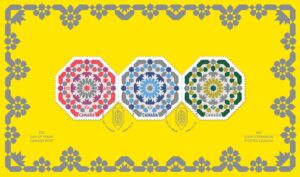
About the design … ***The octagonal shape of the stamps and their repetitive design are evocative of Islamic patterns centred around geometric shapes and floral/vegetal motifs. They also recall a central fountain often seen in Islamic gardens and internal courtyards that are decorated with geometric mosaic tilework. ***The three stamps in this issue are based on the same pattern in three different colour palettes. ***The front cover of the booklet features the title of the issue and a silver border – both of which reflect stylistic elements of the pattern on the stamp. ***The back of the booklet features a similar border to the front. ***The inside of the booklet includes the stamps in three different colour palettes, an upper border similar to the one on the covers, and a sentence about the elements of the stamp design. Stamp Designer: Paprika; Quantity Produced: 50,000; Issue Date: March 10, 2026. Eid (2026)… Official First Day Cover, cancelled in Vancouver, British Columbia. Stamp Designer: Paprika; Quantity Produced: 4,000; Issue Date: March 10, 2026.
2026 – Lucky Loonie –
Collector’s Edition Non-Circulation $1
www.mint.ca
Roll into victory with a Lucky Loonie Special Wrap Roll. Celebrate the spirit of Canada with the Lucky Loonie, a special keepsake that embodies the heart and soul of this nation! Whether you’re gearing up for a big game, pushing through a tough training session, or aiming for a new personal best, the Lucky Loonie is your ultimate Canadian good luck charm—and a Special Wrap Roll multiplies that spirit of fortune. Each roll holds 25 Lucky Loonies wrapped together as a victory-themed keepsake, each one a shining symbol of heritage, excellence, and the unstoppable drive to succeed. Luck multiplied—share the luck that fuels champions.
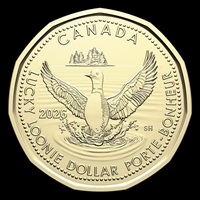
Face Value: $1 … Composition: Three-ply brass-plated steel; Mintage: 15,000; Weight: 6.27 g; Diameter: 26.5 mm; Edge: Plain; Finish: Brilliant Uncirculated; Artist: Steve Hepburn (reverse), Steven Rosati (obverse); Packaging: Custom graphic special wrap roll packaging.
DID YOU KNOW? … No one knows exactly who first coined the nickname “Loonie”—but it caught on almost instantly when Canada’s dollar coin entered circulation in 1987, and Canadians have been using it ever since.
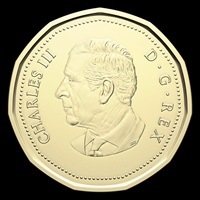
Designed by Canadian artist Steve Hepburn, your 2026 Lucky Loonie continues the tradition of offering a fresh take on the classic $1 circulation coin design by Robert-Ralph Carmichael and features a quintessentially Canadian lake setting. The common loon (Gavia immer)—a Canadian symbol embodying this country’s wilderness and waterways—has its wings raised triumphantly in a “V” (for “Victory”) shape while splashing into the water below. The obverse features the effigy of His Majesty King Charles III by Canadian artist Steven Rosati.
Gleaming Maple Leaves –
$10 Fine Silver Coin
www.mint.ca
The silver maple leaf’s timeless beauty, renewed in every detail. The gentlest breeze sets the leaves of the silver maple tree in motion, their silvery undersides catching the light as they softly sway and shimmer. That fleeting moment is beautifully captured and preserved on this ½ oz. 99.99% pure silver coin, where finely veined leaves are rendered in a refined, enduring style, enhanced by multiple frostings that add depth. The result is a classic portrait that balances delicacy with strength—a portrait that highlights both the natural grace of the maple and the timeless allure of Canada’s most treasured symbol. Traditionally Canadian. Naturally elegant. AddGleaming Maple Leavesto your collection.
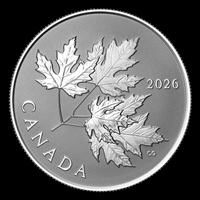
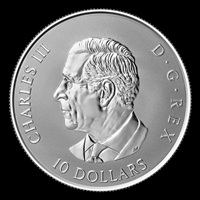
Face Value: $10 … Composition: 99.999% pure silver; Mintage: 25,000; Weight: 15.87 g; Diameter: 34 mm; Edge: Serrated; Finish: Reverse proof; Artist: Celia Godkin (reverse), Steven Rosati (obverse); Packaging: Black clamshell with black beauty box.
DID YOU KNOW? … The silver maple is one of the 10 maple species (genus Acer) that were proclaimed Canada’s national arboreal emblem in 1996. While its common name refers to the bright undersides of its leaves, the scientific name Acer saccharinum is a nod to the silver maple’s sweet sap—though it’s not as sweet as the sap of a sugar maple (Acer saccharum), the preferred species for maple syrup production.
The reverse design by Canadian artist Celia Godkin features a cluster of four silver maple (Acer saccharinum) leaves at the tip of a branch; presented at a gentle upward angle in their natural state, the leaves are rendered in a classic style that highlights their iconic form and intricate veining. The obverse features the effigy of His Majesty King Charles III by Canadian artist Steven Rosati.
2026 … Fine Silver Proof Set –
100th Anniversary of
The Royal Canadian Legion
www.mint.ca
A century of service and Remembrance, honoured in rose gold. Marking the centenary of The Royal Canadian Legion, the 2026 Fine Silver Proof Dollar pays tribute to Canada’s largest Veteran and community service organization—and to a lasting legacy of honouring sacrifice while inspiring future generations. This seven-piece collection includes an enhanced version of the Proof Dollar, available exclusively in the set. Rose gold plating highlights all of the poppies and the maple leaf from the Legion’s official crest, as well as the forget-me-not flower, adding a warm richness to a design that invites reflection. Thoughtfully crafted, this set offers a meaningful keepsake for collectors, Veterans, and supporters alike—a keepsake that simultaneously honours the Legion’s century of service and those it proudly represents. An exclusive rose gold plated tribute to The Royal Canadian Legion. Mintage: 25,000; Packaging: Book-style packaging with a removable lens; Artist: Steve Hepburn (reverse), Steven Rosati (obverse).
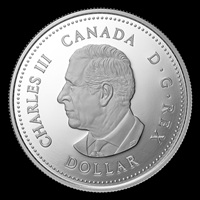
Proof dollar … Composition: 99.99% pure silver with selective rose gold plating; Weight: 23.17 g; Diameter: 36.07 mm; Edge: Reeded.
2 dollars … Composition: 99.99% pure silver with gold-plated inner core; Weight: 9 g; Diameter: 28 mm; Edge: Interrupted serrations.
1 dollar … Composition: 99.99% pure silver with gold plating; Weight: 7.89 g; Diameter: 26.5 mm; Edge: Plain.
50 cents … Composition: 99.99% pure silver; Weight: 9.37 g; Diameter: 27.13 mm; Edge: Serrated.
25 cents … Composition: 99.99% pure silver; Weight: 6 g; Diameter: 23.88 mm; Edge: Serrated.
10 cents … Composition: 99.99% pure silver; Weight: 2.45 g; Diameter: 18.05 mm; Edge: Serrated.
5 cents … Composition: 99.99% pure silver; Weight: 5.4 g; Diameter: 21.2 mm; Edge: Plain.
DID YOU KNOW?… ***In the decades following the Second World War and Korean War, the demographics of Canadian Veterans began to shift. As the population of traditional service members aged, the Legion recognized the need to both honour the legacy of Veterans and ensure the continued vitality of its branches and mission. ***The Legion made pivotal decisions to expand membership eligibility beyond Veterans to include serving members of the Canadian Armed Forces, their families, and eventually non-military community members. This inclusive approach responded to both practical needs—such as declining numbers of wartime Veterans—and philosophical ones, reflecting the Legion’s evolving role in Canadian life. ***This shift reinforced the Legion’s identity as more than just a Veterans’ club—it became a true community anchor, dedicated to Remembrance, support, and public service. Branches embraced roles in youth programs, housing initiatives, education, and civic events, making membership relevant to a broader cross-section of Canadians. Today, this inclusive model ensures that the Legion remains a living memorial, sustained not only by those who served, but by families, friends, and communities who continue to honour and uphold their legacy.
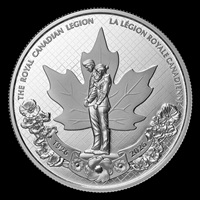
Commemorating the centenary of The Royal Canadian Legion, the Proof Dollar in this set is enhanced with selective rose gold plating. The reverse design by Canadian artist Steve Hepburn presents two Legion members standing in Remembrance, set against the maple leaf from the Legion’s official crest. In the background, the fabric pattern symbolizes the Legion’s role as a national community service organization, woven into the social fabric of Canada. Arching the bottom, the floral arrangement consists of 14 poppies—one for each Canadian province and territory, and another for the Legion’s international branches. On the right side or east of the floral arrangement, a forget-me-not flower, a symbol of Remembrance in Newfoundland and Labrador. Beneath this, three poppies from the Legion’s official crest, adorn the scroll banner marked with the anniversary dates “1926” and “2026”. The obverse features the effigy of His Majesty King Charles III by Canadian artist Steven Rosati.
Steve Hepburn, Artist … “My grandfather, a pilot officer in the Royal Air Force, went to Medicine Flat, Alta., for training in 1941. He loved Canada and met his wife on Vancouver Island, eventually moving to Victoria, B.C. I’m lucky to have these roots, as my family still lives on the beautiful west coast of Canada”.
Matt Eggink, Product Manager … “To have the opportunity to work on the centenary of The Royal Canadian Legion, and on this Proof Dollar, has been a tremendous honour. The artist, Steve Hepburn, did a wonderful job and showed great patience as we worked through numerous sketches to arrive at this beautiful, respectful design. From there, our engraver, Matt Porter, transformed Steve’s two-dimensional concept into the final product you see here—a piece I believe truly honours the legacy of The Royal Canadian Legion”.
Matt Porter, 3D artist and Engraver … “Working on The Royal Canadian Legion Proof Dollar was a true honour. This design required careful layering of symbolic elements—the maple leaf, figures, banner and poppies—while maintaining a balanced composition and ensuring strike ability. The most technically demanding aspect was managing the relief at the bottom of the field, where dense detail had to remain shallow enough for effective minting. The result is a harmonious tribute that reflects both artistic intent and technical precision”.
2026 … Celebrate Love –
$20 Fine Silver Coin
www.mint.ca
For every kind of love your heart holds dear. Love isn’t just a feeling, it’s the thread that ties us to one another in different ways—whether it’s the spark of romance, the comforting support of friendship, the heartbeat of family, or the care and attention we give to ourselves, this 99.99% pure silver coin celebrates it all! Its everlasting bouquet features tulips representing affection and renewal, roses for devotion and beauty, and fairy thimble for those small, simple moments that can feel like magic. Tying all of these together is a ribbon plated with rose gold to give it the colour of compassion and tenderness as it weaves its way through the blooms, forming hearts and infinity symbols that reflect love’s boundless nature. Give love, share joy, cherish forever.
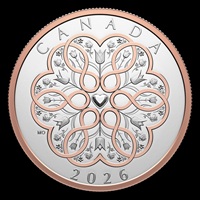
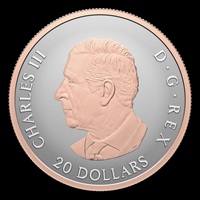
Face Value: $20 … Composition: 99.999% pure silver with rose gold plating; Mintage: 20,000; Weight: 31.39 g; Diameter: 38 mm; Edge: Serrated; Finish: Reverse proof; Artist: Mariya Olshevska (reverse), Steven Rosati (obverse); Packaging: Premium grey graphic beauty box with gold foil details.
DID YOU KNOW? … Popular during the Victorian era, floriography is the language of flowers and the art of communicating through the blooms and colours that hold different meanings—such as the tulip representing perfect love or friendship, and the red rose that conveys passion.
Designed by Mariya Olshevska, your coin’s reverse features a multi-faceted heart at its centre, where the shape forms an everlasting expression of love. It is surrounded by a circular arrangement of symbolic flowers: tulips for affection and renewal; roses for devotion and beauty; and fairy thimble for those small, simple moments that can feel like magic. Rose gold plating adds a pink hue to the ribbon that forms hearts and infinity symbols as it weaves among the blooms, and to the rim on both sides of the coin. The obverse features the rose gold-plated effigy of His Majesty King Charles III by Canadian artist Steven Rosati.
2026 … 100th Anniversary of
The Royal Canadian Legion –
Fine Silver Proof Dollar
www.mint.ca
The Royal Canadian Legion: Stewards of Remembrance, pillar of community, service and support—and the Proof Dollar’s theme for 2026. Incorporated in 1926, The Royal Canadian Legion rose from a variety of independent Veterans’ groups formed after the First World War to become a single, steadfast voice for those who served. A century later, 270,000 members carry that sacred mission with solemn pride, serving all Veterans, including serving military and RCMP members and their families, promoting Remembrance, and serving their communities and country. Marking the centenary of The Royal Canadian Legion, the 2026 Fine Silver Proof Dollar pays tribute to Canada’s largest Veteran and community service organization—and to a lasting legacy of honouring past sacrifices while inspiring future generations. A legacy etched in Remembrance.
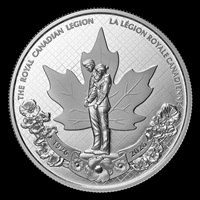
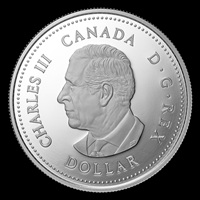
Face Value: $1 … Composition: 99.999% pure silver; Mintage: 35,000; Weight: 23.17 g; Diameter: 36.07 mm; Edge: Serrated; Finish: Proof; Artist: Steve Hepburn (reverse), Steven Rosati (obverse); Packaging: Black clamshell with black beauty box.
DID YOU KNOW? … After the First World War, Canada had over 50 Veterans’ groups, each representing different needs and regions, without a unified voice. On November 25, 1925, a National Unity Conference in Winnipeg brought together major groups and associations, leading to the formation of the Canadian Legion of the British Empire Service League. Officially incorporated on July 17, 1926, by a special Act of Parliament, it became what is now The Royal Canadian Legion (it was granted the “Royal” prefix in 1960), advocating for Veterans, Remembrance, and community support nationwide.
Commemorating the centenary of The Royal Canadian Legion, the reverse design by Canadian artist Steve Hepburn presents two Legion members standing in Remembrance, set against the maple leaf from the Legion’s official crest. In the background, the fabric pattern symbolizes the Legion’s role as a national community service organization, woven into the social fabric of Canada. Arching the bottom, the floral arrangement consists of 14 poppies—one for each Canadian province and territory, and another for the Legion’s international branches. On the right side or east of the floral arrangement is a forget-me-not flower, a symbol of Remembrance in Newfoundland and Labrador. Beneath this, three poppies from the Legion’s official crest adorn the scroll banner marked with the anniversary dates “1926” and “2026”. The obverse features the effigy of His Majesty King Charles III by Canadian artist Steven Rosati.
Steve Hepburn, Artist … “My grandfather, a pilot officer in the Royal Air Force, went to Medicine Flat, Alta., for training in 1941. He loved Canada and met his wife on Vancouver Island, eventually moving to Victoria, B.C. I’m lucky to have these roots, as my family still lives on the beautiful west coast of Canada”.
Matt Eggink, Product Manager … “To have the opportunity to work on the centenary of The Royal Canadian Legion, and on this Proof Dollar, has been a tremendous honour. The artist, Steve Hepburn, did a wonderful job and showed great patience as we worked through numerous sketches to arrive at this beautiful, respectful design. From there, our engraver, Matt Porter, transformed Steve’s two-dimensional concept into the final product you see here—a piece I believe truly honours the legacy of The Royal Canadian Legion.”
Matt Porter, 3D artist and Engraver … “Working on The Royal Canadian Legion Proof Dollar was a true honour. This design required careful layering of symbolic elements—the maple leaf, figures, banner and poppies—while maintaining a balanced composition and ensuring strike ability. The most technically demanding aspect was managing the relief at the bottom of the field, where dense detail had to remain shallow enough for effective minting. The result is a harmonious tribute that reflects both artistic intent and technical precision.”
2026 … $20 Fine Silver Coin Canada’s National Parks
– Torngat Mountains National Park
www.mint.ca
Welcome to Torngat Mountain National Park—take a seat and take in the view. Its name comes from the Inuktitut word Tongait, meaning “place of spirits,” and those acquainted with its spectacular landscapes know that Torngat Mountains National Park is a place like no other. Located on the northern tip of the Labrador Peninsula, the park’s remoteness has long kept its magnificent peaks and glacier-carved inlets hidden from the rest of the world, for there are no roads here—only 9,700 square kilometres of untamed northern wilderness and unparalleled beauty. New for 2026: The first coin in the Canada’s National Parks series brings you an incredible (and colourful) view from Torngat Mountains National Park, where the echoes of ancient footsteps and thousands of years of Inuit cultural tradition have consecrated this sacred place. Coin #1: A northern national park is our first stop.

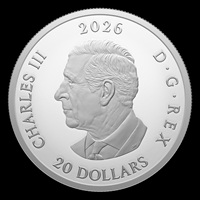
Face Value: $20 … Composition: 99.999% pure silver with selective colour; Mintage: 7,000; Weight: 31.39 g; Diameter: 38 mm; Edge: Serrated; Finish: Proof; Artist: Bronson Jacque (reverse), Steven Rosati (obverse); Packaging: Black clamshell with black beauty box.
DID YOU KNOW?… ***Home to the tallest peaks east of the Canadian Rocky Mountains, Torngat Mountains National Park was first established as a national park reserve in 2005 as a result of the Labrador Inuit Land Claims Agreement, and with the signing of the Nunavik Inuit Land Claim Agreement, it became a national park in 2008. It is cooperatively managed by the Inuit of Nunatsiavut, the Inuit of Nunavik and Parks Canada.
Designed by Nunatsiavut artist Bronson Jacque, your coin’s reverse invites you to take a seat and enjoy the view from Torngat Mountains National Park, located on the northern tip of the Labrador Peninsula. The engraved setting is a U-shaped glacier valley, and the scene depicts a lone caribou lifting its head to the sky as the aurora borealis colourfully lights up the night. Selective colour also highlights two red Adirondack chairs—a familiar sight in Canada’s national parks. The obverse features the effigy of His Majesty King Charles III by Canadian artist Steven Rosati.
Bronson Jacque, Artist … “Looking back on my life, the connection between the land, my community and myself have always felt the strongest while seated among the wild moss, berries and flowers. With patient, deep breaths that fill my lungs with the crisp northern air, I muse over the vastness of it all and our place within it. Witnesses of these wonders are instilled with a distinct reverence for life, indiscriminately embraced in equanimity; with this coin, I hope to express that sense of harmony and offer you a quiet moment among the moss, berries and flowers, as you bear witness to the North’s endless beauty.”
2026 … $20 Fine Silver Coin Canada’s National Parks –
Kluane National Park and Reserve
www.mint.ca
Head to Kluane National Park and Reserve and enjoy Canada’s beauty at its peak. The journey continues! Coin #2 in the Canada’s National Parks series heads to southwest Yukon, where some of Canada’s most stunning landscapes rise up to dizzying heights. In Southern Tutchone, this region is known as Dań Keyǐ/the People’s Country, home to Dań/The People for thousands of years where their knowledge is based on an interconnected relationship to the land. Within Dań Keyǐ is Kluane National Park and Reserve, a mountaineer’s dream and a haven for outdoor enthusiasts: 17 of Canada’s 20 highest peaks (including our tallest, Mount Logan) are located here, as are the world’s largest non-polar icefields. From backcountry hiking to rafting by ancient glaciers, there are so many ways to enjoy and explore this vast protected area, where some of the greatest biodiversity in northern Canada lies nestled among ice-covered giants. Kwiyaajàl’/We are happy to welcome you. Coin #2: Head north to take in nature’s grandeur.

Face Value: $20 … Composition: 99.999% pure silver with selective colour; Mintage: 7,000; Weight: 31.39 g; Diameter: 38 mm; Edge: Serrated; Finish: Proof; Artist: Steve Hepburn (reverse), Steven Rosati (obverse); Packaging: Black clamshell with black beauty box.
DID YOU KNOW? … ***Established in 1976, Kluane (pronounced “kloo-AH-nee”) National Park and Reserve is part of a UNESCO World Heritage Site, declared in 1979, along with its neighbours Wrangell-St. Elias and Glacier Bay National Parks in Alaska, and Tatshenshini-Alsek Provincial Park in British Columbia; together, these parks form the world’s largest internationally protected area. In 1986, the 90-kilometre portion of the Alsek River that flows through Kluane National Park and Reserve was designated a Canadian Heritage River. The river is recognized for its impressive natural features, 10,000 years of cultural history, and world-class wilderness rafting. ***Over thousands of years, First Nations peoples, including Southern Tutchone people of Champagne and Aishihik First Nations and Kluane First Nation, have acquired and passed down the knowledge and skills needed to live off of the abundance of plants and animals in this land of climatic and geographic extremes. Their stewardship, based on this knowledge, has enriched the health of the land. ***Today, Kluane National Park and Reserve is managed cooperatively by Champagne and Aishihik First Nations, Kluane First Nation, and Parks Canada, through the Kluane National Park Management Board. Sharing knowledge and respecting the ways of First Nations’ people as the original stewards of the land are key elements in the management of Kluane National Park and Reserve. ***You can find over 400 red Adirondack chairs placed in peaceful, breathtaking locations from coast to coast to coast. Rest, relax and discover the wonders Parks Canada has to offer.
Designed by Canadian artist Steve Hepburn, your coin’s reverse invites you to take a seat and enjoy the view from Kluane National Park and Reserve, located in southwest Yukon. The view from the shore of Mät’àtäna Män (Kathleen Lake) is framed by the colourful branches of black cottonwood (Populus trichocarpa) and fireweed (Epilobium angustifolium) flowers, as the engraved King’s Throne Mountain is reflected on the colourful surface of the water. Selective colour also highlights two red Adirondack chairs—a familiar sight in Canada’s national parks. The obverse features the effigy of His Majesty King Charles III by Canadian artist Steven Rosati.
2026 … $20 Fine Silver Coin Canada’s National Parks
– Grasslands National Park
www.mint.ca
Windswept plains, weathered buttes, rolling uplands and river valleys—welcome to Grasslands National Park, one of the few remaining natural grasslands in North America. Coin #3 travels to this national park and Dark Sky Preserve in southwestern Saskatchewan, where blue sky meets Canadian prairie, and where visitors can experience the wonders of the preserved mixed-grass prairie ecosystem. Home to rare species and spaces, rich history and wondrous wildlife, its rugged land formations offer a window into prehistoric times, while the thousands of tipi rings are remnants of a past inextricably linked to the bison. Coin #3: Travel to where the bison roam.
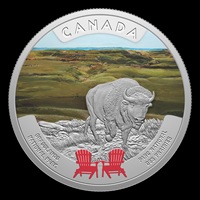
Face Value: $20 … Composition: 99.999% pure silver with selective colour; Mintage: 7,000; Weight: 31.39 g; Diameter: 38 mm; Edge: Serrated; Finish: Proof; Artist: Kerri Burnett (reverse), Steven Rosati (obverse); Packaging: Black clamshell with black beauty box.
DID YOU KNOW? … ***Approximately 10,000 years ago, upon the retreat of the glaciers the prairies became home to several Indigenous groups: The A’aninin (Gros Ventres), Nakoda (Assiniboine), Nêhiyawak (Plains Cree), Niitsitapi (Blackfoot), Dakota and Lakota (Sioux)—each nation linking their lives to the migrations of the bison. Today, the evidence is profound with bison drive lanes, projectile points, tipi rings and other cultural features that dot the park landscape. Grasslands National Park is home to one of the largest concentrations of undisturbed cultural resources in Canada. ***The park was established in 1981 to protect and present a representative example of the Prairie Grasslands Natural Region using a unique willing-buyer, willing-seller model. The park currently consists of 730 km2 and could eventually cover 906 km2 when land acquisition is complete. Grasslands National Park is comprised of two blocks: the West Block, which centres on the Frenchman River Valley; and the East Block which highlights the Rock Creek Badlands. The revealing landscape of the Badlands led to the first recorded find of dinosaur remains in Canada in 1874. The East Block is also one of the best places in the world for viewing the Cretaceous-Paleogene (KPG) Boundary—a layer of sediment corresponding to the mass extinction event that marked the end of the age of dinosaurs. ***After a 120-year absence, the bison that once roamed the prairies in great numbers was reintroduced to Grasslands National Park in 2005. The initial herd consisted of 71 bison that originated from Elk Island National Park in Alberta; today, the herd includes over 400 individuals that freely roam in 180 km2. The West Block is also the only place in Canada where the playful black-tailed prairie dog is found in its natural habitat.
Designed by Canadian artist Kerri Burnett, your coin’s reverse invites you to take a seat and enjoy the view from Grasslands National Park, located in southwestern Saskatchewan. A mighty plains bison (Bison bison bison) appears in the engraved foreground, while behind it, selective colour captures the serene beauty of the open prairie landscape, as it extends into the horizon under a clear blue sky. Selective colour also highlights two red Adirondack chairs—a familiar sight in Canada’s national parks. The obverse features the effigy of His Majesty King Charles III by Canadian artist Steven Rosati.
Kerri Burnett, Artist … “I love using nature as a source of inspiration. In this composition, I used a plains bison as symbol of monumental strength, posing it against the expanse of the grassland terrain and the distinctive butte formations in the distance.”
2026 … $20 Fine Silver Coin Canada’s National Parks –
Mingan Archipelago National Park Reserve
www.mint.ca
Coin #4: Last stop on the Canada’s National Parks tour! Our tour concludes in Quebec’s Côte-Nord region, where more than a thousand limestone islets and islands lie just off the northern shores of the Gulf of St. Lawrence, opposite Anticosti Island. The Mingan Archipelago National Park Reserve (MANPR) is located on Nitassinan, traditional lands of the Innu people inhabited by the Ekuanitshit and Nutashkuan First Nations for thousands of years. The archipelago is best known as the home of Canada’s largest concentration of erosion monoliths—rock pillars that continue to be shaped by water, wind and time. Its islands are accessible by boat; once ashore, visitors are invited to let the ocean set the rhythm as they take in the scenery and discover the rich biodiversity of this coastal chain preserved since 1984, part of a vast network of spaces protected for present and future generations of Canadians. The Gulf of St. Lawrence is the final stop.
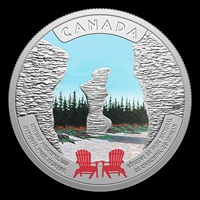
Face Value: $20 … Composition: 99.999% pure silver with selective colour; Mintage: 7,000; Weight: 31.39 g; Diameter: 38 mm; Edge: Serrated; Finish: Proof; Artist: Jean-Luc Hervieux (reverse), Steven Rosati (obverse); Packaging: Black clamshell with black beauty box.
DID YOU KNOW?… ***Stretching along the coast of the Gulf of the St. Lawrence between the villages of Longue-Pointe-de-Mingan and Aguanish, Que., the Mingan Archipelago National Park Reserve was created in 1984 with the aim of protecting a natural area that is representative of the Eastern St. Lawrence Lowlands. The park reserve is famous for its seabird population: an estimated 200 bird species congregate here, and more than 80,000 seabird colonies feed and nest on the islands. ***While the park reserve’s limestone bedrock is over 450 million years old, its famous monoliths were shaped by variations in the sea level associated with glacial retreat 10,000 years ago, and continuously carved by the eroding forces of wind and waves, freezing and thawing.
Designed by Innu artist Jean-Luc Hervieux, your coin’s reverse invites you to take a seat and enjoy the view from Mingan Archipelago National Park Reserve, located in the province of Quebec and just off the northern coast of the Gulf of St. Lawrence. The design highlights the park’s vast collection of monoliths by presenting a view of the famous Bonne Femme formation (centre) on Île Niapiskau, one of the park’s many islands and islets. Selective colour highlights the surrounding landscape and, in the foreground, two red Adirondack chairs—a familiar sight in Canada’s national parks. The obverse features the effigy of His Majesty King Charles III by Canadian artist Steven Rosati.