
TROYAK EXECUTIVE TEAM is informing all members, colleagues, collectors, and Polonia at large, that Club meetings taking place at John Paul II Polish Cultural Centre, 4300 Cawthra Rd. (just south of Hwy. 403), Mississauga, Ontario. The new members are always welcome. www.polishculturalcentre.ca
ADRES SPOTKAÑ KLUBOWYCH ! Zarząd Główny Klubu “Troyak” informuje wszystkich członków kolekcjonerów, sympatyków oraz całą Polonię, że spotkania klubowe odbywają się w Polskim Centrum Kultury im. Jana Pawła II, przy 4300 Cawthra Rd. (na południe od autostrady 403), Mississauga, Ontario. Zapraszamy nowych członków do prężnego. Klubu “Troyak”. www.polishculturalcentre.ca

“TROYAK” CLUB NEXT MEETINGS …
NASTĘPNE SPOTKANIA KLUBU “TROYAK” …
Sunday 25th October 2026 @ 4:30 p.m.

22nd November 2026
Sunday – 29th November 2026 @ 9:00 a.m. to 4:00 p.m.
Mississauga Coin & Stamp Show
December 2026 … Happy Holidays!
Sunday – 17th January 2027 AGMeeting
31st January 2027
28th February 2027
Sunday – 7th March 2027 @ 9:00 a.m. to 4:00 p.m.
Mississauga Coin & Stamp Show
21st March 2027
25th April 2027
30th May 2027
27th June 2027
July & August 2027 …
Summer break / Letnie wakacje
Robotnicze protesty czerwca 1976
www.poczta-polska.pl
24-06-2026 … Nominał znaczka: beznominałowy … Autor projektu: Roch Stefaniak; Ilość znaczków w emisji: 3; Format znaczka: 31,25 x 43mm; Format bloku: 121 x 82 mm; Ilość znaczków w bloku: 3; Technika druku / Papier: Offset / fluorescencyjny; Nakład: 60 000 szt.; Format koperty FDC: 207 mm x 149 mm.
Data emisji: 24-06-2026 … W dniu 24 czerwca 2026 roku Poczta Polska wprowadza do obiegu blok znaczkowy „Robotnicze protesty Czerwca 1976”, upamiętniający wydarzenia, które odegrały istotną rolę w najnowszej historii Polski i stały się ważnym symbolem społecznego sprzeciwu wobec polityki władz PRL. Protesty, które wybuchły po ogłoszeniu drastycznych podwyżek cen żywności, objęły przede wszystkim Radom, Ursus i Płock, stając się jednym z najważniejszych wystąpień robotniczych w latach 70. XX wieku. Wydarzenia te zapoczątkowały proces budowania opozycji demokratycznej i solidarności społecznej. Blok składa się z 3 znaczków pocztowych, które tworzą spójną, symboliczną narrację, prezentując najważniejsze miejsca i momenty protestów.

Na znaczkach oraz w oprawie bloku przedstawiono: Radom … ***płonący budynek Komitetu Wojewódzkiego PZPR; ***robotników przemieszczających się na wózku akumulatorowym. Sceny te symbolizują dramatyczny przebieg protestów i ich eskalację.
Ursus … ***zatrzymanie ruchu kolejowego. Motyw ten odnosi się do jednego z najbardziej rozpoznawalnych aktów protestu – blokady torów kolejowych przez robotników, która miała wymiar strategiczny i symboliczny.
Płock… ***rafinerię naftową; ***protestujących mieszkańców. Przedstawienie Płocka podkreśla udział społeczności lokalnej i znaczenie przemysłu w kształtowaniu protestów.

Na kopercie FDC przedstawiono archiwalną mapę protestów robotniczych z 1976 roku, ukazującą ich skalę na terenie całego kraju. Dokument został sporządzony przez Ministerstwo Spraw Wewnętrznych i znajduje się obecnie w zbiorach Instytutu Pamięci Narodowej, co nadaje emisji dodatkowy walor historyczny i dokumentacyjny. Kompozycja bloku łączy archiwalne materiały ikonograficzne z nowoczesnym opracowaniem graficznym, tworząc dynamiczną, dokumentalną narrację. Zastosowana kolorystyka – kontrast czerwieni, czerni i stonowanych odcieni – oddaje napięcie i dramatyzm wydarzeń.
Całość ma charakter symboliczno‑reportażowy, przybliżający odbiorcy atmosferę czerwca 1976 roku. Współpraca: ***Miasto Radom; ***Miasto Płock; ***Dzielnica Ursus m.st. Warszawy. Materiały ikonograficzne: ***Instytut Pamięci Narodowej; ***Narodowe Archiwum Cyfrowe.
Emisja „Robotnicze protesty Czerwca 1976” stanowi ważne przypomnienie o wydarzeniach, które przyczyniły się do kształtowania świadomości społecznej, rozwoju opozycji demokratycznej oraz drogi Polski do wolności. To filatelistyczne upamiętnienie łączy historię, edukację i pamięć zbiorową, wpisując się w nurt emisji o charakterze rocznicowym i patriotycznym. Oznaczenie literowe B odpowiada wartości nominalnej znaczka używanego do uiszczenia opłaty za priorytetową przesyłkę listową nierejestrowaną w obrocie krajowym w formacie S.

The workers’ protests of June 1976
www.poczta-polska.pl
24-06-2026 … Denomination: stamps without face value … Author of the stamp design: Roch Stefaniak; Number of stamps in issue: 3; Stamp size: 31,25 x 43 mm; Number of stamps in block: 3; Block size: 121 x 82 mm; Paper: Fluorescent; Printing techniques: Offset; Print run: 60 000 pcs; FDC size: 207 mm x 149 mm.
Issue date: 24-06-2026 … On June 24, 2026, Polish Post issued a commemorative stamp block titled “Workers’ Protests of June 1976”, which honors one of the most significant episodes in modern Polish history and a symbol of social resistance against the policies of the communist authorities. The protests broke out after the announcement of drastic food price increases and were most intense in Radom, Ursus and Płock. These events became a turning point, contributing to the emergence of democratic opposition movements and strengthening social solidarity.
The block consists of three postage stamps, forming a coherent visual narrative of the protests. The design presents key locations and symbolic moments from each city: Radom … ***the burning building of the Provincial Committee of the Polish United Workers’ Party; ***workers moving on a battery‑powered cart. These scenes reflect the dramatic escalation of protests. Ursus … ***the blocking of railway traffic. This refers to one of the most symbolic acts of protest — workers stopping trains, disrupting national transport. Płock … ***the oil refinery; ***protesting residents; ***This highlights the participation of industrial workers and local communities.
The FDC features an archival map illustrating the scale of protests across Poland in 1976. The document was created by the Ministry of Internal Affairs and is now preserved in the collections of the Institute of National Remembrance (IPN). The composition combines archival imagery with modern graphic design, creating a documentary‑style narrative. The color palette — dominated by red, black and muted tones — emphasizes the tension and drama of the events.
Cooperation: ***City of Radom; ***City of Płock; ***Ursus District of Warsaw. Sources: ***Institute of National Remembrance; ***National Digital Archives. This issue commemorates events that contributed to the rise of democratic opposition and the long-term path toward freedom in Poland. It serves both as a historical document and a tribute to social courage.
Polska zobacz więcej – 2026
www.poczta-polska.pl
30-06-2026 … Nominał znaczka: beznominałowy … Autor projektu: Roch Stefaniak; Ilość znaczków w emisji: 2; Format znaczka: 51 x 39,5 mm; Format bloku: 121 x 82 mm; Ilość znaczków w arkuszu: 8; Technika druku / Papier: Offset / fluorescencyjny; Nakład: 108 000 szt.; Format koperty FDC: 162 mm x 113 mm.
Data emisji: 30-06-2026 … Emisja „Polska Zobacz Więcej” prezentuje dwa wyjątkowe miejsca Wielkopolski: Zamek w Kórniku oraz Podziemną Trasę Turystyczną Kopalni Soli „KŁODAWA” – obiekty reprezentujące dwa odmienne, lecz uzupełniające się oblicza dziedzictwa Polski: kulturowe i industrialne. Arkusik składa się z 8 znaczków w układzie kombinowanym (naprzemiennie dwa wzory), tworząc spójną narrację o historii, naturze i rozwoju regionu.
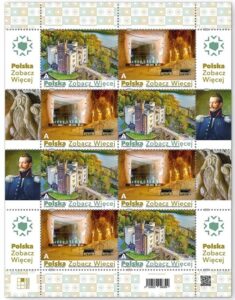
Znaczki i przedstawione miejsca: ***Zamek w Kórniku – Biblioteka Kórnicka PAN. Zamek w Kórniku to jedna z najbardziej malowniczych i najlepiej zachowanych rezydencji Wielkopolski. Jego początki sięgają średniowiecza, jednak obecny romantyczny wygląd zawdzięcza przebudowie dokonanej w XIX wieku przez hrabiego Tytusa Działyńskiego, który nadał mu formę neogotyku angielskiego.
Obiekt od wieków związany jest z wybitnymi rodami – Górków, Czarnkowskich, Działyńskich i Zamoyskich. W jego wnętrzach zachowały się autentyczne elementy wyposażenia, które pozwalają przenieść się w realia epoki XIX wieku. Zamek pełni obecnie funkcję siedziby Biblioteki Kórnickiej PAN, jednej z najcenniejszych bibliotek w Polsce, przechowującej rękopisy, starodruki i dokumenty o fundamentalnym znaczeniu dla historii kraju. Szczególnym walorem miejsca jest otaczające go Arboretum Kórnickie – jeden z najstarszych ogrodów dendrologicznych w Polsce, liczący tysiące gatunków drzew i krzewów z całego świata. Wiosną przyciąga uwagę spektakularnym kwitnieniem magnolii. Zamek owiany jest również legendą o Białej Damie, która według podań spaceruje nocami po zamkowych korytarzach, nadając miejscu aurę tajemniczości. Rok 2026 to wyjątkowy jubileusz: ***600 lat zamku; ***200 lat Biblioteki Kórnickiej.
Kopalnia Soli „KŁODAWA” – Podziemna Trasa Turystyczna … Kopalnia w Kłodawie to największa i najgłębsza czynna kopalnia soli kamiennej w Polsce, której historia sięga połowy XX wieku. Złoża soli powstały około 250 milionów lat temu, stanowiąc jedno z najcenniejszych bogactw naturalnych regionu. Eksploatacja prowadzona jest na głębokości do około 750 metrów, natomiast trasa turystyczna prowadzi odwiedzających na poziom około 600 metrów pod ziemią.
Zwiedzający mogą podziwiać: ***ogromne komory solne; ***podziemne korytarze i wyrobiska; ***naturalne i wykute formy skalne. Szczególną atrakcją jest niepowtarzalna kolorystyka soli – od białej po naturalnie różową, niespotykaną w wielu innych kopalniach. Kopalnia łączy funkcję: ***przemysłową; ***edukacyjną; ***turystyczną. Ukazując jednocześnie trud i specyfikę pracy górników.
Kompozycja arkusika została wzbogacona o elementy narracyjne: ***portret Tytusa Działyńskiego – symbol dziedzictwa kulturowego; ***Skarbnik – legendarny opiekun kopalni; ***graficzny pattern emisji (mapa Polski + strzałki); ***motywy „Polska Zobacz Więcej” – zachęta do odkrywania kraju.
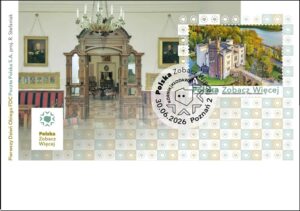
FDC i datownik: ***FDC Kórnik: wnętrza zamku; ***FDC Kłodawa: podziemia kopalni; ***Datownik: mapa Polski z zaznaczeniem obu lokalizacji. Oznaczenie literowe A odpowiada wartości nominalnej znaczka używanego do uiszczenia opłaty za ekonomiczną przesyłkę listową nierejestrowaną w obrocie krajowym w formacie S.
Poland See More – 2026
www.poczta-polska.pl
30-06-2026 … Denomination: stamps without face value … Author of the stamp design: Roch Stefaniak; Number of stamps in issue: 2; Stamp size: 51 x 39,5 mm; Number of stamps in sheet: 8; Paper: Fluorescent; Printing techniques: Offset; Print run: 108 000 pcs; FDC size: 162 mm x 113 mm.
Issue date: 30-06-2026 … The philatelic issue “Poland See More” highlights two outstanding locations in the Greater Poland region: Kórnik Castle and the Underground Tourist Route of the Kłodawa Salt Mine. These sites represent two complementary aspects of Poland’s heritage: cultural legacy and industrial tradition. The sheet consists of 8 stamps arranged in an alternating (combinational) layout, featuring two designs that together create a cohesive visual narrative about history, nature and human achievement.
Stamps and featured locations: órnik Castle – Polish Academy of Sciences Library … Kórnik Castle is one of the most picturesque and best-preserved aristocratic residences in western Poland. Its origins date back to the 15th century, though its current romantic appearance is the result of a 19th-century reconstruction by Count Tytus Działyński, who redesigned it in the English neo-Gothic style. Over the centuries, the castle was owned by prominent noble families such as the Górka, Czarnkowski, Działyński and Zamoyski families. The interiors still retain authentic furnishings from the turn of the 19th and 20th centuries, providing a rare insight into historical life.
Today, the castle houses the Kórnik Library of the Polish Academy of Sciences, one of the most valuable manuscript and rare book collections in Poland, containing documents of immense historical significance.
Surrounding the castle is the renowned Kórnik Arboretum, one of the oldest and richest dendrological gardens in Poland, home to approximately 3,500 species of trees and shrubs from around the world. In spring, it attracts thousands of visitors thanks to its spectacular magnolia blossoms. The castle is also associated with the famous legend of the “White Lady”, believed to be the spirit of Teofila Działyńska, which adds a layer of mystery and cultural storytelling to the site. The year 2026 marks a special double anniversary: ***600 years of Kórnik Castle; ***200 years of the Kórnik Library.
Kłodawa Salt Mine – Underground Tourist Route … The Kłodawa Salt Mine is the largest and deepest active rock salt mine in Poland, located in central Poland. Its deposits were formed approximately 250 million years ago, making them among the oldest natural resources in the region. Mining operations reach depths of up to 750 meters, while the underground tourist route allows visitors to descend to approximately 600 meters below ground level.
Visitors can explore: ***vast salt chambers; ***underground corridors and mining tunnels; ***natural and man-made rock formations. A unique feature of the mine is its range of salt colors, from classic white to naturally pink salt, rarely found in other European mines.
The site combines several functions: ***industrial; ***educational; ***tourist. It offers insight into both the geological history of the region and the specialized work of miners.
The sheet is enriched with additional narrative elements: ***portrait of Tytus Działyński, symbolizing cultural heritage; ***statue of Skarbnik, the legendary guardian spirit of the mine; ***decorative pattern featuring the outline of Poland and arrows (identity of the series); ***“Polska Zobacz Więcej” typographic elements encouraging exploration. FDC and postmark: ***FDC (Kórnik): castle interiors; ***FDC (Kłodawa): underground chambers; ***Postmark: outline of Poland with both locations marked.
Zwierzęta domowe – 2026
www.poczta-polska.pl
30-06-2026 … Nominał znaczka: beznominałowy … Autor projektu: Agnieszka Sancewicz; Ilość znaczków w emisji: 4; Format znaczka: 31,25 x 43mm; Format bloku: 125 x 152,25 mm; Ilość znaczków w bloku: 4; Technika druku / Papier: Offset / fluorescencyjny; Nakład: 90 000 szt.; Format koperty FDC: 215 mm x 108 mm.
Data emisji: 30-06-2026 … Emisja filatelistyczna „Zwierzęta domowe” prezentuje wybrane gatunki i rasy zwierząt towarzyszących człowiekowi, ukazując ich różnorodność, urodę oraz wyjątkowe cechy biologiczne i behawioralne. Blok składa się z 4 znaczków pocztowych, z których każdy przedstawia inne popularne zwierzę domowe – od ptaka śpiewającego, przez niewielkiego ssaka, po kota rasowego i egzotyczną rybę akwariową. Całość podkreśla rolę zwierząt w życiu człowieka oraz ich znaczenie jako towarzyszy codzienności.
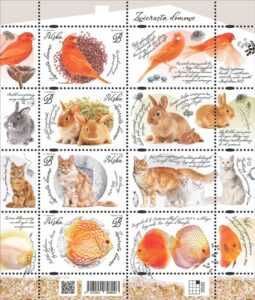
Na znaczkach widnieją: ***Kanarek czerwony (Serinus canaria) … Barwa czerwonego upierzenia została uzyskana poprzez krzyżowanie z czyżem czerwonym. Znanych jest wiele odmian kolorystycznych kanarków – od zielonych po intensywnie czerwone. Śpiewają wyłącznie samce, a konkursy śpiewu i wyglądu są popularne wśród hodowców.
***Królik miniaturowy (Oryctolagus cuniculus f. domesticus) … Popularny domowy pupil o wielu odmianach barwnych i typach umaszczenia. Jest zwierzęciem delikatnym, wymagającym odpowiedniej diety i opieki. Charakteryzuje się szerokim polem widzenia (ok. 300°) oraz dużą wrażliwością na ruch.
***Kot Maine Coon (Felis catus) … Jedna z największych ras kotów domowych. Znany z łagodnego charakteru i imponujących rozmiarów. Jego charakterystyczną cechą są pędzelki na uszach. Wymaga starannej pielęgnacji i odpowiedniego żywienia.
***Paletka – dyskowiec (Symphysodon discus) … Egzotyczna ryba pochodząca z Amazonii. Wymaga specyficznych warunków hodowlanych – ciepłej, miękkiej i dobrze natlenionej wody. Znana z opieki nad potomstwem oraz pięknego, symetrycznego ubarwienia.

Na kopertach Pierwszego Dnia Obiegu przedstawiono: ***królika miniaturowego; ***kota Maine Coon. Fotografie podkreślają urok i indywidualne cechy wybranych zwierząt. Projekt konsultowano z udziałem: dr. Andrzeja Kruszewicza, dyrektora Miejskiego Ogrodu Zoologicznego w Warszawie. Oznaczenie literowe B odpowiada wartości nominalnej znaczka używanego do uiszczenia opłaty za priorytetową przesyłkę listową nierejestrowaną w obrocie krajowym w formacie S.
Pets – 2026
www.poczta-polska.pl
30-06-2026 … Denomination: stamps without face value … Author of the stamp design: Agnieszka Sancewicz; Number of stamps in issue: 4; Stamp size: 31,25 x 43 mm; Block size: 125 x 152,25 mm; Number of stamps in block: 4; Paper: Fluorescent; Printing techniques: Offset; Sales sheet: 6; Print run: 90 000 pcs; FDC size: 215 mm x 108 mm.
Issue date: 30-06-2026 … The philatelic issue “Domestic Animals” presents selected species and breeds that accompany humans in everyday life, highlighting their diversity, appearance and unique biological and behavioral features.
The block consists of 4 postage stamps, each showing a different domestic animal — from a singing bird, through a small mammal, to a pedigree cat and an exotic aquarium fish. The issue emphasizes the important role of animals as companions in human life.
Stamps include: ***Red Canary (Serinus canaria) … The red coloration of canaries was achieved through crossbreeding with the red siskin from South America. Today, there are nearly 100 color varieties, ranging from green (wild type) to white, yellow and red, with various patterns. Only males sing, while females produce softer sounds. Canary singing competitions and beauty contests are widely organized.
***Miniature Rabbit (Oryctolagus cuniculus f. domesticus) … Miniature rabbits were first bred over 100 years ago in England. Today, they exist in many forms: white, brown, black, spotted, long‑haired, lionhead and lop‑eared. They weigh up to approximately 3.5 kg and are popular pets, but require careful care, vaccinations and a balanced diet enriched with herbs. Their field of vision reaches up to 300 degrees, allowing them to detect movement very effectively.
***Maine Coon Cat (Felis catus) … First shown at exhibitions in New York in 1860, the Maine Coon is one of the largest domestic cat breeds, with males reaching up to 11 kg. These cats are known for their gentle temperament, but require regular grooming. Their distinctive feature is tufted ears resembling those of a lynx. Despite past myths, the breed is not a hybrid with raccoons or wild animals.
***Discus Fish (Symphysodon discus) … This striking fish originates from the Amazon Basin. It thrives in warm (27–30°C), soft and slightly acidic water. Breeding discus fish requires experience due to their demanding environmental needs. A unique trait is their parental care — fry feed on a secretion from the parents’ skin during early life. Adult fish can grow up to 20 cm in diameter.
The First Day Covers present: ***a miniature rabbit; ***a Maine Coon cat. The images emphasize the individuality and charm of selected domestic animals. The issue was developed with expert consultation from: Dr. Andrzej Kruszewicz, Director of the Warsaw Zoo.
Historia monety polskiej –
1 złoty II Rzeczypospolitej
www.nbp.pl
Narodowy Bank Polski jest centralnym bankiem państwa odpowiadającym za politykę pieniężną i stabilność cen. Jego funkcje określa Konstytucja Rzeczypospolitej Polskiej i ustawa o NBP. NBP ma wyłączne prawo emisji pieniądza. Jako bank centralny nie prowadzi rachunków bankowych obywateli, nie przyjmuje od nich lokat, nie udziela kredytów. Prowadzi natomiast obsługę budżetu państwa, a także podmiotów sektora finansów publicznych. Gromadzi rezerwy walutowe państwa i zarządza nimi. Pełni funkcję banku banków, tworząc warunki do działania systemu bankowego. Jest również jednym z najważniejszych ośrodków naukowo-analitycznych w dziedzinie ekonomii i rynków finansowych.
Emisja wartości kolekcjonerskich stanowi okazję do upamiętniania ważnych historycznych rocznic i postaci oraz do rozwijania zainteresowań polską kulturą, nauką i tradycją. 21 lipca 2026 roku Narodowy Bank Polski wprowadził do obiegu srebrną monetę o nominale 20 zł „Historia monety polskiej” – „1 złoty II Rzeczypospolitej”
Nominał: 20 zł … metal: Ag 925/1000; stempel: lustrzany; średnica: 38,61 mm; masa: 28,28 g; brzeg (bok): gładki; nakład: do 10 000 szt.; Projekt: Dominika Karpińska-Kopiec; Emitent: NBP Na zlecenie NBP monety wyprodukowała Mennica Polska SA.
Oczywiste jest, że państwo polskie po odzyskaniu niepodległości w 1918 r. musiało stworzyć własny system pieniężny. Pierwszą walutą była marka polska, która jednak szybko uległa dewaluacji. W 1924 r., na mocy ustawy z 11 stycznia tegoż roku, została ona zastąpiona nową jednostką monetarną – złotym. Po raz pierwszy w naszych dziejach 1 złoty był równy 100 groszom. Pierwotnie przewidywano emisję monet aż 13 nominałów, bitych w złocie, srebrze, niklu i brązie. Później uwarunkowania nieco zredukowały ten asortyment, przede wszystkim w zakresie monety złotej. Wobec olbrzymiego zapotrzebowania na ten tak zróżnicowany pieniądz bity powstała konieczność złożenia zamówień aż w siedmiu mennicach europejskich i jednej amerykańskiej. Łącznie wybiły one 436 mln polskich monet.
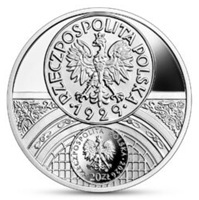
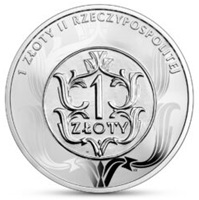
Dalsze zapotrzebowanie na monety zaczęła stopniowo pokrywać mennica warszawska, którą utworzono na Pradze przy ul. Markowskiej. Jej uroczyste otwarcie w obecności prezydenta Rzeczypospolitej Stanisława Wojciechowskiego nastąpiło 14 kwietnia 1924 r. Początkowo wybijano w niej jedynie monety najniższych nominałów – 1 grosz, 2 grosze i 5 groszy. Z czasem pojawiły się również monety bardziej wartościowe. Następowały też zmiany całego systemu monetarnego. W związku z tym obniżono zawartość kruszcu w monetach, a dotychczas srebrne monety 1-złotowe zaczęto bić w czystym niklu. Ich nowy projekt stworzył artysta rzeźbiarz Mieczysław Kotarbiński. Monety te na stronie awersowej noszą wyobrażenie ukoronowanego orła białego, a w otoku napis: RZECZPOSPOLITA POLSKA • 1929 •. Stronę rewersową natomiast zajmuje w całości – pięknie ozdobiony – nominał monety: 1 ZŁOTY.
Moneta kolekcjonerska w pełni wykorzystuje wizerunki przedstawionej wyżej monety zabytkowej. I tak na nowym awersie widzimy jej całą stronę główną z orłem białym i rokiem 1929. Tło stanowi odwzorowanie ozdobnego portalu nad wejściem do głównej sali Banku Polskiego SA w Warszawie, który mieścił się wówczas przy ul. Bielańskiej. To samo tło, ale w dolnej części, posłużyło również dla okręgu z wizerunkiem orła ustalonym dla godła państwa, napisem RZECZPOSPOLITA POLSKA, rokiem emisji 2026 oraz nominałem 20 ZŁ. W ten sposób powstała interesująca kompozycja, dzięki której można dostrzec wielkie podobieństwo godła państwowego obowiązującego w 1929 r. i po upływie niemal stulecia – w 2026 r.
Rewers nowej monety kolekcjonerskiej niesie przekaz prosty w odbiorze – odtwarza w całości rewers monety zabytkowej. Widzimy tam zatem napis 1 ZŁOTY otoczony bardzo finezyjnym ornamentem. Tłem wypełniającym pozostałą część monety jest powtórzenie tego ornamentu w większej skali. Całość dopełnia napis w górnej części otoku, przedstawiający temat monety: 1 ZŁOTY II RZECZYPOSPOLITEJ. Informacja: Stanisław Suchodolski.
History of the Polish Coin –
1 złoty of the Second Polish Republic
www.nbp.pl
Narodowy Bank Polski is the central bank of the State, responsible for its monetary policy and price stability. The Bank’s functions are described in the Constitution of the Republic of Poland and the Act on NBP. NBP holds the exclusive right to issue the currency of the Republic of Poland. As the central bank, it does not provide accounts for the general public, accept deposits from or extend loans to individuals. It acts as a banker to the State budget and public sector entities. NBP also holds and manages the foreign exchange reserves of the State. Finally, it functions as a banker to banks, creating conditions for the operation of the Polish banking system. Narodowy Bank Polski is one of the most important research and analytical centres in the fields of economics and financial markets.
Issuing collector items is an occasion to commemorate important historic figures and anniversaries, as well as to develop the interest of the public in Polish culture, science and tradition. On 21 July 2026, Narodowy Bank Polski issued into circulation a silver coin of the series “History of the Polish Coin” – “1 złoty of the Second Polish Republic”, with a face value of 20 złoty.
Face value: 20 zł … Metal: Ag 925/1000; Finish: proof; Diameter: 38.61 mm; Weight: 28.28 g; Edge (side): plain; Mintage: up to 10,000 pcs; Design: Dominika Karpińska-Kopiec; Issuer: Narodowy Bank Polski The coins, commissioned by Narodowy Bank Polski, were struck by Mennica Polska SA.
There is no doubt that after regaining independence in 1918 the Polish state had to establish its own monetary system. Its first currency was the Polish mark, however, it quickly lost its value. In 1924, pursuant to the Act of 11 January of that year, it was replaced by a new monetary unit – the złoty. For the first time in our history, 1 złoty was equal to 100 grosz. Originally, it was planned to issue coins in as many as 13 denominations, struck in gold, silver, nickel and bronze. Subsequently, circumstances led to a slight reduction in the range of coins available, particularly with regard to gold coins. In view of the enormous demand for the highly varied coinage, it became necessary to place orders with as many as seven European mints and an American one. In total, 436 million Polish coins were struck.
The Polish State Mint, established in Markowska Street in the Praga district of Warsaw, gradually began to meet the growing demand for coins. Its grand opening on 14 April 1924 was attended by the President of the Republic of Poland Stanisław Wojciechowski. Initially, only coins of the lowest denominations were minted there – 1 grosz, 2 grosz, and 5 grosz. Over time coins of higher value also began to appear. Changes to the entire monetary system were taking place as well. As a result, the metal content of coins was reduced, and the previously silver 1 złoty coins were minted in pure nickel. Their new design was created by the sculptor Mieczysław Kotarbiński. The obverse of these coins features an image of a crowned white eagle, with the inscription: RZECZPOSPOLITA POLSKA (Republic of Poland) • 1929 • along the rim. Meanwhile the reverse is entirely dedicated to the beautifully decorated face value of the coin: 1 ZŁOTY.
The images of the historic coin shown above have been fully used in the collector coin. The new obverse shows the entire front side of the coin, featuring a white eagle and the year 1929. The background depicts the decorative portal above the entrance to the main hall of Bank Polski SA in Warsaw, which was located in Bielańska Street at the time. In the bottom part, the same background was also used for the circle featuring the image of the eagle established as the state emblem, the inscription RZECZPOSPOLITA POLSKA, the year of issue 2026, and the face value of 20 ZŁ. This resulted in an interesting composition that demonstrates the striking similarity between the state emblem in use in 1929 and, almost a century later, in 2026.
The reverse of the new collector coin conveys a simple message – it reproduces in its entirety the reverse of the historic coin. We can therefore see the inscription “1 ZŁOTY” framed by a very sophisticated ornament. The background filling the remainder of the coin features a largerscale repetition of this ornament. The design is completed by an inscription in the top part of the rim, representing the theme of the coin: 1 ZŁOTY II RZECZYPOSPOLITEJ (1 złoty of the Second Polish Republic). Info: Stanisław Suchodolski.
Indigenous Leaders (2026):
Booklet of six Permanent™ stamps
www.canadapost.ca
About the issue … Launched in 2022, this series highlights the contributions of modern-day First Nations, Inuit and Métis leaders who have dedicated their lives to preserving their culture and improving the quality of life of Indigenous Peoples in Canada.
About Bryan Trottier … Bryan Trottier (b. 1956 in Val Marie, Saskatchewan) is of Cree, Métis and Chippewa heritage and grew up in a music-filled household that embraced Indigenous identity. After learning to skate on a creek his father cleared, he started playing competitive hockey at age eight. Drafted by the New York Islanders® in 1974, Trottier went on to win the Stanley Cup® six times as a player and five major National Hockey League® honours, including league Most Valuable Player (MVP) and playoffs MVP. He remains the Islanders’ all-time leader in points and assists.

He also won a Stanley Cup as an assistant coach with the Colorado Avalanche®. A Hockey Hall of Famer and member of Canada’s Sports Hall of Fame, Trottier is widely regarded as one of the game’s greats. Beyond the rink, he has championed Indigenous youth through sports. He co-founded the Aboriginal Alumni Hockey Team and has visited communities across Canada, offering clinics and mentorship. His outreach emphasizes education, mental health and the power of sports to open doors. In 2022, the APTN Bryan Trottier Most Valuable Indigenous Player Award was established in his honour. A role model and mentor, Trottier continues to inspire generations of Indigenous athletes to pursue excellence on and off the ice.
About the design … This issue was designed by Tétro. This design features a semi-transparent image of a Bryan Trottier and young hockey players over an orange to blue gradient background, with bold white block lettering.
The cancel mark is a silhouette of Trottier playing hockey. NHL, the NHL Shield and the word mark and image of the Stanley Cup are registered trademarks of the National Hockey League. NHL and NHL team marks are the property of the NHL and its teams. © 2026 NHL. All Rights Reserved. Cancellation Site: Val Marie, Saskatchewan; Stamp Designer: Tétro; Quantity Produced: 5,000; Issue Date: June 19, 2026..

Indigenous Leaders (2026): Bryan Trottier – Official First Day Cover … This three-stamp issue is the fifth set in the Indigenous Leaders series. It celebrates Indigenous leadership in sport, honouring three figures — Wilton Littlechild, Bryan Trottier and Edward Lennie — whose contributions have shaped athletic excellence and cultural pride across Indigenous communities. This year’s honourees were chosen in consultation with the Assembly of First Nations, the Métis National Council and Inuit Tapiriit Kanatami. The Bryan Trottier Official First Day Cover is cancelled in Val Marie, Saskatchewan. The 2026 Indigenous Leaders stamp issue also includes a booklet of six Permanent™ domestic rate stamps, including two of each of the three designs in the set. Official First Day Covers for each design in the issue are also available. Each product is sold separately.
About the issue … Launched in 2022, this series highlights the contributions of modern-day First Nations, Inuit and Métis leaders who have dedicated their lives to preserving their culture and improving the quality of life of Indigenous Peoples in Canada.
About Edward Lennie … Known as the father of the Northern Games, Charles Edward Inglangasak Lennie (1934-2020) dedicated his life to promoting and preserving Inuit sports. Born near Imaryuk (Husky Lakes) in the Northwest Territories, he grew concerned that traditional games – rooted in the strength, agility and endurance needed when living out on the land – were being forgotten. To keep those traditions alive, Lennie began teaching them to youth in his living room, transforming his home in Inuvik into a cultural gathering place. It was Lennie’s leadership that helped elevate Indigenous sports to the world stage.
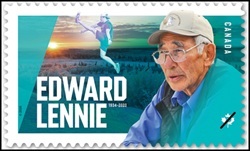
In 1970, he helped found the Northern Games and successfully advocated for Inuit sports to be showcased at the inaugural Arctic Winter Games. Lennie coached athletes in eight traditional events, including the kneel jump, the two-foot-high kick and the arm pull. Traditional Arctic sports continued to gain recognition when they appeared at the 2007 Canada Winter Games and as demonstrations at the 2010 Olympic Winter Games in Vancouver. Lennie received a National Aboriginal Achievement Award (now Indspire Awards) in 2003 and was posthumously inducted into Canada’s Sports Hall of Fame in 2022.
About the design … This issue was designed by Tétro. Edward Lennie holds a high kick stand while Mickey Gordon performs the one-foot-high kick. The photo is set against a soft gradient background with large white lettering. The cancel mark is a line drawing of an Inuk holding a harpoon, the logo of the Northern Games Society. Cancellation Site: Inuvik, Northwest Territories; Stamp Designer: Tétro; Quantity Produced : 5,000; Issue Date: June 19, 2026.

Indigenous Leaders (2026): Edward Lennie – Official First Day Cover … This three-stamp issue is the fifth set in the Indigenous Leaders series. It celebrates Indigenous leadership in sport, honouring three figures — Wilton Littlechild, Bryan Trottier and Edward Lennie — whose contributions have shaped athletic excellence and cultural pride across Indigenous communities. This year’s honourees were chosen in consultation with the Assembly of First Nations, the Métis National Council and Inuit Tapiriit Kanatami. The Edward Lennie Official First Day Cover is cancelled in Inuvik, Northwest Territories. The 2026 Indigenous Leaders stamp issue also includes a booklet of six Permanent™ domestic rate stamps, including two of each of the three designs in the set. Official First Day Covers for each design in the issue are also available. Each product is sold separately.
About the issue … Launched in 2022, this series highlights the contributions of modern-day First Nations, Inuit and Métis leaders who have dedicated their lives to preserving their culture and improving the quality of life of Indigenous Peoples in Canada.
About Wilton Littlechild … Jacob Wilton “Willie” Littlechild, C.C., (b. 1944 in Hobbema [Maskwacis], Alberta) is a trailblazer in Indigenous sports and advocacy. A residential school Survivor, he endured many years of abuse but ultimately found strength and healing through sports. Excelling in hockey, football, baseball and swimming, he won more than 70 championships and has credited athletics with saving his life. Littlechild earned degrees in physical education before becoming the first Alberta Treaty First Nation person to earn a law degree. He helped establish the National Indian Athletic Association, the North American Indigenous Games and the World Indigenous Nations Games, creating platforms for Indigenous athletes to thrive.
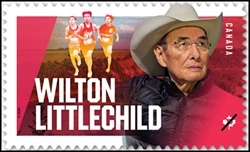
He also coached Alberta’s first all-Indigenous junior hockey team and was inducted into several sports halls of fame, including Canada’s Sports Hall of Fame (2018). A former member of Parliament and Commissioner of the Truth and Reconciliation Commission, Littlechild helped to draft the United Nations Declaration on the Rights of Indigenous Peoples and the American Declaration on the Rights of Indigenous Peoples and to secure Indigenous and Treaty rights in Canada’s Constitution. Bestowed with the Alberta Order of Excellence, he remains a symbol of resilience and a champion of Indigenous rights and sports.
About the design … This issue was designed by Tétro. The front of the OFDC shows Wilton Littlechild in his traditional headdress. The image is in warm gradient tones and set amid bold white typography. The cancel mark is an eagle feather with a figure within it seen in motion. Stamp Designer: Tétro; Quantity Produced: 5,000; Cancellation Site: Maskwacis, Alberta; Issue Date: June 19, 2026.
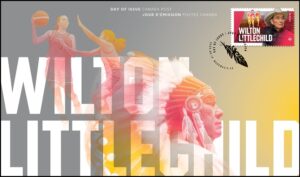
Indigenous Leaders (2026): Wilton Littlechild – Official First Day Cover … This three-stamp issue is the fifth set in the Indigenous Leaders series. It celebrates Indigenous leadership in sport, honouring three figures — Wilton Littlechild, Bryan Trottier and Edward Lennie — whose contributions have shaped athletic excellence and cultural pride across Indigenous communities. This year’s honourees were chosen in consultation with the Assembly of First Nations, the Métis National Council and Inuit Tapiriit Kanatami. The Wilton Littlechild Official First Day Cover is cancelled in Maskwacis, Alberta. The 2026 Indigenous Leaders stamp issue also includes a booklet of six Permanent™ domestic rate stamps, including two of each of the three designs in the set. Official First Day Covers for each design in the issue are also available. Each product is sold separately.
Turtle Island – $20 Fine Silver Coin
www.mint.ca
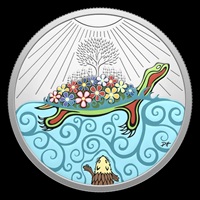
Turtle Island, a celebration of creation and connection. Inspired by the Ojibwe creation story of Turtle Island—a sacred tale of renewal, courage and kinship—this 1 oz. 99.99% pure silver coin honours the deep wisdom of Indigenous storytelling. The colourful scene envisions the moment the world was formed upon the turtle’s back, after the muskrat’s brave dive brought forth the soil that made life possible. With trees and flowers now rooted in harmony, Turtle Island is a living story of resilience and respect, reminding us that when we care for the land and its creatures, we nurture the future of all our communities. Where water, land and spirit come together in a timeless balance.
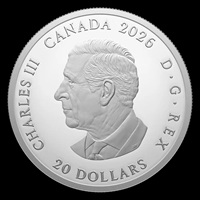
Face Value: $20 … Composition: 99.99% pure silver; Mintage: 5,000; Weight: 31.39 g; Diameter: 38 mm; Edge: Serrated; Finish: Proof; Artist: Patrick Hunter (reverse), Steven Rosati (obverse); Packaging: Black clamshell with black beauty box.
DID YOU KNOW? … Many versions of this creation story exist—here is how the artist tells it: ***Similar to most creation stories, ours begins with a great flood. Creator saw that those in power were corrupt, only seeking more power for themselves, so the rains were sent. To us, water is life; it can be soft and comforting, but it can also move mountains and take life away. ***After the water had settled, many of Earth’s creatures sought refuge upon a giant turtle’s back. If they could just retrieve soil from the bottom of the water, they could create a home again on the turtle. ***Many animals tried, but none could do it—the depth was just too much. Finally, the muskrat said he would try. He was gone a long time, until the creatures noticed his body float to the surface, but in his paw was the soil needed to begin again. It was placed on the turtle’s back and land began to form in all directions, becoming a refuge for all.
The reverse design by Ojibwe artist Patrick Hunter is a visual retelling of the Ojibwe creation story of Turtle Island, capturing the moment the world was shaped by the strengths and actions of Earth’s creatures. The muskrat is shown beneath gently swirling waters, having retrieved the soil that formed the foundation for life—a symbol of its bravery and sacrifice. Above, the giant turtle—presented in a Woodland art style—carries on its back the flourishing flowers and trees, including the Tree of Life, representing harmony and the connection among all living things. Above, the sun and its rays represent hope and the promise of a new day. The obverse features the effigy of His Majesty King Charles III by Canadian artist Steven Rosati.
Patrick Hunter, Artist … “My design celebrates the creation story of what is now called North America but to us, the Ojibwe, it has always, and will forever be, Turtle Island. Here, the muskrat’s determination to bring life-saving soil to the surface, and its ultimate sacrifice, reminds us that bravery comes in many sizes—it only takes one individual to make a difference and change the world for the better. In the present time, sharing stories from other cultures is fundamental to guard against erasure, and creating a coin designed to endure for generations is one way to ensure that the stories of my culture are carried forward.”
Andy Rickard, Former Chief of Garden River First Nation … “The Turtle Island design honours the deep connection Indigenous Peoples hold with Creation. It reflects balance, respect, and our shared responsibility to protect the land and waters that sustain us.”
Triple Maple – $50 Fine Silver Coin
www.mint.ca
Triple Maple returns in 2026 with a striking addition: black rhodium plating that offers maximum contrast. Unlike the 1 oz. silver and 1 oz. gold editions, this 5 oz. Triple Maple uses the black rhodium as an accent against the brilliant field, with the leaves rendered in black for a sleek, contemporary effect. They remain defined by their unmistakable contours, their shapes made more prominent by the play of light and shadow in this modern reimagining. Classic engraving. Classic Canadiana.
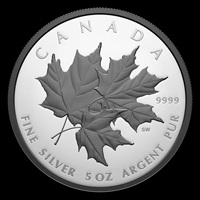
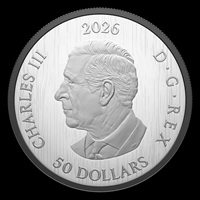
Face Value: $50 … Composition: 99.99% pure silver, with rhodium plating; Mintage:1, 550; Weight: 157.6 g; Diameter: 65.25 mm; Edge: Serrated; Finish: Proof; Artist: Stan Witten (reverse), Steven Rosati (obverse); Packaging: Black clamshell with black beauty box.
DID YOU KNOW? … Acer saccharum, the sugar maple, is arguably the most famous maple tree in Canada—it’s the preferred species for maple syrup production, and it’s abundantly found in our eastern forests.
The reverse design by retired Senior Engraver Stan Witten features an arrangement of three sugar maple (Acer saccharum) leaves. Gently overlapping, the leaves are plated with black rhodium and tilted towards the right to convey movement, as though the leaves are falling or have just landed on the ground, while still allowing a clear view of their intricate vein pattern. The obverse features the effigy of His Majesty King Charles III by Canadian artist Steven Rosati.
Stan Witten, Senior Engraver … “Maples are beautiful year-round, even in winter, and I fell in love with them when I moved to Ottawa—I even planted a few in our backyard, and those trees provided the inspiration for this design. In the fall of 2023, as the leaves were coming down, I gathered some and placed them on the ground to form the arrangement seen here. After photographing it, I drew a sketch and then sculpted it, taking care to give each leaf a 3D composition by including undulations that form subtle valleys, and concave areas that create visual movement.
That’s the key to creating visual interest in a shape that, upon first glance, seems so simple (although it’s not): depending on the art style, a subtle 3D form is more interesting than a series of carved lines. And a strong central image, with a lot of negative space to keep the focus on the main subject—in this case, the maple leaves—makes for a classic design with lasting appeal. These leaves are presented cleanly and without any attachments; they could be interpreted as being in free flight or laying on the ground, and as being symbolic of the passage of time. Having them lean to the right adds a clockwise circular flow that complements the coin shape, while still allowing a great view of the leaf that is so symbolic of Canada and our wild places, which have inspired me throughout my life and career.”
Triple Maple – $20 Fine Silver Coin
www.mint.ca
Triple Maple returns in 2026 with a striking addition: black rhodium plating that offers maximum contrast. On this 1 oz. 99.99% pure silver coin, the plating forms a satin black backdrop that lets the maple leaf arrangement by retired Senior Engraver Stan Witten take centre stage. Emerging from the darkness in quiet brilliance, the leaves’ contours catch the light in sculptural relief—a luminous reminder of nature’s beauty in its purest form. Classic engraving. Classic Canadiana.
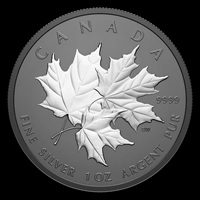
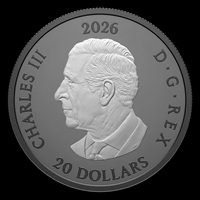
Face Value: $20 … Composition: 99.99% pure silver, with rhodium plating; Mintage:7, 000; Weight: 31.39 g; Diameter: 38 mm; Edge: Serrated; Finish: Matte Proof; Artist: Stan Witten (reverse), Steven Rosati (obverse); Packaging: Black clamshell with black beauty box.
DID YOU KNOW? … Acer saccharum, the sugar maple, is arguably the most famous maple tree in Canada—it’s the preferred species for maple syrup production, and it’s abundantly found in our eastern forests.
The reverse design by retired Senior Engraver Stan Witten features an arrangement of three sugar maple (Acer saccharum) leaves, set against a black rhodium plated field. Gently overlapping, the leaves are tilted towards the right to convey movement, as though the leaves are falling or have just landed on the ground, while still allowing a clear view of their intricate vein pattern. The obverse features a black rhodium plated field and the effigy of His Majesty King Charles III by Canadian artist Steven Rosati.
Stan Witten, Retired Senior Engraver … “Maples are beautiful year-round, even in winter, and I fell in love with them when I moved to Ottawa—I even planted a few in our backyard, and those trees provided the inspiration for this design. In the fall of 2023, as the leaves were coming down, I gathered some and placed them on the ground to form the arrangement seen here. After photographing it, I drew a sketch and then sculpted it, taking care to give each leaf a 3D composition by including undulations that form subtle valleys, and concave areas that create visual movement.
That’s the key to creating visual interest in a shape that, upon first glance, seems so simple (although it’s not): depending on the art style, a subtle 3D form is more interesting than a series of carved lines. And a strong central image, with a lot of negative space to keep the focus on the main subject—in this case, the maple leaves—makes for a classic design with lasting appeal. These leaves are presented cleanly and without any attachments; they could be interpreted as being in free flight or laying on the ground, and as being symbolic of the passage of time. Having them lean to the right adds a clockwise circular flow that complements the coin shape, while still allowing a great view of the leaf that is so symbolic of Canada and our wild places, which have inspired me throughout my life and career.”
Sable Island Horses – $20 Fine Silver Coin
www.mint.ca
Discover the Sable Island horse, a symbol of resilience and heritage. The Sable Island horse has roamed freely for generations, largely untouched by human influence on a remote sandbar off the coast of Nova Scotia. These wild horses have called Sable Island home for nearly 300 years, surviving in isolation and sometimes harsh weather; when a proposed removal sparked a public outcry, formal protections were put in place in 1961 to ensure they remained free and undisturbed. Their enduring spirit is captured on this fine silver coin’s reverse, where the image of a galloping stallion inspires awe and reverence for these creatures who are strong and free, the cherished symbols of resilience, independence and survival. Running wild and free: Celebrate a Canadian equine icon.
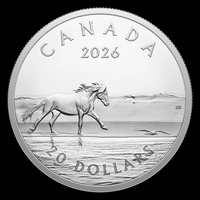
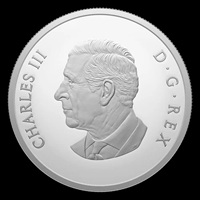
Face Value: $20 … Composition: 99.99% pure silver; Mintage:7, 000; Weight: 31.39 g; Diameter: 38 mm; Edge: Serrated; Finish: Proof; Artist: Sandy Sharkey (reverse), Steven Rosati (obverse); Packaging: Black clamshell with black beauty box.
DID YOU KNOW? … ***Descended from horses introduced in the 1700s, the Sable Island horses faced permanent removal from the island in 1960 when the government proposed to sell the horses due to concerns over malnutrition, inbreeding and harsh conditions. The news touched off a wave of public outcry. Moved by the letters he received from concerned Canadians of all ages, then-Prime Minister John Diefenbaker intervened, and the horses gained protected status in 1961 through an amendment to the Canada Shipping Act, ensuring their survival and permanent place on the island. ***“These particular animals have a long genealogy. They have been with us over a period of several hundred years, and I was naturally very much touched by some of the requests that were made. I had the matter looked into, and I think it may be said with certainty that these animals and their posterity will continue to live on this island.” – The Right Honourable John George Diefenbaker, Prime Minister of Canada from 1957 to 1963, during a House of Commons debate on June 2, 1960. ***In 2013, Sable Island became a National Park Reserve, bringing the island and its famous horses (a naturalized species) under the protection of the Canada National Parks Act, and under the responsibility of Parks Canada.
The reverse design is based on the photograph The Stallion and the Sea taken by Canadian equine photographer Sandy Sharkey during a visit to Sable Island, Nova Scotia, in 2014. The image shows one of the island’s famous wild horses, a stallion, galloping at full speed on the sandy beach. The obverse features the effigy of His Majesty King Charles III by Canadian artist Steven Rosati.
Sandy Sharkey, Artist … “On a windswept island off the coast of Nova Scotia, the wild horses of Sable Island live in harmony with the sea, the wind, and the shifting sands. It is a great honour to have my image ‘The Stallion and the Sea’ adorn an official coin released by the Royal Canadian Mint, featuring a stallion charging down the beach, mane flying, with a herring gull as a feathery escort. Adored around the world, the wild horses are a source of pride for all Canadians, symbolizing the free spirit that exists in all of us.”
Zoe Lucas, President, Sable Island Institute …“The Sable Island horses are iconic, representing the wildness, isolation, mystery, beauty, and energy of the island. Like the island itself, the horses’ habitat is largely shaped by the ocean and weather, by wind and waves. They are the only terrestrial mammal on Sable Island, and they have an important ecological role, sharing their home with nesting and migrant birds, freshwater fishes, and invertebrates. Some of these species, such as the tiny Sable Island Sweat Bee, are found only on the island. Although frequently windy, the island’s climate is milder than that of mainland Nova Scotia. The horses’ habitat is seasonally changing, ranging from some challenging conditions during winter, to the lush abundance of summer when hundreds of plant species thrive in rich communities.
Stands of marram grass and beach pea cloak the dunes and are among the primary forage plants for the horses. In more sheltered inland fields and valleys a wide variety of vegetation flourishes—including wild rose, bayberry, juniper, cranberry, goldenrod, aster, and six species of orchid. The source of fresh water on Sable Island is rain and snow melt which accumulate in a natural underground reservoir. In low areas between the dunes, this water occurs as fresh water ponds and seasonal pools. The horses also frequently drink from shallow waterholes they dig in dune hollows and sand flats. The Sable Island horses are well known internationally, and are recognized as a unique population, valued and appreciated both scientifically and culturally. They are the subject of long-term research programs and have been featured in many artworks—painting, photography, film, dance, and word. In 2008, the Nova Scotia Legislature passed a bill declaring them to be the Provincial Horse of Nova Scotia.”
Murano Silvery Blue Butterfly –
Half Kilo Fine Silver Coin
www.mint.ca
Another exquisite Murano butterfly has landed. The follow-up to 2025’s Murano Monarch Butterfly, this half-kilo coin is adorned with a handcrafted Murano glass resembling the silvery blue, and as the name suggests, this butterfly’s wings are a beautiful blue colour with a silvery spotted underside. Its distinctive colouring is best viewed in 3D form, as presented on this selectively gold-plated coin, where the Murano butterfly sits perched on an engraved arrangement of zinnias and marigolds— two pollinator-friendly annuals that bring bold colour to gardens across Canada. Murano glass meets engraved botanical art.
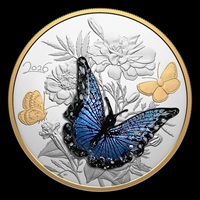
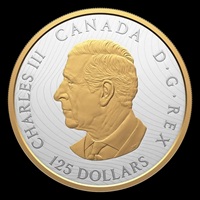
Face Value: $125 … Composition: 99.99% pure silver, with selective gold plating and a handcrafted Murano glass butterfly; Mintage:800; Weight: 502.5 g; Diameter: 85.52 mm; Edge: Serrated; Finish: Proof; Artist: Marie-Élaine Cusson (reverse), Steven Rosati (obverse); Packaging: Dome capsule, wood base display case with black set up box.
DID YOU KNOW? … ***Home to the glassmakers of Venice since 1291, Murano, Italy, is one of the world’s most prominent centres of glassmaking, and its handcrafted glass artworks are renowned for their vibrant colours and highly intricate designs. There’s no paint involved – those captivating colours are achieved by mixing colourless glass with minerals and oxides, such as zinc for white. ***Unlike the monarch butterfly, silvery blue butterflies don’t have a sole host plant. Larvae generally hatch and feed on plants belonging to the legume or pea family, such as alfalfa and cow vetch, while adults feed on nectar from various flowering plants.
Based on an original watercolour painting by Canadian artist Marie-Élaine Cusson, the reverse design features two engraved and gold-plated silvery blue butterflies, each positioned in a way that offers a different view of its wings, and a 3D butterfly handcrafted in Murano glass by master glassmaker Vio Col Vetro in Murano, Italy. All three butterflies are drawn to an arrangement of French marigolds and zinnias, two annuals known for attracting pollinators. The obverse features the effigy of His Majesty King Charles III by Canadian artist Steven Rosati.
Marie-Élaine Cusson, Artist … “I always enjoy re-creating the kind of nature scene that I personally would want to stop and contemplate. Here, my wish was for the collector to almost feel the gentle breeze caressing the leaves and flowers, to smell the perfume of the field immersed in morning sunlight, and imagine the butterflies gracefully dancing around the flowers. This artwork was first created with watercolours, a medium I enjoy working with for its fluidity and bold colour effect. The details on both the butterfly’s wings and the flowers were added over top of the watercolours using coloured pencils. The design elements are layered in a way that draws the eye to each individual detail in turn while maintaining a cohesive feeling overall. I particularly enjoy playing with colour combinations to create a harmonious image that is pleasing to the collector’s eye.”
Louis-Remi Labelle, 3D Artist-Engraver … “Having a larger surface to work with definitely changes my approach to the engraving since there’s an opportunity to showcase even more details compared to a smaller coin. As for working with the embellishment, the goal is to ensure all the elements, including the engraving, ultimately complement each other—something that required a bit of planning and a whole lot of teamwork!”