TROYAK EXECUTIVE TEAM is informing all members, colleagues, collectors, and Polonia at large, that Club meetings taking place at John Paul II Polish Cultural Centre, 4300 Cawthra Rd. (just south of Hwy. 403), Mississauga, Ontario. The new members are always welcome. www.polishculturalcentre.ca
ADRES SPOTKAÑ KLUBOWYCH ! Zarząd Główny Klubu “Troyak” informuje wszystkich członków kolekcjonerów, sympatyków oraz całą Polonię, że spotkania klubowe odbywają się w Polskim Centrum Kultury im. Jana Pawła II, przy 4300 Cawthra Rd. (na południe od autostrady 403), Mississauga, Ontario. Zapraszamy nowych członków do prężnego. Klubu “Troyak”. www.polishculturalcentre.ca

“TROYAK” CLUB NEXT MEETINGS …
NASTĘPNE SPOTKANIA KLUBU “TROYAK” …
Sunday 22nd JUNE 2025 @ 4:30 p.m.

July & August 2025 –
Summer break … Letnie wakacje …

TROYAK CLUB @
Roncesvalles Polish Festival 2025
Saturday – September 13th 2025 &
Sunday – September 14th, 2025
https://polishfestival.ca www.kazimierz.org
St. Casimir’s Church
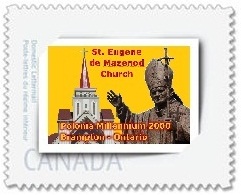
Parish Hall … 156 Roncesvalles Ave. Toronto, Ontario
Stamp Exhibit … Pope John Paul II on World Stamps
and Displays of Coins, Stamps, Collectibles
by Troyak Club Members.
Roncesvalles Polish Festival
www.troyakclub.com
28th September 2025
26th October 2025
23rd November 2025
Sunday – 30th November 2025
@ 9:00 a.m. to 4:00 p.m.
Mississauga Coin & Stamp Show
December 2025 … Happy Holidays!
Wystawa Światowa Expo 2025 Osaka, Kansai w Japonii
World Expo 2025 Osaka, Kansai Japan
www.poczta-polska.pl
2025-04-13 … Nominał znaczka: 12 zł … Autor projektu: Roch Stefaniak; Ilość znaczków w emisji: 1; Format znaczka: 70×90 mm; Technika druku / Papier: Offset / Fluorescencyjny; Nakład: 90 000 szt.; Arkusz sprzedażny: 1.
Wystawa zostanie zorganizowana na sztucznej wyspie Yumeshima na terenie o powierzchni 155 ha podzielonym na 3 części: Świat Pawilonów, Świat Wody i Świat Zieleni. Organizatorzy zakładają, że Wystawę odwiedzi w okresie 6 miesięcy ponad 28 mln osób, w tym 3,5 mln gości zagranicznych.
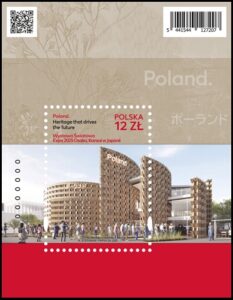
2025-04-13 … Denomination: 12 PLN … Author of the stamp design: Roch Stefaniak; Number of stamps in issue: 1; Stamp size: 70 x 90 mm; Paper: Fluorescent; Printing techniques: Offset; Sales sheet: 1; Print run: 90 000 pcs.
Expo 2025 is an upcoming World Expo organised and sanctioned by the Bureau International des Expositions (BIE), which will be held in Osaka, Japan. It will take place for six months during 2025, opening 13 April 2025 and closing 13 October 2025, for a total of 184 days. This will be the second time Osaka hosts a World Expo, having previously hosted Expo 1970. The event will return to its traditional 5-year scheduling cycle after the 2020 edition was delayed to 2021 due to the COVID-19 pandemic. The projected visitor count is approximately 28 million.
1000. rocznica koronacji Bolesława Chrobrego
1000th Anniversary of the Coronation of Bolesław the Brave
www.poczta-polska.pl
2025-04-18 … Nominał znaczka: 10 zł … Autor projektu: Bożydar Grozdew; Ilość znaczków w emisji: 1; Format znaczka: 75×100 mm; Technika druku / Papier: Offset / Fluorescencyjny; Nakład: 90 000 szt.; Arkusz sprzedażny: 1 w bloku.
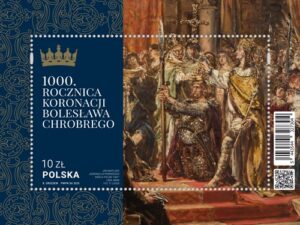
W 2025 roku przypada wyjątkowa, 1000. rocznica koronacji w Archikatedrze Gnieźnieńskiej dwóch pierwszych królów naszego państwa: Bolesława Chrobrego oraz Mieszka II Lamberta. Koronacja Bolesława Chrobrego była jasnym sygnałem dla ówczesnego świata, że młode państwo polskie jest niepodległe i niezależne. Był to początek wzrastania pozycji Polski, na średniowiecznej mapie Europy, która z księstwa przeistoczyła się w królestwo. Z tej okazji Sejm Rzeczypospolitej Polskiej oddaje hołd władcom, którzy 1000 lat temu, będąc spadkobiercami Księcia Mieszka I oraz Księżniczki Dobrawy, kontynuowali dzieło politycznego oraz kulturowego umacniania polskiej państwowości.
Koronacje te nie byłyby możliwe, gdyby nie szereg ważnych wydarzeń, począwszy od legendarnego założenia Gniezna przez Lecha, poprzez Chrzest Polski, męczeńską śmierć Świętego Wojciecha i powstanie pierwszego arcybiskupstwa, a na Zjeździe Gnieźnieńskim skończywszy. Upamiętnienie wstąpienia na tron Bolesława Chrobrego oraz Mieszka II Lamberta jest wspomnieniem wszystkich tych, którzy skupieni wokół idei rodzącego się państwa polskiego, poświęcali czas, energię, a niekiedy i życie, byśmy dziś byli częścią dumnego grona krajów Europy z wielowiekową tradycją państwowości. Pielęgnowanie pamięci o początkach polskiej państwowości jest naszym obowiązkiem, to również świadectwo roli, jaką Polska odgrywała na świecie przez minione tysiąclecie. Sejm Rzeczypospolitej Polskiej, w uznaniu znaczenia tych wydarzeń, owocujących założeniem pierwszej dynastii panującej w historii naszego kraju, ustanawia rok 2025 Rokiem Milenium Koronacji Dwóch Pierwszych Królów Polski w Gnieźnie.
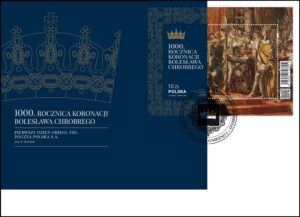
2025-04-18 … Denomination: 10 PLN … Author of the stamp design: Bożydar Grozdew; Number of stamps in issue: 1; Stamp size: 75 x 100 mm; Paper: Fluorescent; Printing techniques: Offset; Sales sheet: 1 in the block; Print run: 90 000 pcs.
The Sejm of Poland has declared 2025 as the Year of the Millennium of the Coronation of Poland’s First Kings, Bolesław Chrobry and Mieszko II Lambert. These historic events, taking place in Gniezno in 1025, established Poland as a sovereign kingdom and demonstrated its growing importance in medieval Europe. The coronation was rooted in a series of significant events: the baptism of Mieszko I in 966, the martyrdom of St. Adalbert, and the establishment of the Gniezno Archdiocese in 1000. These milestones laid the foundation for a strong Polish state, recognized by both the Church and European rulers.
Bolesław Chrobry’s Coronation in 1025 affirmed Poland’s sovereignty, while his son, Mieszko II Lambert, continued his legacy. The 2025 celebration reflects the enduring importance of these monarchs in shaping Poland’s cultural and political identity. Poland commemorates the 1,000th Anniversary of the coronations of its first kings, Bolesław the Brave and Mieszko II, with a series of large-scale events throughout 2025. The celebrations include outdoor spectacles, historical reenactments, festivals, academic conferences, and religious ceremonies centered around the city of Gniezno, where the coronations took place.
Bolesław the Brave was crowned Poland’s first king on April 18, 1025, in the Gniezno Cathedral. His coronation was a pivotal moment that affirmed Poland’s independence and raised its status in medieval Europe. However, his reign was short-lived; he died on June 17, 1025. His son, Mieszko II, was crowned later that year on December 25. Mieszko’s reign was turbulent, marked by conflicts that eventually forced him into exile in 1031.
Bolesław I the Brave (c. 967 – 17 June 1025), less often known as Bolesław the Great, was Duke of Poland from 992 to 1025 and the first King of Poland in 1025. He was also Duke of Bohemia between 1003 and 1004 as Boleslaus IV. A member of the Piast dynasty, Bolesław was a capable monarch and a strong mediator in Central European affairs. He continued to proselytize Western Christianity among his subjects and raised Poland to the rank of a kingdom, thus becoming the first Polish ruler to hold the title of rex, Latin for king.
The son of Mieszko I of Poland by his first wife Dobrawa of Bohemia, Bolesław ruled Lesser Poland already during the final years of Mieszko’s reign. When the country became divided in 992, he banished his father’s widow, Oda of Haldensleben, purged his half-brothers along with their adherents and successfully reunified Poland by 995. As a devout Christian, Bolesław supported the missionary endeavours of Adalbert of Prague and Bruno of Querfurt. The martyrdom of Adalbert in 997 and Bolesław’s successful attempt to ransom the bishop’s remains, paying for their weight in gold, consolidated Poland’s autonomy from the Holy Roman Empire.
At the Congress of Gniezno (11 March 1000), Emperor Otto III permitted the establishment of a Polish church structure with a metropolitan see at Gniezno, independent from the Archbishopric of Magdeburg. Bishoprics were also established in Kraków, Wrocław, and Kołobrzeg, and Bolesław formally repudiated paying tribute to the Empire. Following Otto’s death in 1002, Bolesław fought a series of wars against Otto’s cousin and heir, Henry II, ending in the Peace of Bautzen (1018). In the summer of 1018, in one of his expeditions, Bolesław I captured Kiev, where he installed his son-in-law Sviatopolk I as ruler. According to legend, Bolesław chipped his blade when striking Kiev’s Golden Gate. In honour of this legend, the Szczerbiec (“Jagged Sword”) would later become the coronation sword of Polish kings.
Bolesław is widely considered one of Poland’s most accomplished Piast monarchs; he was an able strategist and statesman, who transformed Poland into an entity comparable to a hereditary monarchy. Bolesław conducted successful military campaigns to the west, south and east of his realm, and conquered territories in modern-day Slovakia, Moravia, Red Ruthenia, Meissen, Lusatia, and Bohemia. He established the “Prince’s Law” and sponsored the construction of churches, monasteries, military forts as well as waterway infrastructure. He also introduced the first Polish monetary unit, the grzywna, divided into 240 denarii, and minted his own coinage.
EUROPA
EUROPE
www.poczta-polska.pl
2025-04-28 … Nominał znaczka: 4.90 zł … Autor projektu: Andrzej Gosik; Ilość znaczków w emisji: 1; Format znaczka: 31,25×43 mm; Technika druku / Papier: Offset / Fluorescencyjny; Nakład: 144 000 szt.; Arkusz sprzedażny: 12.
W 1933 roku na skutek prac melioracyjno-irygacyjnych poziom wody w Jeziorze Biskupińskim obniżył się na tyle, że ponad lustro wody wyłoniły się pozostałości umocnień starożytnej osady. Miejscowi chłopi odnajdywali zabytkowe przedmioty, nie zdając sobie sprawy z ich wartości archeologicznej. Dopiero dzieci uczęszczające do miejscowej szkoły poinformowały o dziwnych znaleziskach nauczyciela Walentego Szwajcera, a ten nagłośnił sprawę. O odkryciu wystających z wody drewnianych bali powiadomił on prof. Józefa Kostrzewskiego z Poznania. Badania wykopaliskowe zostały zainicjowane w roku 1934 i kontynuowano je do wybuchu II wojny światowej. Początkowo ekspedycja dysponowała skromnymi środkami. 22 czerwca 1934 sześcioosobowa ekipa archeologów rozpoczęła prace wyposażona w 360 zł z dwudziestoma bezrobotnymi mężczyznami z Gąsawy i Biskupina do pomocy. Do 1939 prace prowadzono po kilka miesięcy rocznie. Ekspedycją wykopaliskową Uniwersytetu Poznańskiego kierowali prof. Józef Kostrzewski i dr Zdzisław Rajewski.
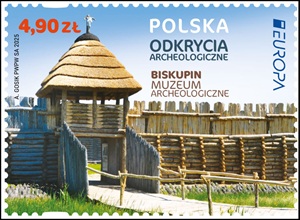
W czasie wojny, w latach 1939–1942, specjalny niemiecki oddział SS-Ausgrabung Urstätt, pod dowództwem Hauptsturmführera prof. Hansa Schleifa prowadził wykopaliska na terenie osady biskupińskiej w celu wykazania jej pragermańskości. Po wojnie ukuto teorię, że ponieważ niemieckie badania nie przyniosły oczekiwanych rezultatów, okupant postanowił zlikwidować stanowisko poprzez zasypanie go ziemią i piaskiem. Efektem miało być to, że część odsłoniętych przed wojną znalezisk nie nadawała się do ponownej ekspozycji. Następnie polscy archeolodzy pod kierunkiem Zdzisława Rajewskiego wznowili badania i kontynuowali je do roku 1974 (w 1950 otwarto muzeum, a w 1951 studencki obóz archeologiczny. Ogółem przebadano ok. 3/4 powierzchni osady. Obecnie większa część obiektu ponownie została zasypana ziemią i torfem.
Badania w Biskupinie – zarówno w okresie międzywojennym, jak i po wojnie – były przykładem najwyższego możliwego wówczas poziomu metodycznego prowadzenia wykopalisk. W Biskupinie w okresie międzywojennym zainicjowano interdyscyplinarne badania paleoekologiczne dokonywano eksperymentów archeologicznych, kładąc w ten sposób podwaliny pod polską archeologię eksperymentalną. Wojciech Kóčka w czasie tych badań po raz pierwszy w Polsce zastosował fotografię dokumentacyjną, wykonywaną aparatem fotograficznym wyniesionym balonem wypełnionym wodorem.
Gród w Biskupinie jest jedynym w Polsce stanowiskiem archeologicznym dla którego opracowano program długoterminowej konserwacji. Konserwacja polega na utrzymywaniu wysokiego poziomu wody w jeziorze oraz wdrożeniu systemu monitorowania parametrów środowiska, dla zapewnienia optymalnych warunków przetrwania autentycznej substancji zabytkowej. 16 września 1994 roku gród w Biskupinie uznany został za pomnik historii Polski. W uzasadnieniu stwierdzono, że zabytek ten nie posiada odpowiedników w swojej skali z tego okresu; porównać go można do osad palowych z neolitu w Szwajcarii, czy też do Pompejów (które pochodzą z innych okresów).
2025-04-28 … Denomination: 4.90 PLN … Author of the stamp design: Andrzej Gosik; Number of stamps in issue: 1; Stamp size: 43×31,25 mm; Paper: Fluorescent; Printing techniques: Offset; Sales sheet: 12; Print run: 144 000 pcs.
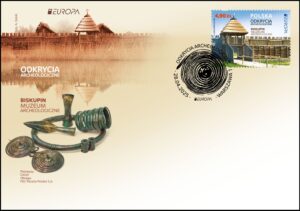
Biskupin is an archaeological site and a life-size model of a late Bronze Age fortified settlement in north-central Poland that also serves as an archaeological open-air museum. When first discovered it was thought to be early evidence of a West Slavic settlement, but archaeologists later confirmed it belonged to the Biskupin group of the Lusatian culture from the 8th century BC.
The Museum is situated on a marshy peninsula in Lake Biskupin, 90 kilometres northeast of Poznań and 8 km south of the small town of Żnin. In the years 1956–2000, it was a division of the National Museum of Archaeology in Warsaw. After the Polish local government reforms of 1998, Biskupin was granted the status of an independent institution known as the Archeological Museum in Biskupin. The site is one of Poland’s official national Historic Monuments (Pomnik historii), as designated September 16, 1994, and tracked by the National Heritage Board of Poland.
85. rocznica zbrodni katyńskiej
www.nbp.pl
Narodowy Bank Polski jest centralnym bankiem państwa odpowiadającym za politykę pieniężną i stabilność cen. Jego funkcje określa Konstytucja Rzeczypospolitej Polskiej i ustawa o NBP. NBP ma wyłączne prawo emisji pieniądza. Jako bank centralny nie prowadzi rachunków bankowych obywateli, nie przyjmuje od nich lokat, nie udziela kredytów. Prowadzi natomiast obsługę budżetu państwa, a także podmiotów sektora finansów publicznych. Gromadzi rezerwy walutowe państwa i zarządza nimi. Pełni funkcję banku banków, tworząc warunki do działania systemu bankowego. Jest również jednym z najważniejszych ośrodków naukowo-analitycznych w dziedzinie ekonomii i rynków finansowych.
Emisja wartości kolekcjonerskich stanowi okazję do upamiętniania ważnych historycznych rocznic i postaci oraz do rozwijania zainteresowań polską kulturą, nauką i tradycją. 8 kwietnia 2025 roku Narodowy Bank Polski wprowadził do obiegu srebrną monetę kolekcjonerską o nominale 50 zł „85. rocznica zbrodni katyńskiej”.
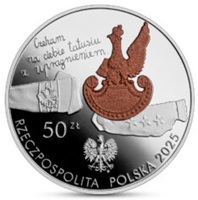
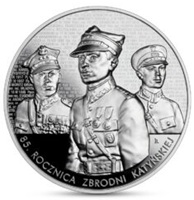
Nominał: 50 zł … metal: Ag 999/1000; stempel: lustrzany, wysoki relief, selektywne platerowanie; średnica: 45,00 mm; masa: 62,20 g; brzeg (bok): gładki; nakład: do 5000 szt.; Projektant: Robert Kotowicz; Emitent: NBP; Na zlecenie NBP monety wyprodukowała Mennica Polska SA. Wizerunki osób oraz przedmiotów przedstawionych na monecie według zdjęć pochodzących ze zbiorów Muzeum Katyńskiego Oddziału Martyrologicznego Muzeum Wojska Polskiego w Warszawie.
Na rewersie monety widnieją symboliczne sylwetki ofiar – oficerów Wojska Polskiego i funkcjonariusza Policji Państwowej, w tle umieszczono fragment Epitafium Katyńskiego zawierającego dane ofiar zbrodni katyńskiej. Na awersie monety odwzorowano orła wojskowego wz. 19 z ułamanym skrzydłem znalezionego w dołach śmierci w Charkowie, a także dwa naramienniki należące do oficera Wojska Polskiego i funkcjonariusza Policji Województwa Śląskiego. Powyżej znajduje się fragment korespondencji pochodzącej z kartki pocztowej wysłanej przez rodzinę do jednego z jeńców.
Po agresji Związku Sowieckiego na Polskę 17 września 1939 r. do niewoli dostało się około 250 tys. żołnierzy Wojska Polskiego i Korpusu Ochrony Pogranicza, funkcjonariuszy Policji Państwowej, Policji Województwa Śląskiego, Straży Więziennej, Straży Granicznej oraz wszystkich pozostałych formacji mundurowych. Do więzień na terenach Kresów Wschodnich, okupowanych przez ZSRS, trafiło też tysiące cywili. Spośród jeńców i więźniów NKWD wyselekcjonowało ponad 20 tys. osób, które zostały rozmieszczone w specjalnych obozach NKWD w Kozielsku, Starobielsku i Ostaszkowie oraz więzieniach Zachodniej Białorusi i Zachodniej Ukrainy. Byli to przedstawiciele elit wojskowych, politycznych, intelektualnych i kulturalnych II Rzeczypospolitej.
Na podstawie decyzji politycznej najwyższych władz ZSRS z 5 marca 1940 r. w kolejnych miesiącach dokonano masowej zbrodni na bezbronnych jeńcach wojennych oraz więźniach, którzy niezależnie od wyznania, wykształcenia, majętności i pochodzenia byli według Sowietów „zatwardziałymi i niepoprawnymi wrogami władzy sowieckiej”. W tym samym czasie prowadzono zakrojoną na wielką skalę akcję deportacji ludności cywilnej w głąb ZSRS, obejmującą swoim zasięgiem rodziny jeńców i więźniów mieszkające na terenach anektowanych przez Rosję sowiecką. Atak Niemiec na ZSRS w 1941 r. zmienił układ sił na arenie międzynarodowej i wymusił nawiązanie stosunków między rządem Rzeczypospolitej Polskiej na uchodźstwie a Rosją sowiecką.
Władze polskie rozpoczęły poszukiwania „zaginionych”. Ich los był nieznany aż do kwietnia 1943 r., kiedy Niemcy ze względów propagandowych oficjalnie poinformowali opinię publiczną o odkryciu masowych grobów w Katyniu. ZSRS natychmiast podjął akcję fałszowania i zatajania zbrodni katyńskiej, określaną współcześnie jako kłamstwo katyńskie. W czasach komunizmu wszelkie próby wyjaśnienia sowieckiego sprawstwa oraz upamiętniania zamordowanych były zakazane.
Dopiero 13 kwietnia 1990 r. ZSRS przyznał się oficjalnie do popełnienia „zbrodni stalinowskiej”. Umożliwiło to przeprowadzenie badań archeologicznych i ekshumacyjnych w Charkowie, Katyniu, Miednoje i Bykowni, gdzie następnie powstały cmentarze ofiar zbrodni katyńskiej. Niestety do dziś trwają poszukiwania tzw. białoruskiej listy katyńskiej, która może obejmować około 4 tys. nieznanych dotąd nazwisk ofiar zbrodni sowieckich dokonanych na obywatelach Rzeczypospolitej. Informacja: dr Bartłomiej Bydoń.

85th Anniversary of the Katyń Massacre
www.nbp.pl
Narodowy Bank Polski is the central bank of the State, responsible for its monetary policy and price stability. The Bank’s functions are described in the Constitution of the Republic of Poland and the Act on NBP. NBP holds the exclusive right to issue the currency of the Republic of Poland. As the central bank, it does not provide accounts for the general public, accept deposits from or extend loans to individuals. It acts as a banker to the State budget and public sector entities. NBP also holds and manages the foreign exchange reserves of the State. Finally, it functions as a banker to banks, creating conditions for the operation of the Polish banking system. Narodowy Bank Polski is one of the most important research and analytical centres in the fields of economics and financial markets.
Issuing collector items is an occasion to commemorate important historic figures and anniversaries, as well as to develop the interest of the public in Polish culture, science and tradition. On 8 April 2025, Narodowy Bank Polski issued into circulation a silver coin “85th Anniversary of the Katyn Massacre”, with a face value of 50 złoty.
Face value: 50 zł … Metal: Ag 999/1000; Finish: standard, high relief, selective plating; Diameter: 45.00 mm; Weight: 62.20 g; Edge (side): plain; Mintage: up to 5,000 pcs; Designer: Robert Kotowicz; Issuer: Narodowy Bank Polski; The coins, commissioned by Narodowy Bank Polski, were struck by Mennica Polska SA. The images of people and objects depicted on the coin are based on photographs from the collections of the Katyn Museum – the Martyrology Branch of the Polish Army Museum in Warsaw.
The reverse of the coin features symbolic silhouettes of victims – officers of the Polish Army and an officer of the State Police; in the background, there is a fragment of the Katyn Epitaph containing details of the victims of the Katyn massacre. The obverse of the coin features a reproduction of the model 19 military eagle emblem with a broken wing found in the death pits in Kharkiv, as well as two shoulder marks: one belonging to an officer of the Polish Army and the other to an officer of the Silesian Voivodeship Police. Above there is a line from a postcard sent by the family to one of the prisoners.
After the Soviet Union’s aggression against Poland on 17 September 1939, approximately 250 thousand soldiers of the Polish Army and Border Protection Corps, officers of the State Police, Silesian Voivodeship Police, Prison Guard, Border Guard and all other uniformed formations were taken prisoner. Prisons in the Eastern Borderlands, occupied by the USSR, soon also filled with thousands of civilians. From among the prisoners of war and civilian captives, the NKVD selected more than 20,000 people, who were placed in special NKVD camps in Kozelsk, Starobilsk and Ostashkov, as well as prisons in Western Belarus and Western Ukraine. They were representatives of the military, political, intellectual and cultural elites of the Second Polish Republic.
Based on the political decision of the highest authorities of the USSR of 5 March 1940, in the following months, a mass crime was committed against the defenceless prisoners of war and civilian captives who, regardless of their religion, education, wealth and background, were, according to the Soviets, “hardened and incorrigible enemies of the Soviet state”. At the same time, a large-scale operation of deporting civilians deep into the USSR was carried out, including the families of the prisoners of war and civilian captives living in the territories annexed by Soviet Russia.
The German attack on the USSR in 1941 changed the balance of power in the international arena and forced the establishment of relations between the government of the Republic of Poland in exile and Soviet Russia. Polish authorities began searching for the “missing ones”. Their fate was unknown until April 1943, when, for propaganda reasons, the Germans officially informed the public about the discovery of mass graves in Katyn. The USSR immediately took action to falsify and cover up the Katyn crime, currently referred to as the Katyn lie. During the communist era, any attempt to investigate the Soviet perpetration and to commemorate the murdered was prohibited.
It was not until 13 April 1990 that the USSR officially admitted to committing the “Stalinist crime”. This enabled archaeological and exhumation research to be carried out in Kharkiv, Katyn, Mednoye and Bykivnia, where cemeteries of the victims of the Katyn massacre were subsequently established. Unfortunately, the search for the so-called Belarusian Katyn list, which may include about 4 thousand previously unknown names of victims of Soviet crimes committed against citizens of the Republic of Poland, is still ongoing. Info: Bartłomiej Bydoń, Ph.D.
Peonies 2025 booklet of 10 Permanent™ stamps
www.canadapost.ca
This year’s issue in the annual Flower series includes two stamps featuring the elegant peonies ‘Cytherea’ and ‘Marie-Victorin.’ Both were developed by Canadian-born horticulturists and are well suited to the climate in parts of Canada. Known for their showy blooms, peonies are popular perennials in many private and public ornamental gardens in Canada and elsewhere around the world.
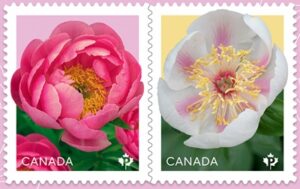
Good to know … ***Booklet of 10 Permanent™ domestic rate stamps. ***The annual Flower issue is a bestseller that is often used for wedding stationery and is popular among Canadian gardeners. ***Canada Post has issued pairs of commemorative stamps featuring flowers each year since 2007. ***Flowers have also been featured on past issues of definitive stamps and other commemorative stamp issues, including Gardens (2006) and Tulips (2002).
About the issue … This year’s issue in the annual Flower series features two elegant peonies: ‘Cytherea’ and ‘Marie-Victorin.’
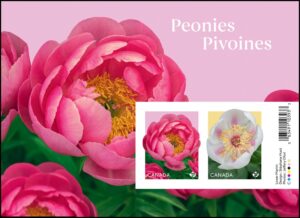
About the peonies … Laden with luxurious, delicately perfumed blossoms so large they often require support, peonies are perennial showstoppers. In late spring, their golf-ball-sized buds burst into extravagant bloom, creating a dazzling display in ornamental gardens. Most of today’s cultivars trace their roots to China, where the genus Paeonia has flourished for more than 4,000 years.
This year’s Flower stamps feature two elegant hybrids developed by Canadian-born horticulturists and well suited to the climate in parts of the country. Named after the Greek goddess of love, ‘Cytherea’ is a cherry rose “semi-double” – meaning that it has two or more rows of petals. It was registered in 1953 by Arthur Percy Saunders, one of the most accomplished peony hybridizers of the 20th century and son of William Saunders, the first director of Canada’s Central Experimental Farm. ‘Marie-Victorin’ was first propagated in 2004 by Lindsay D’Aoust, who purchased a collection of seedlings grown by Quebec peony breeder Maurice Ménard. A symmetrical, globe-shaped flower composed of a single row of rounded, pale pink petals with purple-pink flares, it was named for Brother Marie-Victorin (1885-1944), founder of the Montréal Botanical Garden.
About the design … ***The front cover features the photograph from the ‘Cytherea’ stamp. ***In the background of the two inside panels is a photograph of peonies. ***The booklet also includes 10 envelope seals featuring the two flowers. Cancellation Site: Ottawa, ON; Stamp Designer: Stéphane Huot; Quantity Produced: 1 million booklets of 10 Permanent™ stamps; Issue Date: March 3, 2025
The Souvenir Sheet features the two stamps and the photograph from the ‘Cytherea’ stamp, with additional blossoms visible. Cancellation Site: Ottawa, ON; Stamp Designer: Stéphane Huot; Quantity Produced: 45,000 (2 Permanent™ stamps each); Issue Date: March 3, 2025.
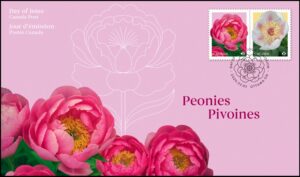
The front of the OFDC features the photograph from the ‘Cytherea’ stamp, with additional blossoms visible, and a line drawing of a peony by Simon Bousquet. The back of the OFDC features photographs of peony breeders Arthur Percy Saunders, Maurice Ménard and Lindsay D’Aoust. The OFDC is cancelled in Ottawa, Ontario. The cancel location was chosen because it is home of the Central Experimental Farm peony collection, where the flowers were photographed. The cancel image is a line drawing of a peony. Cancellation Site: Ottawa, ON; Stamp Designer: Stéphane Huot; Quantity Produced 5,000; Issue Date: March 3, 2025.
Commemorating Black History:
Hogan’s Alley – $20 Fine Silver Coin
www.mint.ca
For half a century, it was known to outsiders for its good food and great music, but to its residents, Hogan’s Alley represented community, a place where entrepreneurial spirit and civil activism were woven into the fabric of life. Vancouver’s first Black community, Hogan’s Alley flourished in the early 20th century when it was home to many Black porters who, through their unions, would later fight to gain recognition for Black Canadians within the labour movement. Women also played a central role in this community, many emerging as prominent organizers and entrepreneurs, operating restaurants and speakeasies that became not only local favourite, but cultural institutions that cemented the area’s reputation as a vibrant hub.
Sadly, the community was lost in the 1960s when despite protests and resistance, the city began levelling it in the name of urban renewal—a devastating blow to its residents. The displacement and erasure of the Black community in Hogan’s Alley have had long-lasting effects. Gone but not forgotten, Hogan’s Alley, its rich cultural mosaic, and the many contributions made by its residents—workers and activists, artists and athletes, business owners and community builders—are honoured on this 2025 Commemorating Black History coin.
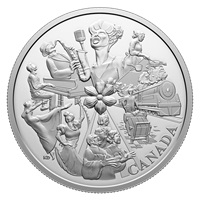
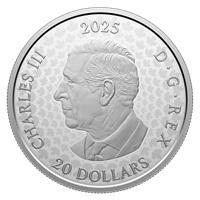
Face Value: $20 … Composition: 99.99% pure silver; Mintage: 5,000; Weight: 31.39 g; Diameter: 38 mm; Edge: Serrated; Finish: Reverse Proof; Artist: Kwame Delfish (reverse), Steven Rosati (obverse); Packaging: Black clamshell with black beauty box.
DID YOU KNOW? … Nora Hendrix, grandmother of guitar legend Jimi Hendrix, lived in Hogan’s Alley, where she co-founded Vancouver’s first Black church, the African Methodist Episcopal (AME) Fountain Chapel, in 1918. She later worked as a cook at Vie’s Chicken and Steak House, the most famous of the area’s chicken house restaurants that attracted locals and touring celebrities.
The reverse design by Canadian artist Kwame Delfish represents the spirit of Hogan’s Alley, Vancouver’s first Black community and a once-thriving cultural hub during the 20th century. While British Columbia’s provincial flower, the Pacific Dogwood (Cornus nuttallii), lies at the centre, the surrounding images reflect the character and vibrancy of the neighbourhood (starting at the one o’clock position and moving clockwise): a cook at one of the women-owned chicken house restaurants; a Black railway sleeping car porter; a choir representing the African Methodist Episcopal (AME) Fountain Chapel, Vancouver’s first Black church; and two different types of dancers, as well as a pianist, saxophonist and singer, all representing the incredible talent that was regularly on display in the community’s nightclubs and speakeasies. The obverse features a maple leaf pattern and the effigy of His Majesty King Charles III by Canadian artist Steven Rosati.
Kwame Delfish, Artist … “This coin pays homage to the vibrant community of Hogan’s Alley. While housing discrimination played an integral role in the settlement of Black Canadians as primary residents of this neighbourhood, it only tells part of the story. As an Afro-Caribbean designer, it was necessary for me to ground this piece in the rich culture and entrepreneurial prowess of this tenacious community. A thriving cultural hub that encompassed music, art and activism, the residents restored a sense of identity and belonging, strengthened solidarity and bolstered collective pride. The establishment of Black women-owned businesses was remarkable despite the prevalence of racism and discrimination during that time. While short-lived, Hogan’s Alley is part of Canadian history that is to be celebrated. I hope I was able to capture the essence of this distinct community, while also amplifying Black settlement in Canada.”
Louis-Remi Labelle, 3D Artist-Engraver … “The details are really astounding on this design! Every vignette should be considered its own little portrait, and each one needed to be sculpted with same amount of care and detail in order for them to come together so well at the end. We also opted to use a mix of frostings to introduce a bit of contrast between the different elements so they stand out from one another, but without putting the focus on a single element. It was all a balancing act—it’s challenging, but ultimately very satisfying work.”
Christa Bruce, Product Manager… “As an African-Canadian, the Commemorating Black History series makes my heart swell with pride. Having known very little about Hogan’s Alley, this was a journey of learning. Hogan’s Alley was a thriving cultural hub. However their contributions far exceeded the rich entertainment found there. The residents of Hogan’s Alley were civil activists, they were successful business owners and artists whose talents spanned generations. Exploring Hogan’s Alley revealed a tapestry of resilience and innovation, reminding us of the true legacy of this neighbourhood.”
Mustang Country by Robert Bateman
– $30 Fine Silver Coin
www.mint.ca
Few images are more evocative of wide-open spaces, and of unbridled freedom, as that of mustang herds roaming the prairie landscape. This is the scene so poignantly captured by celebrated wildlife artist Robert Bateman in Mustang Country, reimagined here in 99.99% pure silver. As with other Robert Bateman originals, Mustang Country treats both its subject and the grasslands with equal reverence; the same can be said for our engraved rendition, which pays tribute to the artist’s photo-realistic details while adding a bright silver lustre to the water’s reflective surface.
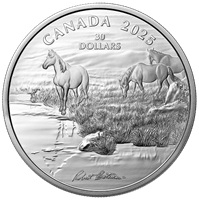
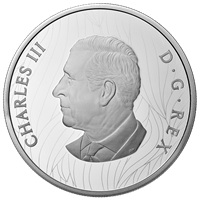
Face Value: $30 … Composition: 99.99% pure silver; Mintage: 4,000; Weight: 62.69 g; Diameter: 50 mm; Edge: Serrated; Finish: Proof; Artist: Robert Bateman (reverse), Steven Rosati (obverse); Packaging: Black clamshell with black beauty box.
DID YOU KNOW? … ***Mustangs are descended from horses brought to North America from Spain – in fact, “mustang” is derived from the Spanish words mestengo/mesteño, meaning “masterless (stray) animal.”
The coin’s reverse features an engraved rendering of Mustang Country, an original painting by renowned Canadian wildlife artist Robert Bateman. Set in the prairie grasslands, the scene shows the lead stallion of the mustang herd going down for a morning drink at a slough, where the horse is reflected in the still body of water. The reverse includes the text “CANADA 2025”, the denomination of “30 DOLLARS” and an engraved reproduction of the artist’s signature. The obverse features the effigy of His Majesty King Charles III by Canadian artist Steven Rosati.
Elegant Maple – $20 Fine Silver Coin
www.mint.ca
Among the many fascinating leaves found in Canada’s eastern forests, the sugar maple truly stands out. Its distinctive outline, deeply veined lobes, and irregularly toothed edges give it a familiar-yet-intriguing look that sets it apart from the rest, and these iconic features are especially prominent on this 1 oz. 99.99% pure silver coin. On the coin’s reverse, the black rhodium plated field acts as a matte backdrop, redirecting both the light and the viewer’s attention to the true shining star: Canada’s endlessly elegant maple leaf, which shines ever brighter against a beautiful matte proof finish.
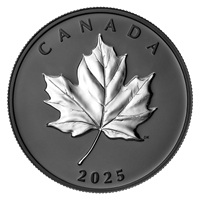
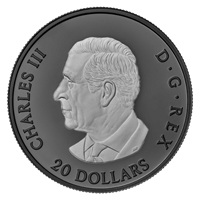
Face Value: $20 … Composition: 99.99% pure silver with selective black rhodium plating; Mintage: 7,000; Weight: 31.39 g; Diameter: 38 mm; Edge: Serrated; Finish: Matte Proof; Artist: Donna Kriekle (reverse), Steven Rosati (obverse); Packaging: Black clamshell with black beauty box.
DID YOU KNOW? … ***The sugar maple is one of 10 maple species that naturally occur in Canada, but it is arguably the most well-known Canadian maple due to its ecological and economic importance—it’s also the preferred species for maple syrup production.
Designed by Canadian artist Donna Kriekle, your coin’s reverse features a finely engraved sugar maple (Acer saccharum) leaf set against the black rhodium plated field. Black rhodium plating also fills the field on the obverse, which features the effigy of His Majesty King Charles III by Canadian artist Steven Rosati.
Predator or Prey in Shadow Box
– $175 Fine Silver Coin
www.mint.ca
The balance of nature depends on predator-prey relationships that drive evolution, with each side of that relationship striving to adapt in order to survive. Every organism plays a part in the web of life, and that concept is beautifully illustrated on this fine silver collectible featuring a spellbinding shadow box composition on its reverse. Filled with lush flora and hidden fauna, the shadow box design is composed of superimposed layers of engraving that gently overlap, each casting shadows on the next and obscuring important story details that are only visible when viewed from a certain angle, ultimately revealing that the hunter may actually be the hunted!
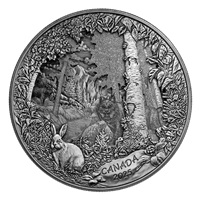
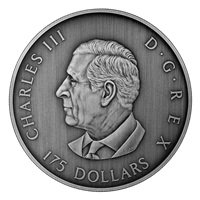
Face Value: $175 … Composition: 99.99% pure silver; Mintage: 750; Weight: 738.92 g; Diameter: 102 mm; Edge: Serrated; Finish: Antique finish; Artist: Julius Csotoyni (reverse), Steven Rosati (obverse); Packaging: Wood case.
DID YOU KNOW? … ***Wolves and cougars are among the known predators of Canada lynx which in turn are primary predators of snowshoe hares that average about 75% of their diet. When competing for resources within a shared territory, the larger and stronger wolf has some advantages over the lynx, but the wild cat is more agile and can escape a threat by climbing trees.
The reverse design by Canadian artist Julius Csotonyi is set in a boreal forest environment, where the nocturnal summer scene is divided into four separate layers of engraving that partially overlap to create a shadow box effect. With its antique finish, the bottom layer sets the mood by showing a full moon shining in the sky above the mountains and spruce- (g. Picea) covered foothills. Engraved on the uppermost layer (also featuring an antique finish), the woodland foreground is teeming with flora that have attracted a semirelict underwing (Catocala semirelicta) on the upper right, and a hungry snowshoe hare (Lepus americanus) at ground level.
The two middle painted layers add more complexity and tension to this story: on the second layer, a lynx (Lynx canadensis) can be seen stalking the hare, while a pileated woodpecker (Dryocopus pileatus)—an insectivore—is resting not far from the moth; and the third layer shows a wolf (Canis lupus) pack tracking the lynx from the edge of a stream. The obverse features the effigy of His Majesty King Charles III by Canadian artist Steven Rosati.
Julius Csotonyi, Artist … “I grew up on an acreage in Alberta along one of these ecotones between drier and wet boreal forest. Drawing this scene was like taking a stroll down memory lane for me because I loved to walk through the huge backyard for hours, reveling in the enormous diversity of plants that lived there, and the small invertebrates and vertebrates that inhabited this biome.”
Aida Alves, 3D Artist-Engraver … “Humbled by the opportunity to craft this coin, I faced a unique challenge sculpting four intricate models within standard time constraints. The top plate layer, with its dense and detailed art, required a sculpting approach that maintained clarity and readability. Precision tooling was paramount for seamless convergence, marrying artistic intricacy with engineering finesse in a harmonious dance of craftsmanship. This venture pushed beyond conventional design, delivering a masterpiece that blends multiple layers and dimensions and stands as a testament to overcoming challenges in the pursuit of artistic excellence.”
Zodiac Signs – $30 Fine Silver Coin
www.mint.ca
From Aries to Pisces, each piece of the zodiac puzzle represents our connection to the cosmos, where planetary interactions may influence our own relationships and personalities. The 12 astrological signs are elegantly represented on this 99.99% pure silver zodiac coin, which is imbued with the energies of the sun and moon. Its colour-over-engraved design features a dazzling blue night sky and painted metallic gold accents that reflect our collective captivation with cosmic arrangements, and all the different meanings attributed to them.
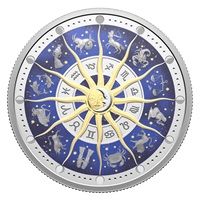
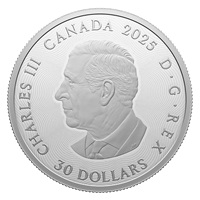
Face Value: $30 … Composition: 99.99% pure silver; Mintage: 4,000; Weight: 62.69 g; Diameter: 50 mm; Edge: Serrated; Finish: Proof; Artist: Jori van der Linde (reverse), Steven Rosati (obverse); Packaging: Black clamshell with black beauty box.
DID YOU KNOW? … Seen on this coin, the natural zodiac wheel is arranged like a compass pointed downward, with Aries being the first sign of the zodiac to rise over the eastern horizon (at the 9 o’clock position), followed by the 11 other signs.
Enhanced with vibrant colours and metallic gold paint, the reverse design by Jori van der Linde features an intertwined sun and moon engraved at the centre of a celestial circle, which is divided into 30-degree sections that house each of the 12 western zodiac signs (counterclockwise from the 9 o’clock position): Aries, Taurus, Gemini, Cancer, Leo, Virgo, Libra, Scorpio, Sagittarius, Capricorn, Aquarius and Pisces. Set against a deep blue night sky filled with stars, the zodiac signs are rendered in an illustrative style and paired with their engraved glyph, which appears in the inner ring. The sun’s long rays form divisional lines, as they radiate outward towards the moon phases engraved along the outer edge in counterclockwise order, beginning with the new moon in the 12 o’clock position. The obverse features a wavy pattern behind the effigy of His Majesty King Charles III by Canadian artist Steven Rosati.
Jori van der Linde, Artist … “I thoroughly enjoyed creating this intricate coin and all its elements, especially the sun motif. The long, wavy sun rays extend to the edges like celestial fingers, elegantly dividing the symbols and highlighting the starlit beauty of each zodiac illustration.”
Robin Armstrong, Astrologer and President of RASA School of Astrology … “From 2018 to 2026, Uranus travels through Taurus. Known as the planet of excitement, innovation, change, and astrology, Uranus in Taurus represents a time of significant financial shifts. This Canadian Zodiac coin captures the spirit of these times.”