

+ LEST WE FORGET +
+ CZEŚĆ ICH PAMIĘCI +
+ N’OUBLIONS PAS +

TROYAK EXECUTIVE TEAM is informing all members, colleagues, collectors, and Polonia at large, that Club meetings taking place at John Paul II Polish Cultural Centre, 4300 Cawthra Rd. (just south of Hwy. 403), Mississauga, Ontario. The new members are always welcome. www.polishculturalcentre.ca
ADRES SPOTKAÑ KLUBOWYCH ! Zarząd Główny Klubu “Troyak” informuje wszystkich członków kolekcjonerów, sympatyków oraz całą Polonię, że spotkania klubowe odbywają się w Polskim Centrum Kultury im. Jana Pawła II, przy 4300 Cawthra Rd. (na południe od autostrady 403), Mississauga, Ontario. Zapraszamy nowych członków do prężnego. Klubu “Troyak”. www.polishculturalcentre.ca

“TROYAK” CLUB NEXT MEETINGS …
NASTĘPNE SPOTKANIA KLUBU “TROYAK” …
Sunday 22nd November 2026 @ 4:30 p.m.

Sunday – 29th November 2026 @ 9:00 a.m. to 4:00 p.m.
Mississauga Coin & Stamp Show

December 2026 … Happy Holidays!
17th January 2027 AGMeeting
31st January 2027
28th February 2027
Sunday – 7th March 2027 @ 9:00 a.m. to 4:00 p.m.
Mississauga Coin & Stamp Show
21st March 2027
25th April 2027
30th May 2027
27th June 2027
July & August 2027 …
Summer break / Letnie wakacje !
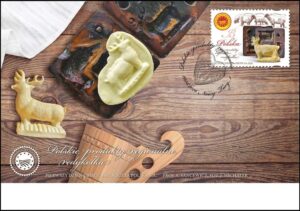
Polskie produkty regionalne – redykołka
www.poczta-polska.pl
10-08-2026 … Nominał znaczka: 5,80 zł, beznominałowy … Autor projektu: Agnieszka Sancewicz; Ilość znaczków w emisji: 1; Format znaczka: 31,25 x 43mm; Technika druku / Papier: Offset / fluorescencyjny; Nakład: 99 000 szt.; Ilość znaczków w arkuszu: 9; Format koperty FDC: 162 mm x 113 mm.
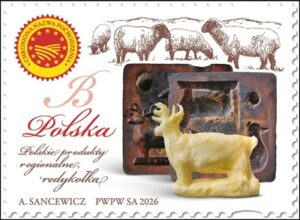
Data emisji: 10-08-2026 … Na znaczku przedstawiono redykołkę w charakterystycznym kształcie zwierzęcia, umieszczoną na tle tradycyjnej drewnianej formy serowarskiej wykorzystywanej podczas produkcji serów pasterskich. Redykołka to niewielki, wędzony serek wytwarzany głównie z mleka owczego na terenach Podhala i wybranych obszarach Beskidów. W przeciwieństwie do oscypka ma mniejsze rozmiary i do dziś zachowała swój pierwotny charakter uroczystego podarunku wręczanego przy okazji zakończenia redyku, czyli sezonowego wypasu owiec na górskich halach. Produkt posiada status Chronionej Nazwy Pochodzenia (ChNP) w Unii Europejskiej, co potwierdza jego wyjątkowy charakter i silny związek z miejscem pochodzenia. Arkusik składa się z 9 znaczków pocztowych ułożonych w układzie 3 × 3. Stylistyka nawiązuje do krajobrazu i kultury pasterskiej Karpat.
Oprawę arkusika tworzą: ***liczne ilustracje owiec i stad wypasanych na górskich pastwiskach, ***elementy architektury pasterskiej charakterystycznej dla Podhala, *** sylwetka bacy symbolizująca wielowiekową tradycję wypasu owiec, ***motywy związane z produkcją tradycyjnych serów, znak graficzny europejskiego systemu ochrony produktów regionalnych.
Całość utrzymana jest w stonowanej, sepijowej kolorystyce, przywołującej klimat dawnych fotografii i podkreślającej historyczny charakter przedstawionej tradycji. Arkusik stanowi opowieść o bacowaniu – tradycyjnym pasterstwie karpackim, wpisanym na Krajową listę niematerialnego dziedzictwa kulturowego, obejmującą żywe zwyczaje, wiedzę i umiejętności przekazywane z pokolenia na pokolenie. Materiały graficzne wykorzystane przy opracowaniu emisji zostały udostępnione dzięki uprzejmości Pana Józefa Michałka, któremu składane są szczególne podziękowania za współpracę przy realizacji wydawnictw filatelistycznych. Oznaczenie literowe B odpowiada wartości nominalnej znaczka używanego do uiszczenia opłaty za priorytetową przesyłkę listową nierejestrowaną w obrocie krajowym w formacie S.

Polish regional products – redykołka cheese
www.poczta-polska.pl
10-08-2026 … Denomination: 5,80 PLN, stamps without face value … Author of the stamp design: Agnieszka Sancewicz; Number of stamps in issue: 1; Stamp size: 31,25 x 43 mm; Paper: Fluorescent; Printing techniques: Offset; Sales sheet: 9; Print run: 99 000 pcs; FDC size: 162 mm x 113 mm.
Issue date: 10-08-2026 … The stamp depicts a Redykołka cheese shaped like an animal, placed against the background of a traditional wooden cheese mould used by mountain shepherds. Redykołka is a small smoked cheese produced mainly from sheep’s milk in Podhale and selected areas of the Beskid Mountains. Unlike oscypek, it is smaller in size and has preserved its traditional role as a ceremonial gift presented at the end of the redyk, the seasonal return of sheep from mountain pastures.
The product is protected within the European Union under the Protected Designation of Origin (PDO) scheme. The sheet consists of 9 stamps arranged in a 3 × 3 layout. The decorative design includes: ***illustrations of sheep grazing on mountain pastures, ***traditional shepherds’ huts and elements of Carpathian pastoral architecture, ***the figure of a shepherd (baca), ***references to traditional cheese making, the official symbol of the European quality protection scheme.
The sepia-toned composition evokes historical photographs and highlights the centuries-old traditions of mountain shepherding. The sheet celebrates bacowanie (Carpathian shepherding traditions), which has been included on Poland’s National List of Intangible Cultural Heritage. Special thanks are extended to Józef Michałek for providing the graphic materials used in the philatelic products accompanying this issue.
Generał Tadeusz Rozwadowski
www.poczta-polska.pl
15-08-2026 … Nominał znaczka: 4,90 zł, beznominałowy … Autor projektu: Agnieszka Sancewicz; Koloryzacja fotografii: Mirosław Szponar; Ilość znaczków w emisji: 1; Format znaczka: 31,25 x 43mm; Technika druku / Papier: Offset / fluorescencyjny; Nakład: 96 000 szt.; Ilość znaczków w arkuszu: 6; Format koperty FDC: 162 mm x 113 mm.
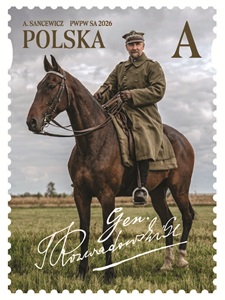
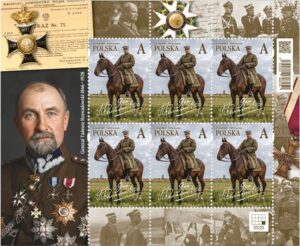
Data emisji: 15-08-2026 … Na znaczku wykorzystano archiwalną fotografię gen. Tadeusza Rozwadowskiego pochodzącą ze zbiorów Wojskowego Biura Historycznego. Przedstawienie generała na koniu podkreśla jego wojskowy charakter, rolę dowódcy oraz związek z okresem odbudowy polskich sił zbrojnych po 1918 roku. Arkusik składa się z 6 znaczków pocztowych w układzie 3 × 2. Oprawa arkusika tworzy rozbudowaną narrację historyczną poświęconą życiu i służbie generała.
W kompozycji wykorzystano: ***fotografie odznaczeń wojskowych przyznanych generałowi; *** dokumenty i rozkazy wojskowe związane z działalnością sztabową, ***archiwalne fotografie przedstawiające gen. Rozwadowskiego podczas służby wojskowej, ***reprodukcję Orderu Wojennego Virtuti Militari, portret generała pochodzący ze zbiorów Narodowego Archiwum Cyfrowego. Kolorystyka arkusika utrzymana jest w historycznej tonacji sepii i oliwkowych odcieni mundurów wojskowych, podkreślając charakter dokumentalny i patriotyczny emisji.
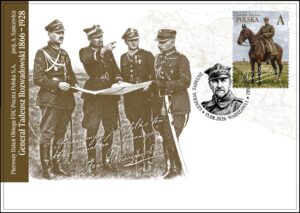
Na kopercie FDC przedstawiono manewry wojskowe na Wołyniu w 1925 roku, w których uczestniczył gen. Rozwadowski. Fotografia ukazuje działalność szkoleniową i organizacyjną Wojska Polskiego w okresie międzywojennym, podkreślając znaczenie generała dla rozwoju polskiej armii po odzyskaniu niepodległości. Emisja przypomina postać oficera, którego wkład w odbudowę polskich sił zbrojnych po odzyskaniu niepodległości oraz przygotowanie zwycięstwa w Bitwie Warszawskiej należy do najważniejszych osiągnięć militarnej historii Polski XX wieku. Wydawnictwo zostało przygotowane we współpracy z Ministerstwem Obrony Narodowej. Oznaczenie literowe A odpowiada wartości nominalnej znaczka używanego do uiszczenia opłaty za ekonomiczną przesyłkę listową nierejestrowaną w obrocie krajowym w formacie S.
General Tadeusz Rozwadowski
www.poczta-polska.pl
15-08-2026 … Denomination: 4,90 PLN, stamps without face value … Author of the stamp design: Agnieszka Sancewicz; Number of stamps in issue: 1; Stamp size: 31,25 x 43 mm; Paper: Fluorescent; Printing techniques: Offset; Sales sheet: 6; Print run: 96 000 pcs; FDC size: 162 mm x 113 mm.
Issue date: 15-08-2026 … The stamp features an archival photograph of General Tadeusz Rozwadowski from the collections of the Polish Military Historical Bureau (Wojskowe Biuro Historyczne). The image of the general on horseback emphasizes his military service, leadership role and contribution to rebuilding the Polish Army after 1918. The sheet consists of 6 stamps arranged in a 3 × 2 layout. The surrounding artwork creates a broader historical narrative devoted to the General’s life and military career.
The design incorporates: ***photographs of military decorations awarded to the General; *** military documents and operational orders, ***archival photographs depicting Rozwadowski during military service, ***the Order of Virtuti Militari, a portrait from the collections of the National Digital Archives. The sepia and military-green color palette reinforces the documentary and commemorative character of the issue.
The First Day Cover presents military maneuvers in Volhynia in 1925, involving General Rozwadowski. The image illustrates the training and development of the Polish Army during the interwar period and highlights the General’s role in shaping the armed forces of the Second Polish Republic. The issue honors a figure whose contribution to rebuilding the Polish Army after independence and to the victory in the Battle of Warsaw in 1920 remains one of the most important achievements in modern Polish military history. The issue was prepared in cooperation with the Ministry of National Defence.
Owoce naszych sadów
www.poczta-polska.pl
24-08-2026 … Nominał znaczka: 4,90 zł, beznominałowy … Autor projektu: Poczta Polska S.A.; Ilość znaczków w emisji: 3; Format znaczka: 51 x 39,5 mm; Technika druku / Papier: Offset / fluorescencyjny; Nakład: 90 000 szt.; Ilość znaczków w arkuszu: 6; Format koperty FDC: 162 mm x 113 mm.
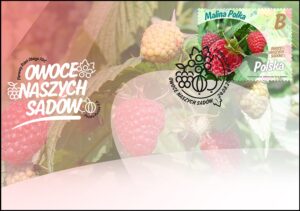
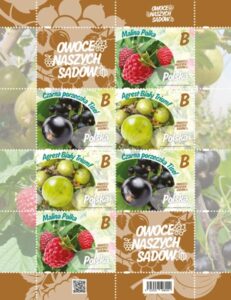
Data emisji: 24-08-2026 … W 2026 roku seria „Owoce naszych sadów” prezentuje kolejne wyjątkowe owoce od lat uprawiane w polskich sadach i ogrodach. Emisja promuje bogactwo krajowego sadownictwa oraz odmiany cenione za walory smakowe, zdrowotne i gospodarcze. Arkusik został przygotowany we współpracy z Ministerstwem Rolnictwa i Rozwoju Wsi oraz Instytutem Ogrodnictwa – Państwowym Instytutem Badawczym w Skierniewicach. Arkusik zawiera 6 znaczków pocztowych, ułożonych w dwóch seriach po trzy znaczki, oraz 2 przywieszki umieszczone po bokach kompozycji.

Na znaczkach przedstawiono: ***Malina „Polka” … Jedna z najbardziej znanych i cenionych polskich odmian malin deserowych. Owoce wyróżniają się intensywną czerwoną barwą, wysoką jakością oraz wyjątkowym aromatem. Odmiana znana jest z obfitego owocowania i znajduje szerokie zastosowanie zarówno w przetwórstwie, jak i w bezpośrednim spożyciu. *** Czarna porzeczka „Tisel” … Polska odmiana czarnej porzeczki ceniona za wysoką plenność oraz bogactwo witaminy C i przeciwutleniaczy. Jej ciemne owoce wykorzystywane są do produkcji soków, przetworów, nalewek i suplementów diety. ***Agrest „Biały Triumf” … Tradycyjna odmiana agrestu o jasnych, zielonożółtych owocach. Ceniona za delikatny smak i wszechstronne zastosowanie kulinarne. Od wielu lat stanowi charakterystyczny element polskich sadów przydomowych oraz plantacji owocowych.

Na przywieszkach oraz w tle arkusika przedstawiono kompozycję graficzną obejmującą wszystkie trzy gatunki owoców. Kolorowa i naturalistyczna oprawa podkreśla różnorodność polskiego sadownictwa oraz bogactwo rodzimych odmian owoców. Całość utrzymano w świeżej, letniej kolorystyce, nawiązującej do sezonu zbiorów i tradycji polskich sadów. Polska należy do największych producentów owoców w Europie. Maliny, porzeczki i agrest od pokoleń są ważnym elementem krajowego rolnictwa oraz tradycyjnej kuchni. Emisja przypomina o znaczeniu rodzimych odmian owoców oraz pracy sadowników, którzy od lat pielęgnują polskie tradycje ogrodnicze i sadownicze. Oznaczenie literowe B odpowiada wartości nominalnej znaczka używanego do uiszczenia opłaty za priorytetową przesyłkę listową nierejestrowaną w obrocie krajowym w formacie S.
Fruits of our orchards
www.poczta-polska.pl
24-08-2026 … Denomination: 4,90 PLN, stamps without face value … Author of the stamp design: Poczta Polska S.A.; Number of stamps in issue: 3; Stamp size: 51 x 39,5 mm; Paper: Fluorescent; Printing techniques: Offset; Sales sheet: 6; Print run: 90 000 pcs; FDC size: 162 mm x 113 mm.
Issue date: 24-08-2026 … In 2026, the “Fruits of Our Orchards” series presents three traditional fruits that have long been cultivated in Polish orchards and gardens. The issue highlights the richness of Polish fruit-growing traditions and promotes cultivars valued for their taste, nutritional qualities and agricultural importance. The issue was prepared in cooperation with the Ministry of Agriculture and Rural Development and the Research Institute of Horticulture – National Research Institute in Skierniewice. The sheet contains 6 postage stamps, arranged in two sets of three designs, accompanied by 2 decorative labels.
The stamps feature: ***Raspberry “Polka” … One of the best-known Polish raspberry cultivars. Its bright red fruits are appreciated for their excellent flavor, aroma and versatility. The variety is highly productive and widely used for fresh consumption and processing. ***Blackcurrant “Tisel” … A Polish blackcurrant cultivar valued for its abundant yields and high vitamin C content. The fruits are commonly used in juices, preserves, syrups and other food products. ***Gooseberry “Biały Triumf” (White Triumph) … A traditional gooseberry variety producing pale green-yellow fruit with a delicate flavor. It has been a familiar feature of Polish orchards and home gardens for generations.
The labels and surrounding artwork present all three fruits together in a colorful composition celebrating Poland’s orchard heritage. The design uses fresh, vibrant colors inspired by the summer harvest season. Poland is among Europe’s leading fruit producers. Raspberries, blackcurrants and gooseberries have long held an important place in Polish agriculture and traditional cuisine. The issue pays tribute to orchard growers and to the horticultural traditions that have shaped the Polish countryside for generations.
Halina Konopacka –
w służbie Ojczyźnie
www.nbp.pl
Narodowy Bank Polski jest centralnym bankiem państwa odpowiadającym za politykę pieniężną i stabilność cen. Jego funkcje określa Konstytucja Rzeczypospolitej Polskiej i ustawa o NBP. NBP ma wyłączne prawo emisji pieniądza. Jako bank centralny nie prowadzi rachunków bankowych obywateli, nie przyjmuje od nich lokat, nie udziela kredytów. Prowadzi natomiast obsługę budżetu państwa, a także podmiotów sektora finansów publicznych. Gromadzi rezerwy walutowe państwa i zarządza nimi. Pełni funkcję banku banków, tworząc warunki do działania systemu bankowego. Jest również jednym z najważniejszych ośrodków naukowo-analitycznych w dziedzinie ekonomii i rynków finansowych.
Emisja wartości kolekcjonerskich stanowi okazję do upamiętniania ważnych historycznych rocznic i postaci oraz do rozwijania zainteresowań polską kulturą, nauką i tradycją. 1 września 2026 roku Narodowy Bank Polski wprowadził do obiegu srebrną monetę o nominale 10 zł „Halina Konopacka – w służbie Ojczyźnie”.
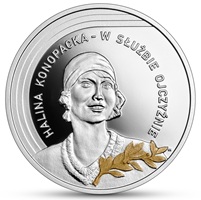

Nominał: 10 zł … metal: Ag 999/1000; stempel: lustrzany, selektywne złocenie; średnica: 32,00 mm; masa: 14,14 g; brzeg (bok): gładki; nakład: do 8000 szt.; Projekt: Dominika Karpińska-Kopiec; Emitent: NBP; Na zlecenie NBP monety wyprodukowała Mennica Polska SA.
Na rewersie monety widnieje wizerunek Haliny Konopackiej, a także elementy nawiązujące do jej osiągnięć sportowych – fragment bieżni stadionu olimpijskiego oraz gałązka laurowa, tradycyjny symbol zwycięstwa. Awers monety przedstawia symboliczne nawiązanie do ewakuacji złota we wrześniu 1939 r. – sztaby złota i jeden z autobusów komunikacji miejskiej z tamtego okresu. Dopełnieniem rewersu jest powtórzony fragment bieżni stadionu olimpijskiego.
Halina Konopacka stała się ikoną polskiego sportu. Urodzona w 1900 r. w Rawie Mazowieckiej, zmarła 89 lat później na Florydzie. Była wybitną lekkoatletką warszawskiego AZS i zdobywczynią pierwszego złotego medalu dla Polski na igrzyskach olimpijskich w Amsterdamie w 1928 r. w rzucie dyskiem. Należy do niej 27 tytułów mistrzyni Polski w różnych konkurencjach: od rzutu oszczepem aż po skok w dal. Konopacka uprawiała tenis, koszykówkę i piłkę ręczną, startowała też w rajdach samochodowych. Zachwycała urodą i inteligencją – grała na fortepianie, znała cztery języki obce, zajmowała się poezją oraz malarstwem. Publikowała wiersze w „Skamandrze”. Była również działaczką sportową. Z pierwszego złotego medalu olimpijskiego cieszyła się cała Polska. Gdy Konopacka wracała z igrzysk w Amsterdamie, Warszawiacy stawiali łuki tryumfalne, a lekkoatletka stała się sportową gwiazdą z honorami przyjmowaną przez samego prezydenta Ignacego Mościckiego.
Warszawska ulica stworzyła powiedzenie, że Polskę najlepiej sławią „Konopacka dyskiem, Jan Kiepura pyskiem”. Mężem olimpijki był płk Ignacy Matuszewski, minister skarbu w sanacyjnym rządzie w latach 1929–1931, poważany polityk, ale też kibic, dobrze rozumiejący sportowe pasje żony. Wybuch II wojny światowej postawił przed nią nowe wyzwania. Od pierwszych dni września 1939 r. Konopacka towarzyszyła mężowi w przetransportowaniu złota Banku Polskiego SA. Akcją dowodził Matuszewski wraz z posłem i byłym ministrem przemysłu i handlu mjr. Henrykiem Floyarem-Rajchmanem.
Podczas dramatycznej ewakuacji złota przez Polskę, Rumunię, Turcję i Syrię do Francji Halina Konopacka prowadziła jeden z autobusów cennego konwoju. Wraz z innymi członkami ekspedycji rozładowywała skrzynie z samochodów do pociągu, potem na statek. Złoto Banku Polskiego SA zostało uratowane, tyle że w ewakuacyjnym rozgardiaszu bezcenna pamiątka – złoty medal olimpijski – bezpowrotnie zaginęła. Halina Konopacka przeżyła wojnę, ale po 1945 r. zamieszkała na stałe w Stanach Zjednoczonych. W rok po śmierci, w 1990 r. sprowadzono jej prochy do Polski i uroczyście pochowano w Warszawie na Cmentarzu Bródnowskim. Informacja: Robert Gawkowski.
Halina Konopacka –
In the Service of the Homeland
www.nbp.pl
Narodowy Bank Polski is the central bank of the State, responsible for its monetary policy and price stability. The Bank’s functions are described in the Constitution of the Republic of Poland and the Act on NBP. NBP holds the exclusive right to issue the currency of the Republic of Poland. As the central bank, it does not provide accounts for the general public, accept deposits from or extend loans to individuals. It acts as a banker to the State budget and public sector entities. NBP also holds and manages the foreign exchange reserves of the State. Finally, it functions as a banker to banks, creating conditions for the operation of the Polish banking system. Narodowy Bank Polski is one of the most important research and analytical centres in the fields of economics and financial markets.
Issuing collector items is an occasion to commemorate important historic figures and anniversaries, as well as to develop the interest of the public in Polish culture, science and tradition. On 1 September 2026, Narodowy Bank Polski issued into circulation a silver coin “Halina Konopacka – In the Service of the Homeland”, with a face value of 10 złoty.
Face value: 10 zł … Metal: Ag 999/1000; Finish: proof, selective gilding; Diameter: 32.00 mm; Weight: 14.14 g; Edge (side): plain; Mintage: up to 8,000 pcs; Design: Dominika Karpińska-Kopiec; Issuer: Narodowy Bank Polski. The coins, commissioned by Narodowy Bank Polski, were struck by Mennica Polska SA.
The reverse of the coin features an image of Halina Konopacka as well as elements referencing her sporting achievements – a fragment of an Olympic stadium track and a laurel branch, the traditional symbol of victory. The obverse of the coin bears symbolic reference to the evacuation of the gold in September 1939 – bars of gold and a public transport bus from the period. The design of the reverse is completed by a repetition of the fragment of the Olympic stadium track.
Halina Konopacka became an icon of the Polish sport. She was born in 1900 in Rawa Mazowiecka and died 89 years later in Florida, US. She was an outstanding track and field athlete for AZS Warsaw (Academic Sports Association) and the first Polish Olympic gold medallist, winning the discus throw at the 1928 Amsterdam Games. She holds 27 Polish championship titles in multiple disciplines varying from javelin throw to long jump. Konopacka played tennis, basketball and handball, she also took part in car rallies. She was renowned for her beauty and intellect – she played the piano, spoke four foreign languages, wrote poetry and painted. She published her poems in the “Skamander” magazine. She was also a sports activist. The whole country celebrated the first gold medal. When Konopacka returned from the Amsterdam Olympics, people in Warsaw erected arches of triumph and the athlete became a sports star received with honours by President Ignacy Mościcki himself.
The streets of Warsaw coined the saying that Poland was best represented by “Konopacka with the discus and Jan Kiepura – the famous singer – with his mouth”. She was married to colonel Ignacy Matuszewski, Minister of Treasury in Piłsudski’s Sanation government from 1929 to 1931, a respected politician but also a sports fan who understood his wife’s sporting passions. The outbreak of World War II posed new challenges for her. From the first days of September 1939 Konopacka accompanied her husband in transporting the gold belonging to Bank Polski SA.
Matuszewski was in charge of the operation together with the Polish Sejm deputy and former Minister of Trade and Industry major Henryk Floyar-Rajchman. During the dramatic evacuation across Poland, Romania, Turkey and Syria to France, Halina Konopacka drove one of the buses in the valuable convoy. Together with the other participants of the expedition, she would unload crates from the vehicles to a train and then onto a ship. The gold belonging to Bank Polski SA was secured, but the invaluable memento – the gold Olympic medal – was irrevocably lost in the commotion that accompanied the evacuation. Halina Konopacka survived the war, however, after 1945 she took up permanent residence in the US. In 1990, a year after her death, her ashes were returned to Poland and laid to rest with honours in Bródno Cemetery in Warsaw. Info: Robert Gawkowski.
Royal Canadian Legion (2026):
Booklet of six PermanentTM stamps
www.canadapost.ca
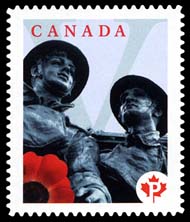
This stamp commemorates the 100th Anniversary of the official incorporation of The Royal Canadian Legion in July 1926. The Royal Canadian Legion has long played an instrumental role in supporting Canadian veterans and communities and commemorating the service and sacrifice of all Canadian veterans. The Legion maintains community spaces across Canada, offering local branches where veterans, their families and community members can gather for support, events and social activities. Canada Post has a long history of commemorating Canada’s military history and Remembrance Day through its annual stamp program. Booklet of six Permanent™ stamps, issued July 17, 2026. This issue also includes an Official First Day Cover. These products are sold separately.

About the Royal Canadian Legion … In 2026, The Royal Canadian Legion marks a century of unwavering dedication to veterans, their families and communities across Canada. Founded to assist service members returning from the First World War, the Legion has grown into a national cornerstone of remembrance, advocacy and assistance for all who have served – both at home and in conflicts and peacekeeping missions around the world. Its National Poppy Campaign unites Canadians in honouring the fallen and recognizing veterans, for whom it raises funds to support vital programs and services. Backed by 270,000 military and civilian members at 1,350 branches across Canada, the Legion’s volunteers carry its mission forward to future generations. The Royal Canadian Legion’s 100th anniversary stands as a testament to its enduring contribution to Canadian history and to the legacy it continues to build through compassion, service and an unbreakable promise to never forget.

About the design … The stamp and OFDC are the work of designer Blair Thomson and photo by Jo Thomson at Believe in. The stamp design features The Royal Canadian Legion banner as the backdrop, with a detailed presentation of the Legion badge. The inside of the booklet includes the message “Honouring 100 years of commitment to veterans, remembrance and community” and features six stamps. Stamp Designer: Blair Thomson | Believe in; Quantity Produced: 100,000; Issue Date: July 17, 2026.

The stamp and OFDC are the work of designer Blair Thomson and photo by Jo Thomson at Believe in. The cover of the OFDC features The Royal Canadian Legion banner as the backdrop, with a detailed presentation of the Legion badge. The cancel design references service medals, honouring The Royal Canadian Legion’s dedication to veterans and remembrance. Cancellation Site: Ottawa, Ontario. Stamp Designer: Blair Thomson | Believe in; Quantity Produced: 8,000; Issue Date: July 17, 2026.
2026 … Remembrance Day –
$20 Fine Silver Coin
www.mint.ca
The red Poppy: Rooted in Remembrance and carried forward. Distinguished by an early cloth lapel Poppy that speaks to its beginnings as an emblem of Remembrance—and to The Royal Canadian Legion’s own origins—this 2026 fine silver coin pays tribute to Canada’s veterans, and to the Legion’s 100-year legacy as Canada’s steward of Remembrance. Inspired by the poem “In Flanders Fields” by Canadian John McCrae, the early lapel Poppy—a handcrafted fabric bloom worn in the aftermath of the First World War—took root as an emblem of grief and gratitude, quickly growing into a national act of Remembrance.
Carried forward by The Royal Canadian Legion upon its incorporation in 1926, the Poppy endures as a living promise—a promise renewed on this fine silver coin, where the red cloth lapel Poppy from the 1920s is joined with the Legion’s motto “MEMORIAM EORUM RETINEBIMUS” (“We Will Remember Them”) and set before a field of blooming poppies that speaks to their shared origins and enduring legacy. A lasting promise, a legacy that endures.

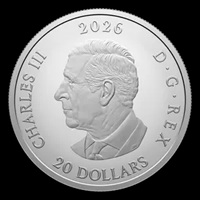
Face Value: $20 … Composition: 99.99% pure silver with selective colour; Print run:: 7,500; Weight: 31.39 g; Diameter: 38 mm; Edge: Serrated; Finish: Proof; Artist: Claire Watson (reverse), Susanna Blunt (obverse); Packaging: Black clamshell with black beauty box.
DID YOU KNOW? … ***In 1921, the Great War Veterans’ Association (GWVA)—the precursor to The Royal Canadian Legion—adopted the lapel-worn Poppy as a symbol of Remembrance and as a way of raising funds for veterans. In 1925, the GWVA united with other veterans’ groups to form the Canadian Legion of the British Empire Service League (today’s The Royal Canadian Legion, officially incorporated in 1926), which carried forward the work of commemoration and support, and continues to oversee the annual Poppy Campaign in Canada.
The reverse design by artist Claire Watson features a red cloth lapel Poppy reminiscent of the handcrafted cloth poppies worn in the years after the First World War, when the Poppy emerged as a symbol of Remembrance. The ribbon wrapped around the rigid stem features the word “CANADA” and The Royal Canadian Legion’s Latin motto, “MEMORIAM EORUM RETINEBIMUS” (“We Will Remember Them”), in recognition of The Royal Canadian Legion’s 100th anniversary in 2026. Behind the red Poppy, an engraved field of blooming poppies extends to the cloud-filled horizon. The obverse features the effigy of His Majesty King Charles III by Canadian artist Steven Rosati.
Claire Watson, Artist … “My design centres on the original fabric Poppy pin adopted by The Royal Canadian Legion as a symbol of Remembrance. I wanted to highlight that historic emblem and bring it to life through a punchy spot of colour, allowing it to stand out clearly against a full field of poppies in the background. The contrast between the vivid red pin and the subtle field reflects both the man-made symbol we wear and the natural landscape it represents. The unfurled ribbon carries The Royal Canadian Legion’s Latin motto, while the soft clouds and surrounding field create a sense of peace and reflection.”
Berkley Lawrence, Immediate Past President, The Royal Canadian Legion … “The Poppy is more than a symbol—it is a promise we carry forward as a nation. This coin reflects both the origins of that promise and the enduring responsibility we share to Remember the service and sacrifice of Canada’s veterans. As the Legion marks its 100th anniversary, it is a reminder that Remembrance is not only about the past, but about ensuring future generations continue to honour those who served.”
Colourful Birds: Canada Jays –
$20 Fine Silver Coin
www.mint.ca
The Canada jay is a year-round resident of the boreal forests that stretch from coast to coast and into the North—exactly why it earns its patriotic name. While other bird species pack their bags for warmer places, this grey-and-white songbird stays put, stashing snacks and turning winter into its own playground. Bold and curious, the Canada jay loves to swoop in and check out anything new, especially if it might be edible. On this Colourful Birds coin, its bold spirit and evergreen perch pop against the winter backdrop, celebrating the resilience and quiet charm of Canada’s namesake bird. Coin #6 in this bird-themed series.
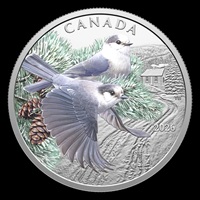
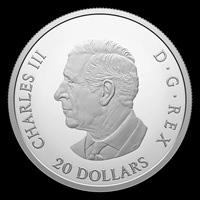
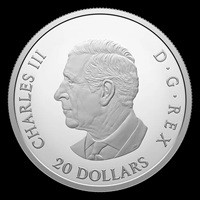
Face Value: $20 … Composition: 99.99% pure silver, with selective colour; Mintage: 7,500; Weight: 31.39 g; Diameter: 38 mm; Edge: Serrated; Finish: Proof; Artist: Tony Bianco (reverse), Steven Rosati (obverse); Packaging: Black clamshell with black beauty box.
DID YOU KNOW? … ***The Canada jay has a habit of hoarding food, using its saliva to stick small items to tree branches high above the (eventual) snow line for later use. Its fluffy plumage comes in handy in winter, when it puffs up its feathers to cover its feet and keep warm on cold days.
The reverse design by Canadian artist Tony Bianco features a pair of Canada jays (Perisoreus canadensis)—one rests on a white pine branch, while the other swoops in on the wing. Their grey-and-white plumage, along with the evergreen branches, stand out against the engraved winter landscape where a snow-covered path leads to a distant log cabin. The obverse features the effigy of His Majesty King Charles III by Canadian artist Steven Rosati.
T.rex– $20 Fine Silver Coin
www.mint.ca
It’s a meeting of prehistoric titans, as the top land predator meets the master of the skies! This 1 oz. 99.99% pure silver coin brings the ancient world to life by showcasing two icons of the Late Cretaceous: Tyrannosaurus rex (aka the “tyrant lizard king”), one of the largest theropod dinosaurs ever to have lived; and Quetzalcoatlus northropi, one of the largest animals ever to fly. Enhanced with selective colour, the prehistoric scene is equal parts art and science, with an additional layer that remains hidden until illuminated by black light (included), revealing the prehistoric beasts’ fossilized forms—a nod to the remarkable discoveries preserved in Canada’s fossil-rich landscapes. Dinosaur fossils revealed under black light.

Face Value: $20 … Composition: 99.99% pure silver, with colour and black light paint technology; Mintage: 8,500; Weight: 31.39 g; Diameter: 38 mm; Edge: Serrated; Finish: Proof; Artist: Julius Csotonyi (reverse), Steven Rosati (obverse); Packaging: Black clamshell with black beauty box.
DID YOU KNOW? …***The Quetzalcoatlus northropi depicted on this coin is either a smaller individual or a juvenile—a full-grown adult would have stood as tall as a giraffe, with a wingspan stretching up to 11 metres (36 feet), making it about the size of a small airplane.

Enhanced with selective colour, the reverse design by Canadian paleoartist Julius Csotonyi presents a ground-level view of a towering Tyrannosaurus rex striding through an engraved swampy woodland, as a juvenile Quetzalcoatlus northropi swoops low overhead. The dinosaurs’ fossilized forms are revealed when the scene is viewed under a black light. The obverse features the effigy of His Majesty King Charles III by Canadian artist Steven Rosati.
Dr. François Therrien, Paleontologist and Curator of Dinosaur Palaeoecology at the Royal Tyrrell Museum of Palaeontology … “Tyrannosaurus rex and Quetzalcoatlus northropi are the last two giants to have lived at the end of the Cretaceous in North America. The theropod T. rex was the top predator on land and the pterosaur Quetzalcoatlus was the top predator in the air, although the latter would have spent a lot of time on the ground feeding on small prey, like young dinosaurs. Even though these animals coexisted in the same environments, no fossil evidence indicating that they fought each other has been found so far. These animals would have witnessed the meteorite impact that occurred 66 million years ago and marked the end of the Age of Dinosaurs.”
2026 Commemorative Collector Keepsake Card –
100th Anniversary of The Royal Canadian Legion
www.mint.ca
One card, two coins: Get both versions of the $2 coin commemorating the Legion’s 100th anniversary. For 100 years, The Royal Canadian Legion has stood as a living promise to remember, honour, and support those who serve and have served Canada, and to strengthen communities across the country. Mark the Legion’s centenary year with a distinguished Collector Keepsake Card, which contains both versions of the $2 100th Anniversary of The Royal Canadian Legion commemorative circulation coin.
Inside the easy-to-give, easy-to-view folder, the coins—including one accented with colour—are presented side by side, unified by a shared design centred on the Legion’s royal crest and motto. Honouring Canada’s largest Veteran support and community service organization. Mintage: 50,000; Finish: Circulation; Artist: Vladyslava Pashchenko (reverse), Steven Rosati (obverse).


2026 … $2 Special Wrap Roll – 100th Anniversary of The Royal Canadian Legion (Non-colourized) … Composition Outer ring: Three-ply nickel-plated steel; Inner core: Three-ply brass-plated aluminum bronze; Weight: 6.99 g; Diameter: 28 mm; Edge: Interrupted serrations.
2026 … $2 Special Wrap Roll – 100th Anniversary of The Royal Canadian Legion (Colourized) … Composition Outer ring: Three-ply nickel-plated steel; Inner core: Three-ply brass-plated aluminum bronze, with selective colour; Weight: 6.99 g; Diameter: 28 mm; Edge: Interrupted serrations.
DID YOU KNOW? … ***The royal crest serves as the Legion’s formal ceremonial emblem, reflecting its national heritage and royal association—royal patronage granted by Queen Elizabeth II in 1960—and incorporates a maple leaf inspired by Canada’s coat of arms.
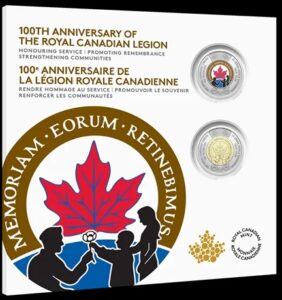
The reverse design by Canadian artist Vladyslava Pashchenko features an adaptation of The Royal Canadian Legion royal crest in the core, brought to life in colour on the colourized coin. The Legion’s Latin motto, “MEMORIAM · EORUM · RETINEBIMUS” (meaning “We Will Remember Them”), is set behind silhouettes of a Legion member offering a Poppy flower to a child with their mother. Inscribed along the outer rim are “THE ROYAL CANADIAN LEGION” and “LA LEGION ROYALE CANADIENNE”, along with “100 YEARS / ANS” and the double dates “1926-2026” reflecting the 100-year anniversary. The Legion’s Poppy logo appears between the two micro-engraved security marks. The obverse features the effigy of His Majesty King Charles III by Canadian artist Steven Rosati.
75th Anniversary of The National Ballet of Canada –
$20 Fine Silver Coin
www.mint.ca
The National Ballet of Canada and The Nutcracker: Bringing ballet magic to your holidays. This egg-shaped, selectively gold-plated, 99.99% pure silver coin offers you a front-row seat to the magic of The National Ballet of Canada’s The Nutcracker, a holiday favourite, as we celebrate the company’s rich artistic legacy on its 75th anniversary.
One of the most famous ballet stories, The Nutcracker is a cherished tradition that marks the beginning of the holiday season—a fantastical journey into a sparkling world where imagination takes centre stage! Shaped to echo the golden egg from which the Sugar Plum Fairy emerges, this selectively gold-plated fine silver coin invites you to discover (or re-discover) the wonder of The Nutcracker, an annual production that is part of the repertory of The National Ballet of Canada. Since its founding in 1951, the Toronto-based company has been a cornerstone of Canadian cultural life; that enduring legacy is reflected in this fine silver coin, which celebrates the dancers and dreamers who have kept this dazzling holiday tradition alive. Honouring 75 years of the National Ballet.
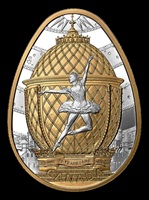
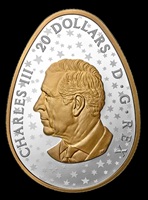
Face Value: $20 … Composition: 99.99% pure silver, with selective yellow gold plating; Mintage: 6,500; Weight: 31.82 g; Dimensions: 45 mm x 33 mm; Edge: Interrupted serrations; Finish: Proof; Artist: Engraved adaptation of photography by Karolina Kuras (reverse), Steven Rosati (obverse); Packaging: Black clamshell with graphic beauty box.
DID YOU KNOW? … ***Set on Christmas Eve, The Nutcracker was originally choreographed by Marius Petipa and set to music by Pyotr Ilyich Tchaikovsky in 1892; by the mid-20th century, the ballet story (and score) had become a holiday favourite. ***The National Ballet first performed The Nutcracker—specifically, an excerpt of Act II—in 1952, just one year after the company’s founding. A full-length production staged by founding artistic director Celia Franca was introduced in 1964 and performed annually until 1994, and the following year (1995) marked the debut of the current production choreographed by James Kudelka.
The reverse design is an engraved adaptation of photography from The National Ballet of Canada captured by Karolina Kuras. The composition shows a Principal Dancer performing the role of the Sugar Plum Fairy in The Nutcracker after stepping out of the golden egg seen in the background—part of the elaborate sets and costumes designed by Santo Loquasto for choreographer James Kudelka’s acclaimed production with The National Ballet of Canada. The egg and the banner commemorating the Canadian ballet company’s 75th anniversary (“1951 2026”) (“75 YEARS | ANS”) are plated with yellow gold on the reverse, as is the rim on both sides of the coin. The obverse features a star pattern and the gold-plated effigy of His Majesty King Charles III by Canadian artist Steven Rosati.
Tami Mayrand Brioux, Product Manager … “Working on this coin for The National Ballet of Canada’s 75th Anniversary feels like a full circle moment. As a young student in the school’s professional division, I spent my days in the studio and my nights in residence, dreaming of someday stepping onto the Toronto stage as a professional ballerina. Those years shaped me—first at the National Ballet School and later with the Royal Winnipeg Ballet—and they remain among my most cherished memories. Contributing to this milestone celebration allows me to honour the organization that set my journey in motion, and to share its remarkable legacy in Canadian arts and culture with those who have yet to discover its magic.”
Charlotte Geeves, Executive Director of The National Ballet of Canada … “We are delighted to see The National Ballet of Canada’s 75th Anniversary and our beloved production of The Nutcracker celebrated through this beautifully crafted commemorative coin. This special piece captures the artistry and enduring legacy that has defined our company and inspired generations of audiences across Canada. It is a meaningful tribute to the dancers, creators and communities who continue to bring this cherished holiday tradition to life.”
Samantha Strath, 3D Artist-Engraver … “I like doing this kind of work because it’s a challenge, and I have to be extremely creative in order to make it work. Being a shaped coin, the maximum relief height on this was low—that makes any design more challenging, but especially this one, with so many complex elements stacked on top of each other in such a limited space. Trying to give the egg a sense of roundness while leaving enough material to sculpt the grid design and the ballerina on top wasn’t easy, and putting all the elements together made it feel like a complicated puzzle—at one point, my model had so many layers that the software was bogged down and barely responded! The details are so tiny and delicate that I couldn’t sculpt them too heavily, or they’d look strange, but then I had to be extremely careful when working on the master tooling to avoid wiping anything away. I ended up reinforcing quite a few areas by hand with a graver, which I always enjoy—holding your breath and cutting into the steel is daunting, but there’s such a sense of accomplishment once you pull it off.”