
+ MERRY CHRISTMAS +
+ WESOŁYCH ŚWIĄT BOŻEGO NARODZENIA +
+ JOYEUSES NOËL +
+ FELIZ NAVIDAD +

TROYAK EXECUTIVE TEAM is informing all members, colleagues, collectors, and Polonia at large, that Club meetings taking place at John Paul II Polish Cultural Centre, 4300 Cawthra Rd. (just south of Hwy. 403), Mississauga, Ontario. The new members are always welcome. www.polishculturalcentre.ca
ADRES SPOTKAÑ KLUBOWYCH ! Zarząd Główny Klubu “Troyak” informuje wszystkich członków kolekcjonerów, sympatyków oraz całą Polonię, że spotkania klubowe odbywają się w Polskim Centrum Kultury im. Jana Pawła II, przy 4300 Cawthra Rd. (na południe od autostrady 403), Mississauga, Ontario. Zapraszamy nowych członków do prężnego. Klubu “Troyak”. www.polishculturalcentre.ca

“TROYAK” CLUB NEXT MEETINGS …
NASTĘPNE SPOTKANIA KLUBU “TROYAK” …
December 2025 … Happy Holidays!
Sunday 11th January 2026 AGM
Sunday 25th January 2026
Sunday 22nd February 2026
Sunday 29th March 2026
Sunday 26th April 2026
Sunday 31st May 2026
Sunday 21st June 2026
July & August 2026 –
Summer break … Letnie wakacje …
Sunday 27th September 2026
Sunday 25th October 2026
Sunday 29th November 2026
December 2026 … Happy Holidays!
XXIII Zjazd PZF
XXIII Convention of the Polish Philatelic Union
www.poczta-polska.pl
2025-10-03 … Nominał znaczka: 12.00 zł … Autor projektu: Agnieszka Sancewicz; Ilość znaczków w emisji: 1; Format znaczka: 121 x 63 mm; Technika druku / Papier: Offset / fluorescencyjny; Nakład: 74 000 szt.; Arkusz sprzedażny: 1 w bloku.
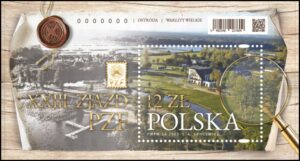
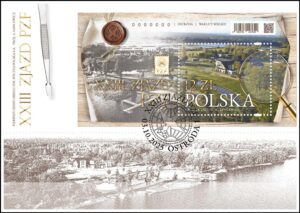
Z okazji XXIII Zjazdu Polskiego Związku Filatelistów, który odbywa się w Warlitach Wielkich (gmina Ostróda), Poczta Polska wydała znaczek o nominale 12 zł, przedstawiający malowniczy krajobraz tej miejscowości – z widokiem na jezioro, otaczającą zieleń i zabudowania, położone w otulinie Rezerwatu Sosny Taborskiej. To miejsce o wyjątkowych walorach przyrodniczych i krajobrazowych, które stało się symboliczną przestrzenią spotkania środowiska filatelistycznego w 2025 roku.
Na bloku i kopercie FDC znalazły się dodatkowe elementy podkreślające charakter wydarzenia i pasję filatelistyczną: *** Lupa powiększająca fragment krajobrazu – symbol dociekliwości i precyzji filatelistów. *** Pęseta – narzędzie pracy każdego kolekcjonera, umieszczona obok pionowego napisu „XXIII ZJAZD PZF”. *** Pieczęć lakowa z odbitym symbolem PZF – nawiązanie do tradycji i elegancji korespondencji. *** Datownik z datą 03.10.2025 i symbolem PZF z miejscowością Ostróda, potwierdzający miejsce i datę emisji oraz zjazdu. Całość tworzy spójną kompozycję, która nie tylko dokumentuje wydarzenie, ale także oddaje ducha filatelistyki – łącząc naturę, historię i pasję kolekcjonerską.
2025-10-03 … Denomination: 12.00 PLN … Author of the stamp design: Agnieszka Sancewicz; Number of stamps in issue: 1; Sheet size: 121 x 63 mm; Paper: Fluorescent; Printing techniques: Offset; Sales sheet: 1 in the block; Print run: 74 000 pcs.
To mark the 23rd Congress of the Polish Philatelic Union, held in Warlity Wielkie (Ostróda commune), Polish Post issued a stamp with a face value of 12 zł, depicting the picturesque landscape of the area – with a view of the lake, surrounding greenery, and buildings nestled within the Taborska Pine Reserve buffer zone. This location, known for its exceptional natural and scenic value, became a symbolic venue for the philatelic community’s gathering in 2025.
The souvenir sheet and FDC envelope include additional elements that emphasize the character of the event and the passion for philately: *** A magnifying glass enlarging part of the landscape – symbolizing the curiosity and precision of philatelists. *** Tweezers – a collector’s essential tool, placed next to the vertical inscription “XXIII ZJAZD PZF”. *** A wax seal with the PZF symbol – referencing the tradition and elegance of correspondence. *** A postmark dated 03.10.2025 with the PZF symbol and the town name Ostróda – confirming the date and place of the issue and the congress The entire composition not only documents the event but also reflects the spirit of philately – combining nature, history, and the passion for collecting.
800 lat historii Parafii Mariackiej w Krakowie
800 years of history of St. Mary’s Basilica in Kraków
www.poczta-polska.pl
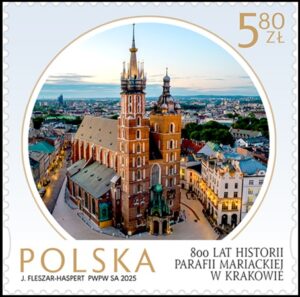
Data emisji: 18-10-2025 … Z okazji 800-lecia parafii Mariackiej w Krakowie, Poczta Polska wydała okolicznościowy arkusik filatelistyczny, który nie tylko upamiętnia ten wyjątkowy jubileusz, ale także oddaje hołd jednej z najważniejszych świątyń w Polsce — Bazylice Mariackiej. Bazylika Mariacka, położona przy Rynku Głównym w Krakowie, jest jednym z najcenniejszych zabytków sakralnych w Polsce. Jej początki sięgają XIII wieku, a obecny gotycki kształt uzyskała w XIV wieku. Świątynia słynie z monumentalnego ołtarza Wita Stwosza, gotyckiej architektury, polichromii autorstwa Jana Matejki oraz tradycji hejnału mariackiego, granego co godzinę z wieży hejnalicy.
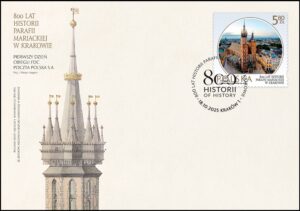
Znaczek przedstawia fotografię Bazyliki Mariackiej na tle panoramy Krakowa. Na przywieszce widnieje polichromia autorstwa Jana Matejki z prezbiterium Bazyliki oraz oficjalny logotyp obchodów 800-lecia. Pionowe elementy oprawy arkusza to polichromia Antoniego Tucha, również z prezbiterium. Arkusik ozdobiony jest bordiurą z motywami roślinnymi i kwiatowymi oraz napisem “800 lat historii Parafii Mariackiej w Krakowie” u góry i dołu. Na kopercie FDC wykorzystano rysunek wieży hejnalicy Bazyliki Mariackiej.
2025-10-18 … Nominał znaczka: 5.80 zł … Autor projektu: Joanna Fleszar – Haspert; Ilość znaczków w emisji: 1; Format znaczka: 40,5 x 40,5 mm; Technika druku: Offset + raster stochastyczny; Papier: fluorescencyjny; Nakład:100 000 szt.; Arkusz sprzedażny: 5 znaczków + przywieszka; Format koperty FDC: 162 mm x 113 mm.
Issue date: 18-10-2025 … To celebrate the 800th anniversary of the Mariacka Parish in Kraków, Poczta Polska issued a commemorative philatelic sheet that honors one of Poland’s most iconic churches — St. Mary’s Basilica. Located on Kraków’s Main Market Square, the basilica dates back to the 13th century and took its current Gothic form in the 14th century. It is renowned for the monumental altar by Veit Stoss, Gothic architecture, polychromes by Jan Matejko, and the tradition of the Mariacki bugle call, played hourly from the basilica’s tower.
Stamps depict a photograph of St. Mary’s Basilica against the Kraków skyline. The tablet includes a polychrome by Jan Matejko from the basilica’s presbytery and the official logo of the 800th anniversary celebrations. Vertical decorative elements feature polychrome by Antoni Tuch, also from the presbytery. The sheet is adorned with a floral and plant motif border and the inscription “800 lat historii Parafii Mariackiej w Krakowie” at the top and bottom. The FDC envelope features a drawing of the basilica’s hejnalica tower.
2025-08-30 … Denomination: 5.80 PLN … Author of the stamp design: Joanna Fleszar – Haspert; Number of stamps in issue: 1; Stamp size: 40,5 x 40,5 mm; Paper: Fluorescent; Printing techniques: Offset+ stochastic raster; Sales sheet: 5 stamps + tablet; Print run: 100 000 pcs; FDC size: 162 mm x 113 mm.
2025 … Fantastyczne światy – blok
2025 … Fantastic worlds – block
www.poczta-polska.pl
Data emisji: 27-10-2025 … W ramach wyjątkowej emisji Poczty Polskiej zaprezentowano blok filatelistyczny poświęcony twórczości Wojciecha Siudmaka – mistrza realizmu fantastycznego, którego dzieła łączą naukę, filozofię i sztukę w niezwykle sugestywnych, surrealistycznych kompozycjach.
W bloku znalazły się cztery znaczki, z których każdy przedstawia jedno z wybitnych dzieł artysty: *** „Energia” – dynamiczna wizja siły i ruchu, ukazana z charakterystyczną dla Siudmaka precyzją i głębią. *** „Chwila bezruchu” – kontemplacyjna scena zatrzymanego czasu, pełna symboliki i metafizycznego napięcia. *** „Energia bawiąca się elektronem” – obraz ukazujący zabawę z nauką i materią, w której energia przybiera niemal ludzką formę. *** „Wieczna Miłość” – poruszająca alegoria uczucia, które przekracza granice czasu i przestrzeni.
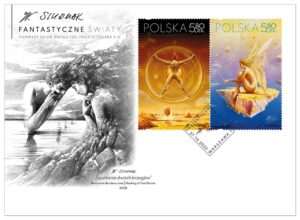
Każdy znaczek posiada nominał 5,80 zł, umieszczony w prawym górnym rogu, oraz napis POLSKA wzdłuż górnej krawędzi. Przy każdym znaczku w oprawie bloku umieszczono tytuł dzieła i rok jego powstania, co nadaje całości charakter kolekcjonerski i edukacyjny. Emisję uzupełniają dwie koperty FDC, ozdobione grafiką kolejnego dzieła Siudmaka – „Spotkanie dwóch brzegów”. W polu datownika znalazł się tytuł emisji, miejsce jej wprowadzenia oraz podpis Mistrza, co czyni całość wyjątkowym hołdem dla jego twórczości.
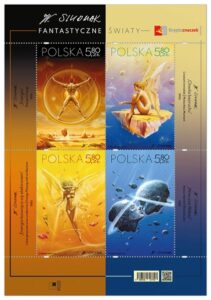
2025-10-27 … Nominał znaczka: 5.80 zł … Autor projektu: Roch Stefaniak; Format znaczka: 51 x 79 mm; Ilość znaczków w emisji: 4; Ilość znaczków w bloku: 4; Format bloku: 149 x 215 mm; Technika druku / Papier: Offset / fluorescencyjny; Nakład:80 000 szt.; Arkusz sprzedażny: 4; Format koperty FDC: 207 x 149 mm.
Issue date: 27-10-2025 … As part of a unique issue by Poczta Polska, a stamp block has been released featuring the works of Wojciech Siudmak – a master of fantastic realism, whose art blends science, philosophy, and surreal imagination.
The block includes four stamps, each showcasing one of the artist’s iconic paintings: *** “Energy” – a dynamic vision of force and motion, rendered with Siudmak’s signature precision and depth. *** “Moment of Stillness” – a contemplative scene of frozen time, rich in symbolism and metaphysical tension. *** “Energy Playing with an Electron” – a playful take on science and matter, where energy takes on a nearly human form. *** “Eternal Love” – a moving allegory of love that transcends time and space.
Each stamp bears the denomination 5.80 zł in the top right corner and the inscription POLSKA along the top edge. The frame of the block includes the title and year of each artwork, adding a collectible and educational value. The issue is complemented by two FDC envelopes, featuring the artwork “Meeting of Two Shores”. The postmark field includes the title of the issue, place of release, and the Master’s signature, making this a true tribute to Siudmak’s visionary art.
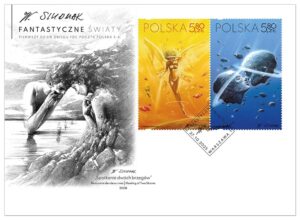
2025-10-27 … Denomination: 5.80 PLN … Author of the stamp design: Roch Stefaniak; Number of stamps in issue: 4; Number of stamps in block: 4; Stamp size: 51 x 79 mm, Block size: 149 x 215 mm; Paper: Fluorescent; Printing techniques: Offset; Print run: 80 000 pcs; FDC size: 207 x 149 mm.
2025 … Boże Narodzenie
2025 … Christmas
www.poczta-polska.pl
2025-11-05 … Nominał znaczka: 5.80 zł / 4.90 zł … Format znaczka: 25,5 x 31,25 mm; Ilość znaczków w emisji: 1; Technika druku / Papier: Rotograwiura/ fluorescencyjny; Nakład:2 000 000 szt./5 000 000 szt.; Arkusz sprzedażny: 100; Format koperty FDC: 207 x 149 mm.
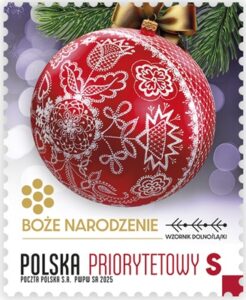
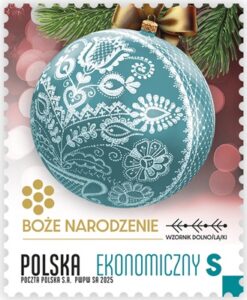
Data emisji: 05-11-2025 (PR format S) … Poczta Polska wprowadziła do obiegu emisję znaczków pocztowych „Boże Narodzenie”, inspirowaną unikatowym Wzornikiem Dolnośląskim – współczesnym regionalnym motywem dekoracyjnym, który łączy tradycję z nowoczesnością. Na znaczkach przedstawiono zdjęcia bombek choinkowych zdobionych wzorami zaczerpniętymi z dolnośląskiego dziedzictwa kulturowego. Pod wizerunkiem bombek widnieje tytuł emisji „Boże Narodzenie” oraz napis „Wzornik Dolnośląski”. Wzdłuż dolnej krawędzi umieszczono napis „POLSKA” i odpowiednie oznaczenie wartości: EKONOMICZNY S, PRIORYTETOWY S oraz 10 zł.
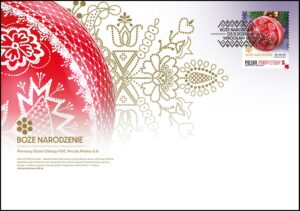
Emisję uzupełniają trzy koperty FDC oraz dwa datowniki, których grafika w całości oparta jest na koncepcji Wzornika Dolnośląskiego, która zakłada dowolne łączenie ludowych motywów dekoracyjnych, charakterystycznych dla regionów, z których przyjechali na Dolny Śląsk osadnicy po 1945 roku. Wzornik Dolnośląski jest niematerialnym dziedzictwem kulturowym, łączącym przeszłość z przyszłością. To współczesny regionalny wzór, który odzwierciedla historię Dolnego Śląska oraz etnograficzne bogactwo jego mieszkańców.
Bombka Dolnośląska to unikatowe szklane rękodzieło zdobione Wzornikiem Dolnośląskim. Bombki są dekorowane techniką przypominającą malowanie wydmuszek woskiem – zdobienie jest strukturalne w monochromatycznym kolorze. Dekorator, cienkim, ostro zakończonym narzędziem, na powierzchnię bombki nanosi akryl i stawiając kropkę przy kropce tworzy kompozycje Wzornika Dolnośląskiego. Bazą każdej kompozycji są dekory zaczerpnięte z haftów i tradycyjnej sztuki plastycznej dawnego Dolnego Śląska. Wykropkowane lilijki, girlandy, parzenice, wiatraczki, kwiatki, słonka, rozety, wachlarze i inne detale zdobnicze układają się w swoistą mozaikę kultur i tradycji, podkreślając zróżnicowanie etniczne Dolnoślązaków.
Ambasadą Wzornika Dolnośląskiego jest Muzeum Bombki w Miliczu. Mieści się ono w budynku dawnej fabryki szklanych ozdób choinkowych. Milicka fabryka bombek – założona na przełomie lat 50. i 60. XX wieku – działała nieprzerwanie aż do 2008 roku. Do tego czasu była to największa w Polsce manufaktura szklanych ozdób choinkowych, produkująca około miliona sztuk bombek rocznie. Cała produkcja odbywała się ręcznie. Milickie bombki trafiały na wszystkie kontynenty świata, głownie do Stanów Zjednoczonych i Japonii. Wśród odbiorców był m.in. Walt Disney. Zbiory eksponowane w muzeum (ok. 6 tys. egzemplarzy) są ze wzorcowni fabryki, gdzie przez lata odkładano po jednym egzemplarzu z każdego produkowanego wzoru bombki. Najstarsze bombki pochodzą z drugiej połowy XX wieku, najnowsze z 2007 roku.
Oznaczenie EKONONICZNY S odpowiada wartości nominalnej znaczka pocztowego właściwego do uiszczania opłaty za przesyłkę listową nierejestrowaną ekonomiczną w obrocie krajowym w formacie S i ekonomiczną kartkę pocztową w obrocie krajowym.
Data emisji: 05-11-2025 (EK format S) … Poczta Polska wprowadza do obiegu emisję znaczków pocztowych „Boże Narodzenie”, inspirowaną unikatowym Wzornikiem Dolnośląskim – współczesnym regionalnym motywem dekoracyjnym, który łączy tradycję z nowoczesnością. Na znaczkach przedstawiono zdjęcia bombek choinkowych zdobionych wzorami zaczerpniętymi z dolnośląskiego dziedzictwa kulturowego. Pod wizerunkiem bombek widnieje tytuł emisji „Boże Narodzenie” oraz napis „Wzornik Dolnośląski”. Wzdłuż dolnej krawędzi umieszczono napis „POLSKA” i odpowiednie oznaczenie wartości: EKONOMICZNY S, PRIORYTETOWY S oraz 10 zł. Oznaczenie PRIORYTETOWY S odpowiada wartości nominalnej znaczka pocztowego właściwego do uiszczania opłaty za przesyłkę listową nierejestrowaną priorytetową w obrocie krajowym w formacie S i priorytetową kartkę pocztową w obrocie krajowym.
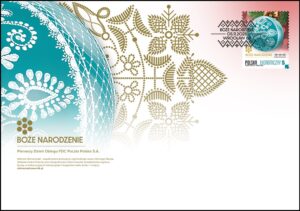
2025-11-05 … Denomination: 5.80 PLN / 4.90 PLN … Stamp size: 25,5 x 31,25 mm; Number of stamps in issue: 1; Paper: Fluorescent; Printing techniques: Rotogravure; Print run: 2 000 000 pcs / 5 000 000; Sales sheet: 100; FDC size: 207 x 149 mm.
Issue date: 05-11-2025 (priority letter) … Polish Post introduces a new stamp issue titled “Christmas,” inspired by the unique Lower Silesian Pattern – a contemporary regional decorative motif that combines tradition with modernity. The stamps feature photographs of Christmas baubles decorated with designs derived from the cultural heritage of Lower Silesia. Below the baubles, the title of the issue “Christmas” and the inscription “Lower Silesian Pattern” are displayed. Along the bottom edge, the word “POLSKA” and the respective denominations appear: ECONOMIC S, PRIORITY S, and 10 PLN. The issue is complemented by three FDC envelopes and two postmarks, whose graphics are entirely based on the concept of the Lower Silesian Pattern.
The Lower Silesian Bauble is a unique handmade glass ornament decorated using a technique reminiscent of wax painting on eggs. The decorator applies acrylic dot by dot to create compositions of folk motifs: lilies, garlands, parzenice, windmills, flowers, suns, rosettes, and fans. These patterns reflect the ethnographic richness of Lower Silesia and the history of settlers who arrived after 1945.
The inspiration for this issue comes from the Christmas Bauble Museum in Milicz, located in the former glass ornament factory – once the largest bauble manufactory in Poland, operating from the 1950s until 2008. Milicz baubles, made entirely by hand, were exported worldwide, mainly to the USA and Japan, with Walt Disney among the recipients. The museum’s collection includes about 6,000 pieces, from the oldest baubles of the late 20th century to the newest from 2007.
Issue date: 05-11-2025 (economic letter) … Polish Post introduces a new stamp issue titled “Christmas,” inspired by the unique Lower Silesian Pattern – a contemporary regional decorative motif that combines tradition with modernity. The stamps feature photographs of Christmas baubles decorated with designs derived from the cultural heritage of Lower Silesia. Below the baubles, the title of the issue “Christmas” and the inscription “Lower Silesian Pattern” are displayed. Along the bottom edge, the word “POLSKA” and the respective denominations appear: ECONOMIC S, PRIORITY S, and 10 PLN. The issue is complemented by three FDC envelopes and two postmarks, whose graphics are entirely based on the concept of the Lower Silesian Pattern.
2025 … Boże Narodzenie
2025 … Christmas
www.poczta-polska.pl
2025-11-17 … Nominał znaczka: 10.00 zł … Autor projektu: Roch Stefaniak; Format znaczka: 25,5 x 31,25 mm; Ilość znaczków w emisji: 1; Technika druku / Papier: Rotograwiura/ fluorescencyjny; Nakład:1 000 000 szt.; Arkusz sprzedażny: 100; Format koperty FDC: 207 x 149 mm.
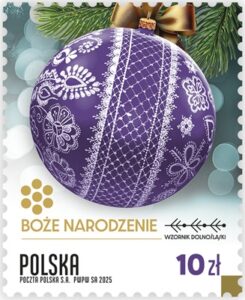
Data emisji: 17-11-2025 … Poczta Polska wprowadza do obiegu emisję znaczków pocztowych „Boże Narodzenie”, inspirowaną unikatowym Wzornikiem Dolnośląskim – współczesnym regionalnym motywem dekoracyjnym, który łączy tradycję z nowoczesnością. Na znaczkach przedstawiono zdjęcia bombek choinkowych zdobionych wzorami zaczerpniętymi z dolnośląskiego dziedzictwa kulturowego. Pod wizerunkiem bombek widnieje tytuł emisji „Boże Narodzenie” oraz napis „Wzornik Dolnośląski”. Wzdłuż dolnej krawędzi umieszczono napis „POLSKA” i odpowiednie oznaczenie wartości: EKONOMICZNY S, PRIORYTETOWY S oraz 10 zł. Emisję uzupełniają trzy koperty FDC oraz dwa datowniki, których grafika w całości oparta jest na koncepcji Wzornika Dolnośląskiego, która zakłada dowolne łączenie ludowych motywów dekoracyjnych, charakterystycznych dla regionów, z których przyjechali na Dolny Śląsk osadnicy po 1945 roku. Wzornik Dolnośląski jest niematerialnym dziedzictwem kulturowym, łączącym przeszłość z przyszłością. To współczesny regionalny wzór, który odzwierciedla historię Dolnego Śląska oraz etnograficzne bogactwo jego mieszkańców.
Bombka Dolnośląska to unikatowe szklane rękodzieło zdobione Wzornikiem Dolnośląskim. Bombki są dekorowane techniką przypominającą malowanie wydmuszek woskiem – zdobienie jest strukturalne w monochromatycznym kolorze. Dekorator, cienkim, ostro zakończonym narzędziem, na powierzchnię bombki nanosi akryl i stawiając kropkę przy kropce tworzy kompozycje Wzornika Dolnośląskiego. Bazą każdej kompozycji są dekory zaczerpnięte z haftów i tradycyjnej sztuki plastycznej dawnego Dolnego Śląska. Wykropkowane lilijki, girlandy, parzenice, wiatraczki, kwiatki, słonka, rozety, wachlarze i inne detale zdobnicze układają się w swoistą mozaikę kultur i tradycji, podkreślając zróżnicowanie etniczne Dolnoślązaków. Ambasadą Wzornika Dolnośląskiego jest Muzeum Bombki w Miliczu. Mieści się ono w budynku dawnej fabryki szklanych ozdób choinkowych. Milicka fabryka bombek – założona na przełomie lat 50. I 60. XX wieku – działała nieprzerwanie aż do 2008 roku. Do tego czasu była to największa w Polsce manufaktura szklanych ozdób choinkowych, produkująca około miliona sztuk bombek rocznie.
Cała produkcja odbywała się ręcznie. Milickie bombki trafiały na wszystkie kontynenty świata, głownie do Stanów Zjednoczonych i Japonii. Wśród odbiorców był m.in. Walt Disney. Zbiory eksponowane w muzeum (ok. 6 tys. Egzemplarzy) są ze wzorcowni fabryki, gdzie przez lata odkładano po jednym egzemplarzu z każdego produkowanego wzoru bombki. Najstarsze bombki pochodzą z drugiej połowy XX wieku, najnowsze z 2007 roku. Oznaczenie PRIORYTETOWY S odpowiada wartości nominalnej znaczka pocztowego właściwego do uiszczania opłaty za przesyłkę listową nierejestrowaną priorytetową w obrocie krajowym w formacie S i priorytetową kartkę pocztową w obrocie krajowym.
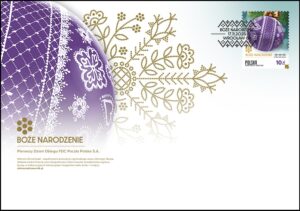
2025-11-17 … Denomination: 10.00 PLN … Number of stamps in issue: 1; Stamp size: 25,5×31,25 mm, Paper: Fluorescent; Printing techniques: Rotogravure; Print run: 1 000 000 pcs; Sales sheet : 100; FDC size: 207 x 149 mm.
Issue date: 17-11-2025 … Polish Post introduces a new stamp issue titled “Christmas,” inspired by the unique Lower Silesian Pattern – a contemporary regional decorative motif that combines tradition with modernity. The stamps feature photographs of Christmas baubles decorated with designs derived from the cultural heritage of Lower Silesia. Below the baubles, the title of the issue “Christmas” and the inscription “Lower Silesian Pattern” are displayed. Along the bottom edge, the word “POLSKA” and the respective denominations appear: ECONOMIC S, PRIORITY S, and 10 PLN. The issue is complemented by three FDC envelopes and two postmarks, whose graphics are entirely based on the concept of the Lower Silesian Pattern.
The Lower Silesian Bauble is a unique handmade glass ornament decorated using a technique reminiscent of wax painting on eggs. The decorator applies acrylic dot by dot to create compositions of folk motifs: lilies, garlands, parzenice, windmills, flowers, suns, rosettes, and fans. These patterns reflect the ethnographic richness of Lower Silesia and the history of settlers who arrived after 1945. The inspiration for this issue comes from the Christmas Bauble Museum in Milicz, located in the former glass ornament factory – once the largest bauble manufactory in Poland, operating from the 1950s until 2008. Milicz baubles, made entirely by hand, were exported worldwide, mainly to the USA and Japan, with Walt Disney among the recipients. The museum’s collection includes about 6,000 pieces, from the oldest baubles of the late 20th century to the newest from 2007.
Hetmani Rzeczypospolitej – Jan Karol Chodkiewicz
www.nbp.pl
Narodowy Bank Polski jest centralnym bankiem państwa odpowiadającym za politykę pieniężną i stabilność cen. Jego funkcje określa Konstytucja Rzeczypospolitej Polskiej i ustawa o NBP. NBP ma wyłączne prawo emisji pieniądza. Jako bank centralny nie prowadzi rachunków bankowych obywateli, nie przyjmuje od nich lokat, nie udziela kredytów. Prowadzi natomiast obsługę budżetu państwa, a także podmiotów sektora finansów publicznych. Gromadzi rezerwy walutowe państwa i zarządza nimi. Pełni funkcję banku banków, tworząc warunki do działania systemu bankowego. Jest również jednym z najważniejszych ośrodków naukowo-analityczny.
Emisja wartości kolekcjonerskich stanowi okazję do upamiętniania ważnych historycznych rocznic i postaci oraz do rozwijania zainteresowań polską kulturą, nauką i tradycją. 23 października 2025 roku Narodowy Bank Polski wprowadził do obiegu złotą monetę o nominale 500 zł oraz srebrną monetę o nominale 10 zł z serii „Hetmani Rzeczypospolitej” – „Jan Karol Chodkiewicz”.
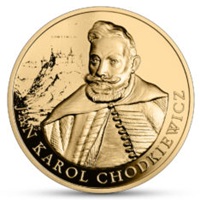
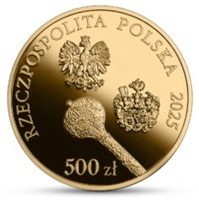
Nominał 500 zł … metal: Au 999,9/1000; stempel: lustrzany, wysoki relief; średnica: 32,00 mm; masa: 31,10 g; brzeg (bok): gładki; nakład: do 1000 szt.; Projektantka: Dobrochna Surajewska.
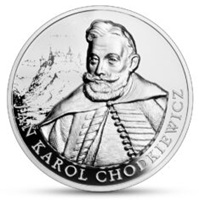
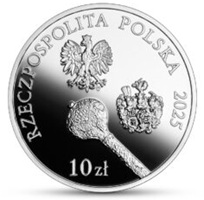
Nominał 10 zł … metal: Ag 999/1000; stempel: lustrzany, wysoki relief średnica: 32,00 mm masa: 31,10 g brzeg (bok): gładki nakład: do 8000 szt. Projektantka: Dobrochna Surajewska Emitent: NBP Na zlecenie NBP monety wyprodukowała Mennica Polska SA.
Na rewersach monety złotej i srebrnej został umieszczony wizerunek hetmana Jana Karola Chodkiewicza oraz fragment planu bitwy pod Chocimiem. Na awersach – poza stałymi elementami monety: napisem „Rzeczpospolita Polska”, rokiem emisji, nominałem oraz wizerunkiem orła ustalonym dla godła Rzeczypospolitej Polskiej – widnieją także buława oraz herb Jana Karola Chodkiewicza.
Jan Karol Chodkiewicz odebrał wychowanie typowe dla wielu synów magnackich – najpierw uczył się w kraju, a następnie kontynuował studia w Niemczech i we Włoszech. Zagraniczne podróże zostały zwieńczone pobytem na Malcie, gdzie zapoznawał się z nowoczesną wojskowością. Pierwsze doświadczenia wojenne zdobywał pod dowództwem Stanisława Żółkiewskiego i Jana Zamoyskiego. Prawdziwy talent wojenny Chodkiewicza uwidocznił się podczas wojen ze Szwedami w Inflantach. Wyróżnił się w bitwie pod Kokenhausen oraz w czasie obrony Rygi. Po objęciu samodzielnego dowództwa odniósł błyskotliwe zwycięstwo pod Białym Kamieniem, które przyniosło mu buławę wielką litewską. Nowo mianowany hetman twardą ręką poprowadził nieliczne, nieopłacone i skore do rozejścia się oddziały. Na ich czele ruszył przeciwko armii szwedzkiej oblegającej Rygę, dowodzonej przez króla Karola IX Sudermańskiego. Do starcia doszło 27 września 1605 r. nieopodal Kircholmu. Przeciw 11 tysiącom Szwedów stanęło około 3,6 tysiąca żołnierzy Rzeczypospolitej.
Hetman, nie zważając na przewagę liczebną wroga, dzięki precyzyjnemu użyciu skromnych sił – zwłaszcza ciężkiej jazdy, husarii – odniósł spektakularne zwycięstwo. W ciągu kilku godzin armia szwedzka została rozbita, a ranny król uciekł z pola bitwy. Triumf pod Kircholmem odbił się głośnym echem w Europie, niestety nie został wykorzystany. Nieopłacani żołnierze buntowali się, a kraj pogrążył się w wojnie domowej. W 1607 r. Chodkiewicz stanął po stronie Zygmunta III i walczył z rokoszanami w bitwie pod Guzowem. Po powrocie na front inflancki kontynuował walkę ze Szwedami, którzy – pamiętając klęskę spod Kircholmu – nie odważyli się stanąć do otwartej bitwy i kryli się w miastach oraz zamkach. Gdy wybuchł konflikt z Rosją, Chodkiewicz próbował przybyć z odsieczą polskiemu garnizonowi na Kremlu. W 1617 r. stanął na czele wyprawy na Moskwę mającej przynieść koronę carską królewiczowi Władysławowi Wazie. Po kilku nieudanych szturmach odstąpiono od oblężenia miasta, a traktat w Dywilnie zakończył polsko-moskiewskie zmagania.
Hetman niedługo cieszył się spokojem. Klęska pod Cecorą i zagłada armii koronnej zmusiły Rzeczpospolitą do wystawienia nowej armii. Jej dowództwo powierzono Chodkiewiczowi, który zgromadził wojska pod Chocimiem. Wykorzystując umocnienia polowe, przez miesiąc umiejętnie kierował obroną i odpierał ataki przeważających sił tureckich dowodzonych przez sułtana Osmana II. Oblężenie zakończyło się zawarciem pokoju 9 października 1621 r. Chodkiewicz nie doczekał tego momentu – schorowany zmarł jeszcze w trakcie walk. Hetman wielki litewski był znany ze swojej energii, zapobiegliwości, ale i porywczości. Na polu bitwy stosował ekonomię sił i wykonywał śmiałe manewry, których celem było przełamanie oporu wroga. W walkach wykorzystywał także fortyfikacje polowe. Znakomite zwycięstwa zapewniły mu miejsce w panteonie wodzów staropolskich, zaś już mu współcześni nadali Chodkiewiczowi przydomek „litewski Achilles”. Informacja: Wojciech Kalwat.

Hetmans of the Polish–Lithuanian Commonwealth –
Jan Karol Chodkiewicz
www.nbp.pl
Narodowy Bank Polski is the central bank of the State, responsible for its monetary policy and price stability. The Bank’s functions are described in the Constitution of the Republic of Poland and the Act on NBP. NBP holds the exclusive right to issue the currency of the Republic of Poland. As the central bank, it does not provide accounts for the general public, accept deposits from or extend loans to individuals. It acts as a banker to the State budget and public sector entities. NBP also holds and manages the foreign exchange reserves of the State. Finally, it functions as a banker to banks, creating conditions for the operation of the Polish banking system. Narodowy Bank Polski is one of the most important research and analytical centres in the fields of economics and financial markets.
Issuing collector items is an occasion to commemorate important historic figures and anniversaries, as well as to develop the interest of the public in Polish culture, science and tradition. On 23 October 2025, Narodowy Bank Polski issued into circulation a gold coin with a face value of 500 złoty and a silver coin with a face value of 10 złoty of the series “Hetmans of the Polish-Lithuanian Commonwealth” – “Jan Karol Chodkiewicz”.
Face value: 500 zł … Metal: Au 999.9/1000; Finish: proof, high relief; Diameter: 32.00 mm; Weight: 31.10 g; Edge (side): plain; Mintage: up to 1,000 pcs; Designer: Dobrochna Surajewska;
Face value: 10 zł … Metal: Ag 999/1000; Finish: proof, high relief; Diameter: 32.00 mm; Weight: 31.10 g; Edge (side): plain; Mintage: up to 8,000 pcs; Designer: Dobrochna Surajewska; Issuer: Narodowy Bank Polski; The coins, commissioned by Narodowy Bank Polski, were struck by Mennica Polska SA.
The reverses of the gold and silver coins feature an image of hetman Jan Karol Chodkiewicz and a fragment of a plan of the Battle of Chocim. Their obverses – apart from the regular elements such as the inscription: “Rzeczpospolita Polska”, year of issue, face value and the image of the Eagle established as the state emblem of the Republic of Poland – also bear the mace and the coat of arms of Jan Karol Chodkiewicz.
Jan Karol Chodkiewicz received an upbringing typical of many sons of magnates – first he went to schools in his home country, then continued his studies in Germany and Italy. His foreign travels culminated in a stay in Malta, where he became acquainted with modern military technique. He gained his first military experience under the command of Stanisław Żółkiewski and Jan Zamoyski. Chodkiewicz’s true martial talent became evident during the wars with the Swedes in Livonia. He distinguished himself at the Battle of Kokenhausen and during the defence of Riga. After taking independent command, he won a brilliant victory at Biały Kamień, which earned him the great mace of Lithuania.
The newly appointed hetman led his small, unpaid and disheartened troops with a firm hand. He headed them against the Swedish army besieging Riga, under the command of King Charles IX of Sweden. The clash took place on 27 September 1605 near Kircholm. Approximately 3,600 soldiers of the Polish-Lithuanian Commonwealth faced 11,000 Swedes. The hetman, regardless of the enemy’s numerical superiority, achieved a spectacular victory thanks to the precise use of his modest forces, especially the heavy cavalry, the hussars. Within a few hours, the Swedish army was defeated and the wounded king fled the battlefield. The triumph at Kircholm resonated throughout Europe, but unfortunately, it was not used to good advantage. Unpaid soldiers mutinied, and the country descended into civil war. In 1607, Chodkiewicz sided with Sigismund III and fought against the rebels at the Battle of Guzów. After returning to the Livonian front, he continued fighting the Swedes, who remembered their defeat at Kircholm and did not dare to fight an open battle, hiding in towns and castles. When the conflict with Russia broke out, Chodkiewicz attempted to come to the aid of the Polish garrison in the Kremlin.
In 1617, he led an expedition to Moscow to bring the tsar’s crown to Polish Prince Ladislas Vasa. After several unsuccessful attacks, the siege of the city was abandoned, and the Treaty of Dywilno ended the Polish- -Muscovite fighting. The hetman did not enjoy peace for long. The defeat at Cecora and the destruction of the Crown Army forced the Commonwealth to raise a new army. Its command was entrusted to Chodkiewicz, who gathered his troops at Chocim. Using field fortifications, he skilfully headed the defence for a month and repulsed the attacks of the superior Turkish forces commanded by Sultan Osman II. The siege ended with the conclusion of peace on 9 October 1621. Chodkiewicz did not live to see this moment – he died of his illness during the fighting. The Grand Hetman of Lithuania was known for his energy, foresight, but also impulsiveness. On the battlefield, he employed an economy of force and executed daring manoeuvres aimed at breaking enemy resistance. He also utilized field fortifications in battle. His remarkable victories earned him a place in the pantheon of Old Polish commanders, and his contemporaries nicknamed Chodkiewicz the “Lithuanian Achilles”. Info: Wojciech Kalwat.
Fungi booklet of 10 Permanent™ stamps
www.canadapost.ca
Discover the fascinating world of fungi with the 2025 stamp issue featuring five species found in Canada. This issue celebrates the beauty, diversity and ecological importance of fungi. Booklet of 10 Permanent™ domestic rate stamps. The 2025 Fungi stamp issue also includes an Official First Day Cover. This is Canada Post’s second set of fungi stamps, the first was issued in 1989.
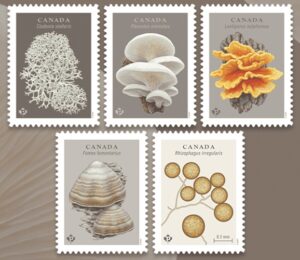
About Fungi … Growing awareness of the importance of biodiversity and traditional Indigenous knowledge has renewed our fascination with fungi and lichens. While the world’s fungal diversity is vast, only a small percentage of fungal species has been catalogued. The five species presented in this stamp issue are all found in Canada:
***A preferred winter food source for caribou, star-tipped reindeer lichen (Cladonia stellaris) grows in boreal and Arctic regions. Like all lichens, it is a fungus and an alga growing as one. ***The oyster mushroom (Pleurotus ostreatus) is common to many cuisines. Researchers are experimenting with its tissues to make packaging, building materials and fungal leather. ***The yellow-orange conks of chicken of the woods (Laetiporus sulphureus) were traditionally used to smooth and soften buckskin and to treat sore joints. ***Used by Indigenous Peoples as a fire starter, tinder fungus (Fomes fomentarius) makes hard conks on deciduous trees. It can also repel insects when burned as a smudge. ***Rhizophagus irregularis, a microscopic arbuscular mycorrhizal fungus (AMF), naturally integrates with plant roots and can also be added to soil to enhance crop health in farming.
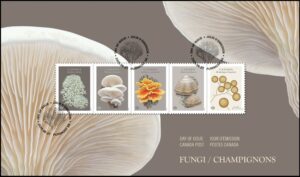
About the design … Designed by Jocelyne Saulnier (Joce Creative) and illustrated by Emily S. Damstra, this stamp issue offers a close-up view of five species of fungi and explores their beauty in a style reminiscent of botanical illustrations. Stamp Designer: Jocelyne Saulnier, Joce Creative; Stamp Illustrator: Emily S. Damstra; Quantity Produced: 120,000 booklets of ten Permanent™ stamps; Issue Date: August 27 2025.
Discover the fascinating world of fungi with the 2025 Fungi Official First Day Cover from the 2025 stamp issue featuring five species found in Canada. This issue celebrates the beauty, diversity and ecological importance of fungi.
Good to know … ***The 2025 Fungi stamp issue also includes a booklet of 10 Permanent™ domestic rate stamps. ***This is Canada Post’s second set of fungi stamps, the first was issued in 1989. ***The 2025 Fungi Official First Day Cover is cancelled in Punnichy, Saskatchewan. ***Punnichy is located near the Touchwood Hills, a wooded area long known to the Cree as a source of Fomes fomentarius, also called “touchwood fungus” or posâkan in Cree. Quantity Produced: 5,000; Issue Date: August 27, 2025.
2025 … Diwali: booklet of 6 Permanent™ stamps
www.canadapost.ca
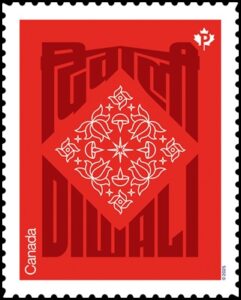
This booklet of 6 Permanent™ stamps heralds the arrival of Diwali, one of the largest, most popular and most widely celebrated festivals in India – and one observed by Hindus, Sikhs, Buddhists, Jains and other communities in Canada and around the world. Diwali celebrates the triumph of good over evil and light over darkness.
About the Diwali stamp issue … In celebration of Canada’s cultural diversity, this stamp heralds the arrival of Diwali, one of the largest, most popular and most widely celebrated festivals in India – and one observed by Hindus, Sikhs, Buddhists, Jains and other communities in Canada and around the world. The Diwali stamp is one of several annual issues that mark events of importance to Canada’s culturally diverse population. The others include Eid, Hanukkah and Christmas.
About Diwali … Diwali is a multiple-day (often five-day) celebration that usually falls in October or November. The timing of Diwali day itself coincides with the arrival of the new moon. This year, it falls on October 20. Also called the Festival of Lights, Diwali’s main theme is the triumph of light over darkness and good over evil. Displays of fireworks, the exchanging of gifts between family members and friends, and donations to those in need are often part of the celebrations.
It should be noted that different regions and communities celebrate aspects of Diwali on different days and in different ways. Auspicious decorations feature prominently during the holiday to welcome guests and – for many – to invite Lakshmi, the goddess of wealth and prosperity, to bestow good fortune on those who enter. Small clay oil lamps called diyas are often lit in rows in homes and temples or set adrift on rivers. Beautiful garlands – known as toranas – are often draped across the entrances and facades of homes and temples.
Rangoli are beautiful yet fleeting works of art that are meant to be swept or washed away. These intricate floor patterns, which have many other names in different regions of India, are a deeply meaningful part of Diwali celebrations. The alluring designs are created in living rooms, courtyards and entranceways using grain, flower petals, coloured sand or rice, and other materials. They are believed to hold divine power.
Women traditionally practise this ancient art. In many homes in India, making floor patterns is a daily, almost meditative ritual. Designs are passed down for generations, from mother to daughter. Some date back thousands of years. Motifs range from geometric shapes to sacred or celestial symbols and auspicious animals, plants and flowers. Some floor patterns serve as a source of food for insects, birds and other small creatures. In this way, they symbolize the charitable focus of the festival.
About the design … The booklet cover features a Rangoli pattern in its centre and the word “Diwali” written in Hindi (above) and English (below). The stamp is red, as red is considered an auspicious colour for Diwali. The inside of the booklet repeats elements of the Rangoli pattern at the heart of the stamp. It also includes a line about the tradition behind the floor patterns. Stamp Designer: Underline Studio; Quantity Produced: 330,000 (55,000 booklets of 6 stamps); Issue Date: October 15, 2025.
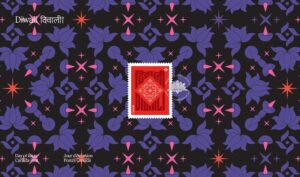
This Official First Day Cover heralds the arrival of Diwali, one of the largest, most popular and most widely celebrated festivals in India – and one observed by Hindus, Sikhs, Buddhists, Jains and other communities in Canada and around the world. Diwali celebrates the triumph of good over evil and light over darkness.
About the design … The cover of the OFDC features elements of the Rangoli pattern at the heart of the stamp. It was cancelled in Scarborough, Ontario, which is home to a large community of Indian Canadians. The cancel image is a lotus flower stamped in metallic silver ink. Stamp Designer: Underline Studio; Quantity Produced: 4,500; Issue Date: October 15, 2025.
2025 … Private Singh:
Booklet of 6 Permanent™ stamps
www.canadapost.ca
The Private Singh stamp – issued on November 3 – in advance of Remembrance Day – honours the courage and sacrifice of the Sikh soldiers who have served in the Canadian military since the First World War. The Private Singh issue is available in multiple formats: ***Booklet of six Permanent™ domestic rate stamps. ***Private Singh: Official First Day Cover. ***Pane of 5 Permanent™ domestic rate stamps. ***Permanent™ domestic rate is always accepted at the current domestic postage price.
About Remembrance Day stamps … Canada Post has a long history of commemorating both Remembrance Day and Canada’s military history through its annual stamp program. Sikh soldiers have served in Canada’s military since the First World War and continue to play an important role during emergencies at home and in international conflicts and peacekeeping efforts.

About Sikh soldiers in Canada … More than a quarter million Sikh soldiers served with Britain and its allies during the two world wars. In Canada, discrimination prevented many Sikhs from enlisting. Only 10 broke the barrier in the First World War – most of them volunteers who fought with the Canadian Expeditionary Force in Europe, despite being denied the right to vote or bring their wives and children to their new home.
As followers of Sikhism – which promotes equality regardless of race, class, gender or religion – all but one had the surname Singh (which means “lion” in Punjabi). Nearly a century later, research brought to light the forgotten stories of these and other Sikh soldiers in Canada, whose resilience helped pave the way for future generations and a more inclusive nation. Private Buckam Singh’s resting place at Mount Hope Cemetery in Kitchener, Ontario, is the only known military grave in Canada of a Sikh soldier from the world wars. The Remembrance Day ceremony held at the site is one of the largest annual gatherings of Sikh soldiers and veterans in North America.
About the design … ***The stamp features an illustration of a Canadian Sikh soldier paying his respects in remembrance of those who have served. The background is an illustration of Private Buckam Singh’s grave at Mount Hope Cemetery in Kitchener, Ontario. ***The front of the booklet is an enlargement of the stamp image. The inside of the booklet features a close-up photograph of the inscription on the cenotaph bearing the names of Private L. (Lashman) Singh and Private W. (Waryam) Singh, in Smiths Falls, Ontario, where they enlisted (photo: Matthew Liteplo). ***The Poppy Design is a registered trademark of The Royal Canadian Legion, Dominion Command, and is used under licence.
Stamp Designer: Larry Burke and Anna Stredulinsky, Burke & Burke; Stamp Illustrator • Illustration: Parm Singh; headstone illustration (based on photo), Dave Peleschak; Quantity Produced: 755,000 (120,000 booklets of 6 Permanent™ stamps; 7,000 panes of 5 Permanent™ stamps); Issue Date: November 3, 2025.

Private Singh: Official First Day Cover … The OFDC – issued on November 3 – in advance of Remembrance Day – honours the courage and sacrifice of the Sikh soldiers who have served in the Canadian military since the First World War. The stamp is cancelled in Kitchener, Ontario, home of the Mount Hope Cemetery, where Private Buckham Singh is buried. The front of the OFDC features a photograph of (l-r) Sergeant Gurpreet Singh Dipak, Captain Daulat Singh Deol and Sergeant Manpreet Singh at the Sikh Remembrance Day Ceremony in Kitchener, Ontario, 2013 (photo: SikhMuseum.com). The back of the OFDC features a photograph of the Victory Medal awarded to Private Buckam Singh in 1919 (photo courtesy of SikhMuseum.com). The Poppy Design is a registered trademark of The Royal Canadian Legion, Dominion Command, and is used under licence. Stamp Designer: Larry Burke and Anna Stredulinsky, Burke & Burke; Stamp Illustrator: Parm Singh; headstone illustration (based on photo), Dave Peleschak; Issue Date: November 3, 2025.
2025 … Christmas:
Booklet of 12 Permanent™ stamps
www.canadapost.ca
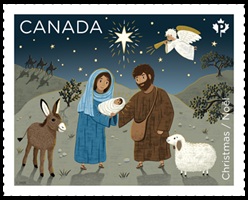
This stamp is part of our annual tradition of issuing a stamp on a sacred, nativity-related topic for the Christmas season. These popular stamps are issued in advance of the Christmas and holiday season so that they can be used on Christmas and holiday mail.
About the design … The stamp features a simple rendition of the Nativity scene – including Mary and Joseph with baby Jesus – set beneath the bright shining star of Bethlehem and an angel announcing the birth of Jesus. The Three Wise Men are seen arriving in the distance. This warm and whimsical depiction of the Nativity features a subtle use of colour and shading. Stamp Designer: Sputnik Design Partners Inc.; Stamp Illustrator: Bex Morley; Quantity Produced: 250,000 booklets of 12 Permanent™ stamps; Issue Date: November 6, 2025.

2025 … Christmas: Official First Day Cover … The cancel location – Hope, British Columbia – was selected for its reference to the theme of hope found in the Nativity story. The cancel is a line illustration of the star of Bethlehem, which was said to announce the birth of Jesus. Cancellation Site: Hope, BC; Stamp Designer: Sputnik Design Partners Inc.; Stamp Illustrator Bex Morley; Quantity Produced: 4,000; Issue Date: November 6, 2025.
Emanuel Hahn’s Original Sketch:
Royal Visit – 5 oz. Fine Silver Coin
www.mint.ca
What came to be: Emanuel Hahn’s vision of the Royal Visit Medallion. With this thin 5 oz. 99.99% pure silver coin, we dipped into the archives to bring you a reproduction of another seldom-seen Emanuel Hahn original: his hand-drawn map of Canada concept for medallions commemorating the 1939 Royal Visit.
In addition to Hahn’s Parliament-themed silver dollar, the Canadian government issued a series of medallions to mark the Royal Visit in 1939, and all of these bore Hahn’s art on their reverse. These medallions were identical in design, but struck in different sizes and materials: 77 mm presentation medallions in gold, silver and tombac; 38 mm silver medallions and bronze ones intended for sale to the public; and a 25 mm bronze medallion to be distributed to Canada’s school children. Struck on the same 5 oz. thin blank as 2024’s Emanuel Hahn’s Original Sketch: Parliament, this 2025 collectible re-creates more than 1,600 lines from the original drawing, including its lettering guidelines and even the paper folds that mark Hahn’s hand-drawn map of Canada, which traces the Royal Tour’s itinerary from sea to sea – A Mari usque ad Mare. A Hahn original on a thin 5 oz. blank with more space for art.
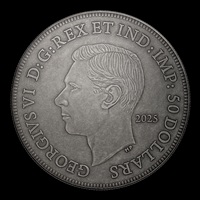
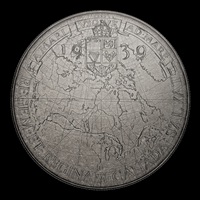
Face Value: $50 … Composition: 99.99% pure silver; Mintage: 1,350; Weight: 158.5 g; Diameter: 110 mm; Edge: Serrated; Finish: Antique; Artist: Emanuel Hahn (reverse), T. H. Paget (obverse); Packaging: Black clamshell with black beauty box.
DID YOU KNOW? … ***Emanuel Hahn submitted two concepts for the 1939 Royal Visit medallion: one with the map of Canada (a suggestion from then-Prime Minister William Lyon Mackenzie King), and one featuring the newly-built National War Memorial. Why wasn’t the War Memorial concept chosen? As explained in a letter dated December 1, 1938, from then-Deputy Minister of Finance, Dr. W. C. Clark, to Dr. O. D. Skelton, Under-Secretary of State for External Affairs: “The sketch of the War Memorial is good insofar as general composition is concerned, but when this design is reduced to the size of the medallion, all the details in the figures will be lost. This design may also be criticized on the ground that the ‘war’ idea may carry an unfortunate connotation to the minds of some people in connection with a visit of Their Majesties.”
Your coin’s reverse is an engraved representation of artist Emanuel Hahn’s hand-drawn concept for the 1939 Royal Visit medallion. Marked by the paper fold lines of the original pencil sketch residing in the National Currency Collection of the Bank of Canada, the reverse design shows a map of Canada that traces the route followed by King George VI and Queen Elizabeth during their visit in 1939. At the top is a ribbon bearing “A MARI VSQUE AD MARE” (“From Sea to Sea”), Canada’s official motto, while the Arms of Canada shield is flanked by the year “1939”. The reverse re-creates the perspective lines and other preliminary graphic elements drawn by the artist, including the lettering guidelines surrounding “REGEM-ET-REGINAM-CANADA-SALVAT”, an erroneous Latin inscription that was later corrected to “REGEM-ET-REGINAM-CANADA-SALVTAT” (“Canada salutes the King and Queen”). The obverse features the effigy of King George VI by Thomas Humphrey Paget.
David Bergeron, Curator, National Currency Collection, Bank of Canada Museum … Following his designs for some of Canada’s most iconic coins issued in 1937, German-Canadian sculptor Emanuel Hahn was invited to design the 1939 Royal Visit Medallion. His concept was simple, showing a map of Canada, but with the distinct feature of tracing the Royal Tour itinerary from their arrival in Quebec City, their movement across Canada to Vancouver, and their return east to depart from St. John’s, N.L. It’s a subtle feature that is better accentuated on his original sketch, which is brilliantly reproduced on this special commemorative coin.
Steven Stewart, 3D Artist – Engraver … It’s no secret that I was eagerly anticipating the release of the first coin in this series, and I’m really proud of its reception. This artwork posed new challenges; the map has the same technical proficiency of Emanuel Hahn’s Parliament building design, but with the addition of more organic line making, which required an additional way to represent drawing through sculpture. In some instances, the best way to faithfully represent the design was to physically redraw it on a transparency with various mark-making tools and scan them into my sculpting software in order to create the desired effect.
Celebrating Canada’s Diversity:
Strength and Abundance – $200 Pure Gold Coin
www.mint.ca
A cultural celebration ornamented with Italian red coral. Since Italian explorer John Cabot first reached Canadian shores more than 500 years ago, Canada has become home to one of the largest Italian diasporas in the world with over 1.5 million Canadians claiming Italian ancestry. Generations of Italian Canadians have influenced Canada’s cultural and economic fabric with contributions to literature, music, science, and more, while the many “Little Italy” neighbourhood remain proud symbols of community, strength, and an abundance of customs that are steeped in history.
The spirit and culture of the Italian people are alive and well in Canada, and they are well represented on this 99.99% pure gold coin. The coin’s immaculately engraved reverse features an artistic arrangement of deeply symbolic elements that surround the Stella d’Italia positioned at the centre of the design, where the five-pointed emblem is adorned with genuine Italian red coral—a precious symbol of good luck and protection in Italian tradition. Coin #6 in the series.
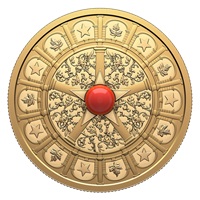

Face Value: $200 … Composition: 99.99% pure gold with red coral; Mintage: 275; Weight: 31.16 g; Diameter: 30 mm; Edge: Serrated; Finish: Proof; Artist: Tony Bianco (reverse), Steven Rosati (obverse); Packaging: Black clamshell with graphic beauty box.
DID YOU KNOW? … ***June is Italian Heritage Month in Canada! It is an opportunity to honour the culture and history of Italian Canadians, and the contributions they have made to Canada and Canadian society.
***Italian red coral has been harvested and used for ornamentation since ancient times, and it continues to be an important industry in coastal regions of Italy—especially in Torre del Greco, a port town renowned for its coral workshops and artisans. As a sought-after jewellery material, red coral is traditionally believed to ward off evil spirits and bring good luck, and it is often used to craft amulets, such as the horn-shaped cornicello that protects against the “evil eye.” Some also believe it to have healing and high-energy qualities.
The reverse design by artist Tony Bianco combines design elements drawn from Italian heritage to form a symbolic representation of the Italian-Canadian community. It centres on the five-pointed symbol of Italy, the Stella d’Italia, which is topped with genuine Italian red coral. Between the Roman columns emanating from the star points, a Renaissance-style pattern includes two elements inspired by the emblem of the Italian Republic: the oak leaf that symbolizes strength, and the olive branch representing peace and abundance. The five columns support a row of arches that form the outer edge; inspired by the Roman Colosseum, these arches frame the repeating Stella d’Italia and the Canadian maple leaf that represent two cultures coming together. The obverse features the effigy of His Majesty King Charles III by Canadian artist Steven Rosati.
Tony Bianco, Artist … “As the Canadian child of an Italian immigrant, I know firsthand the blending of two cultures. I wanted to use symbolism in this design to merge two cultures together, hence the repetition of the Star of Italy and the maple leaf throughout. There are patterns and elements from the architecture and style of Italy, woven together in a new way to create an Italian-Canadian motif. Oak leaves, maple leaves, columns, arches and renaissance patterns all blend to indicate the marriage of two cultures.”
His Excellency Alessandro Cattaneo, Ambassador of Italy to Canada … “The bonds between Italy and Canada are deep and long-standing. They are rooted, among others, in the presence of a vibrant, numerous, and hard-working Italian and Italian-descent community all across Canada. Italian Canadians have made invaluable contributions to Canadian society, enriching the country’s political, economic, scientific, and cultural landscape. This coin honours not only Italy’s rich history and tradition, but also the extraordinary Italian-Canadian partnership, which continues to thrive and strengthen.”
Louis-Remi Labelle, 3D Artist-Engraver … “When a design blends both architectural and organic elements, we engravers need to adapt our approach in order to differentiate and highlight the best of each type. It’s an interesting challenge, and the result is a beautiful, balanced contrast between the flowing lines of the organic elements and the straight, organized lines of the architectural elements.”
Celebrating Canada’s Diversity:
Strength and Abundance – $20 Fine Silver Coin
www.mint.ca
Celebrate Italian heritage in Canada. Since Italian explorer John Cabot first reached Canadian shores more than 500 years ago, Canada has become home to one of the largest Italian diasporas in the world with over 1.5 million Canadians claiming Italian ancestry. Generations of Italian Canadians have influenced Canada’s cultural and economic fabric with contributions to literature, music, science, and more, while the many “Little Italy” neighbourhood remain proud symbols of community, strength, and an abundance of customs that are steeped in history.
This 99.99% pure silver coin features a circular arrangement of elements that form a symbolic representation of the Italian-Canadian community. Framed by repeating emblems representing two cultures coming together, the five-pointed Stella d’Italia is adorned with simulated Italian red coral and positioned at the centre, similar to how it appears in the emblem of the Italian Republic. The emblem also inspired the Renaissance-style pattern appearing on both the reverse and obverse, where olive branches represent peace and abundance, and oak leaves symbolize strength. Features a colourful centrepiece made of simulated Italian red coral.
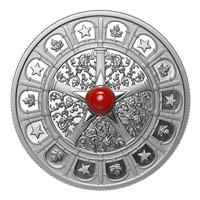
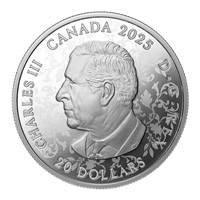
Face Value: $20 … Composition: 99.99% pure silver with simulated Italian red coral; Mintage: 5,500; Weight: 31.39 g; Diameter: 38 mm; Edge: Serrated; Finish: Proof; Artist: Tony Bianco (reverse), Steven Rosati (obverse); Packaging: Black clamshell with black beauty box.
DID YOU KNOW?… ***June is Italian Heritage Month in Canada! It is an opportunity to honour the culture and history of Italian Canadians, and the contributions they have made to Canada and Canadian society.
***Italian red coral has been harvested and used for ornamentation since ancient times, and it continues to be an important industry in coastal regions of Italy—especially in Torre del Greco, a port town renowned for its coral workshops and artisans. As a sought-after jewellery material, red coral is traditionally believed to ward off evil spirits and bring good luck, and it is often used to craft amulets, such as the horn-shaped cornicello that protects against the “evil eye.” Some also believe it to have healing and high-energy qualities.
***Each hexagonal honeycomb cell serves as both a storehouse and a nest for larvae, and it isn’t just the honey bee that builds nests with hexagonal cells—wasps do it, too. The shape, which has inspired architects and engineers, provides several advantages, such as excellent strength-to-weight ratio, thermal insulation, space efficiency and structural stability, while minimizing the amount of building material (beeswax) required.
The reverse design by Canadian artist Tony Bianco combines design elements drawn from Italian heritage to form a symbolic representation of the Italian-Canadian community. It centres on the five-pointed symbol of Italy, the Stella d’Italia, which is topped with simulated Italian red coral. Between the Roman columns emanating from the star points, a Renaissance-style pattern includes two elements inspired by the emblem of the Italian Republic: the oak leaf that symbolizes strength, and the olive branch representing peace and abundance. The five columns support a row of arches that form the outer edge; inspired by the Roman Colosseum, these arches frame the repeating Stella d’Italia and the Canadian maple leaf that represent two cultures coming together. The obverse features the effigy of His Majesty King Charles III by Canadian artist Steven Rosati.
Tony Bianco, Artist … “As the Canadian child of an Italian immigrant, I know firsthand the blending of two cultures. I wanted to use symbolism in this design to merge two cultures together, hence the repetition of the Star of Italy and the maple leaf throughout. There are patterns and elements from the architecture and style of Italy, woven together in a new way to create an Italian-Canadian motif. Oak leaves, maple leaves, columns, arches and renaissance patterns all blend to indicate the marriage of two cultures.”
His Excellency Alessandro Cattaneo, Ambassador of Italy to Canada … “The bonds between Italy and Canada are deep and long-standing. They are rooted, among others, in the presence of a vibrant, numerous, and hard-working Italian and Italian-descent community all across Canada. Italian Canadians have made invaluable contributions to Canadian society, enriching the country’s political, economic, scientific, and cultural landscape. This coin honours not only Italy’s rich history and tradition, but also the extraordinary Italian-Canadian partnership, which continues to thrive and strengthen.”
Louis-Remi Labelle, 3D Artist-Engraver … “When a design blends both architectural and organic elements, we engravers need to adapt our approach in order to differentiate and highlight the best of each type. It’s an interesting challenge, and the result is a beautiful, balanced contrast between the flowing lines of the organic elements and the straight, organized lines of the architectural elements.”
2025 … Whimsical Holiday Tree –
Lenticular Coin
www.mint.ca
This lenticular holiday keepsake invites you to join Churchill the polar bear and friends for some thrills, near-spills, and endless fun! Once you feel the rush of sledding or tobogganing, you’ll want to do it again and again, and not even hot chocolate can lure our animal friends away from the carefree sliding session depicted here. When you tilt the coin, these playful creatures slide – it’s a heartwarming moment and a light-hearted scene that celebrates the joy and magic of a Canadian winter. Tilt the coin and enjoy some winter fun!
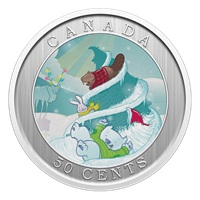
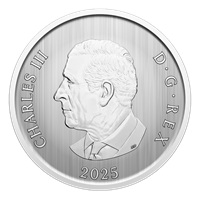
Face Value: 50 cents … Composition: Nickel-plated steel; Mintage: 30,000; Weight: 12.3 g; Diameter: 35 mm; Edge: Plain; Finish: Specimen; Artist: Emily Chen (reverse), Steven Rosati (obverse); Packaging: Black clamshell with black beauty box.
DID YOU KNOW? … The sport of tobogganing originated in Canada in the late 19ᵗʰ century, but long before that, wooden toboggans were used by Indigenous peoples to haul people or loads over snow-covered landscapes. Tubing, sledding and tobogganing continue to be popular winter activities for families in Canada, where it’s a great winter experience for young and old.
Enhanced with lenticular technology to create the illusion of motion, the coin’s reverse features a joyous and carefree winter scene designed by illustrator Emily Chen. Churchill the polar bear, the Toonie’s ($2 coin) mascot, is seen sliding down and around a tree with two friends – a beaver (top) and a rabbit (middle) – while a caribou grazes in the background. When the coin is tilted, a second image is revealed as the fun intensifies: the beaver is sliding down on his tummy, the rabbit is gliding around the swaying tree, and Churchill’s fast descent has caused him to lose his toque. The obverse features the effigy of His Majesty King Charles III by Canadian artist Steven Rosati.
2025 … Snowflake – $20 Fine Silver Coin
www.mint.ca
Embrace the beauty of winter with our 3rd snowflake coin. Delicate ice crystals gracefully floating through the air, each shape reflecting light back on the snowy landscape dotted with evergreens—this is the beauty of a Canadian winter. Our Snowflake series of hexagon-shaped coins continues, this time featuring a fernlike stellar dendrite captured by photographer Don Komarechka. At the centre of this little icy wonder is a green crystal, its rich hue evoking the majesty of the evergreen trees that remain lush and robust, even amidst winter’s stillness. It’s a dazzling winter-themed celebration of the duality of nature, at once mighty and elegant. A stunning new snowflake to add to your collection.


Face Value: $20 … Composition: 99.99% pure silver with a green crystal; Mintage: 7,500; Weight: 32.41 g; Diameter: 42 mm; Edge: Plain; Finish: Reverse Proof; Artist: Don Komarechka (reverse), Steven Rosati (obverse); Packaging: Black clamshell with graphic beauty box.
DID YOU KNOW? … Fernlike stellar dendrites are the largest snow crystals—larger even than the stellar dendrites featured on the first two coins in this series—and may measure over five millimetres in diameter by the time each one reaches the ground.
Your coin’s reverse features a magnified view of a fernlike stellar dendrite captured by Canadian photographer Don Komarechka and intricately reproduced by Royal Canadian Mint engravers. The brilliant relief re-creates its intricate form, its delicate subbranches (or arms) extending outwards and resembling the branches of a fern, while the green crystal at its centre evokes the majesty of the lush evergreens that add colour to a winter landscape. The obverse features the effigy of His Majesty King Charles III by Steven Rosati.
Don Komarechka, Artist … “Snowflakes fall, mostly unnoticed, and begin to fade away the moment they leave the cloud that formed them. By the time they float gently to the ground, they are already disappearing back into the air that created them. The process of documenting these skyborne gems must begin immediately, before the rigid geometry turns to round featureless clumps of ice. The geometric details of a snowflake reflect light beautifully, and at a perfect angle will reveal seemingly unending depth and dimension. Every sparkle you see in a field of freshly fallen snow is a glimpse into this universe of details, and then gone forever.”
Dear Santa – $20 Fine Silver Coin
www.mint.ca
Greetings from the North Pole. Santa Claus is coming to town, and while the elves are busy with toymaking, he himself is working day and night to keep up with all the letters that are pouring in! This 99.99% pure silver coin whisks you to the North Pole for a fun dose of holiday cheer and a sneak peek at Santa’s mail call. Accompanied by one of his magical reindeer, Santa is seen retrieving the latest batch of letters from his mailbox in this colourful nighttime scene, which turns magical when viewed under a black light (flashlight included) that unlocks a fun glow effect. Keep the wonder and magic alive with this holiday keepsake.

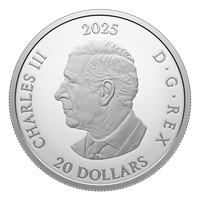
Face Value: $20 … Composition: 99.99% pure silver with selective colour and black light technology; Mintage: 7,500; Weight: 31.39 g; Diameter: 38 mm; Edge: Serrated; Finish: Proof; Artist: Lisa Thomson-Khan (reverse), Steven Rosati (obverse); Packaging: Black clamshell with black beauty box.
DID YOU KNOW? … The tradition of writing to Santa Claus actually began as letters received from Santa (or Saint Nicholas), encouraging children to maintain (or adopt) good behaviours. Today, more than a million letters addressed to “Santa Claus, North Pole, H0H 0H0, Canada” are received each year between November 1 and the end of January.
The reverse design by artist Lisa Thomson-Khan features a view of Santa’s home and workshop at the North Pole, where a full moon appears in the night sky. Joined by one of his magical reindeer, Santa Claus adjusts his glasses as he reaches for the latest letters that have landed in his mailbox, which is affixed to a candy cane post with a hanging sign that reads “H0H 0H0”, the Canadian postal code for the North Pole. When viewed under black light, the festive holiday lights and decor, the nearby street light, the moon, and the top and base of the pole all glow in the dark, while the glowing “Dear Santa” letters represent holiday magic. The obverse features the effigy of His Majesty King Charles III by Canadian artist Steven Rosati.