

+ LEST WE FORGET +
+ CZEŚĆ ICH PAMIĘCI +
+ N’OUBLIONS PAS +
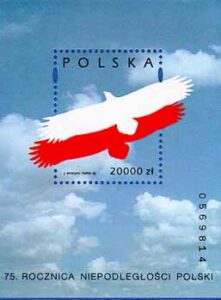
Narodowe Święto Niepodległości obchodzone 11 listopada to obok Święta Narodowego Trzeciego Maja, najważniejsze obchody państwowe. Obywatele celebrują niepodległość, którą Rzeczpospolita uzyskała 11 listopada 1918 roku po 123 latach niewoli pod zaborami. Samo odzyskiwanie wolności nie stało się z dnia na dzień. Było podzielone na etapy, których najważniejszym stało się zakończenie I Wojny Światowej i zawarciu rozejmu w Compiègne. Był to układ pomiędzy państwami Ententy a Niemcami.

TROYAK EXECUTIVE TEAM is informing all members, colleagues, collectors, and Polonia at large, that Club meetings taking place at John Paul II Polish Cultural Centre, 4300 Cawthra Rd. (just south of Hwy. 403), Mississauga, Ontario. The new members are always welcome. www.polishculturalcentre.ca
ADRES SPOTKAÑ KLUBOWYCH ! Zarząd Główny Klubu “Troyak” informuje wszystkich członków kolekcjonerów, sympatyków oraz całą Polonię, że spotkania klubowe odbywają się w Polskim Centrum Kultury im. Jana Pawła II, przy 4300 Cawthra Rd. (na południe od autostrady 403), Mississauga, Ontario. Zapraszamy nowych członków do prężnego. Klubu “Troyak”. www.polishculturalcentre.ca

“TROYAK” CLUB NEXT MEETINGS …
NASTĘPNE SPOTKANIA KLUBU “TROYAK” …
Sunday 23rd November 2025 @ 4:30 p.m.
Sunday – 30th November 2025 @ 9:00 a.m. to 4:00 p.m.
Mississauga Coin & Stamp Show
December 2025 … Happy Holidays!
Sunday 11th January 2026 AGM
Sunday 25th January 2026
Sunday 22nd February 2026
Sunday 29th March 2026
Sunday 26th April 2026
Sunday 31st May 2026
Sunday 21st June 2026
July & August 2026 –
Summer break … Letnie wakacje …
Sunday 27th September 2026
Sunday 25th October 2026
Sunday 29th November 2026
December 2026 … Happy Holidays!
105. rocznica odzyskania niepodległości … W tym roku obchodzimy 105. rocznicę odzyskania przez Polskę niepodległości. Niepodległe i suwerenne państwo dla Polaków zawsze było wartością najwyższą. Niestety, w latach 1772, 1793 i 1795 Prusy, Rosja i Austria dokonały trzech rozbiorów, w wyniku których Rzeczpospolita zniknęła z mapy Europy. Marzenia pokoleń Polaków o wolności spełniły się dopiero wraz z klęską wszystkich zaborców i zakończeniem I wojny światowej. Polska, po 123 latach zniewolenia, odzyskała niepodległość i rozpoczęła trudny i złożony proces odbudowy swojej państwowości.
10 listopada 1918 r. powrócił do Warszawy – zwolniony z więzienia w Magdeburgu – Józef Piłsudski. 11 listopada podpisano zawieszenie broni na froncie zachodnim. Dekretem z tego samego dnia Rada Regencyjna oddała Józefowi Piłsudskiemu naczelne dowództwo nad wojskiem. Rada rozwiązała się 14 listopada, przekazując Józefowi Piłsudskiemu całą władzę nad tworzącym się państwem.
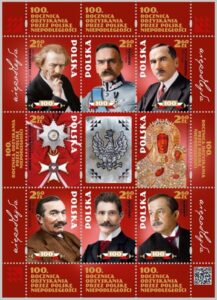
Gdy wspominamy odzyskanie niepodległości, musimy pamiętać o jej „ojcach” – ludziach, którzy swoją determinacją i oddaniem idei wolności do niej doprowadzili: Józefie Piłsudskim, Romanie Dmowskim, Ignacym Janie Paderewskim, Józefie Hallerze, Ignacym Daszyńskim, Wincentym Witosie i Wojciechu Korfantym. Wywodzili się z różnych środowisk politycznych i mieli różne wizje odradzającego się państwa, ale łączył ich jeden nadrzędny cel: odbudowa Polski wolnej, niepodległej, niezależnej i suwerennej. „Ojcowie” polskiej niepodległości wywarli też wpływ na kształt granic odrodzonej Rzeczypospolitej. Ustalono je ostatecznie dopiero w 1921 r. w wyniku traktatu wersalskiego, kolejnych powstań – śląskich, wielkopolskiego i sejneńskiego, plebiscytów narodowościowych i traktatu ryskiego.
11 listopada ustanowiony został uroczystym Świętem Niepodległości na mocy ustawy z 1937 r. o Święcie Niepodległości. Po II wojnie światowej zniesiono to święto już 22 lipca 1945 r. ustawą Krajowej Rady Narodowej. W okresie PRL obchody rocznicy odzyskania niepodległości 11 listopada organizowane były nielegalnie przez środowiska niepodległościowe, a ich organizatorzy i uczestnicy często byli represjonowani przez ówczesne władze. Wyjątek stanowiły lata 1980–81, kiedy za sprawą „Solidarności” przywrócono Świętu Niepodległości należne miejsce w świadomości społecznej. Decyzja o jego przywróceniu była jedną z pierwszych w trakcie procesu transformacji ustrojowej w 1989 r. www.senat.gov.pl

105th Anniversary of regaining independence … This year, we celebrate the 105th anniversary of Poland regaining its independence. An independent and sovereign state has always been a paramount value for Poles. Unfortunately, in 1772, 1793, and 1795, Prussia, Russia, and Austria carried out three partitions, resulting in the disappearance of the Polish-Lithuanian Commonwealth from the map of Europe. The dreams of freedom for generations of Poles were only realized with the defeat of all the partitioning powers and the end of World War I. After 123 years of subjugation, Poland regained its independence and began the difficult and complex process of rebuilding its statehood.
On November 10, 1918, Józef Piłsudski, released from prison in Magdeburg, returned to Warsaw. On November 11, an armistice was signed on the Western Front. By decree of the same day, the Regency Council gave Józef Piłsudski supreme command of the army. The Council dissolved itself on November 14, handing Józef Piłsudski full authority over the nascent state.
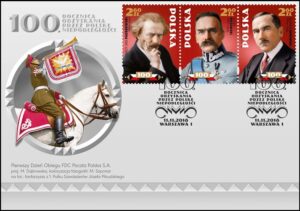
When we commemorate the regaining of independence, we must remember its “fathers” – the men who, through their determination and dedication to the idea of freedom, achieved it: Józef Piłsudski, Roman Dmowski, Ignacy Jan Paderewski, Józef Haller, Ignacy Daszyński, Wincenty Witos, and Wojciech Korfanty. They came from diverse political backgrounds and had different visions for the reborn state, but they were united by one overarching goal: the rebuilding of a free, independent, sovereign, and sovereign Poland. The “fathers” of Polish independence also influenced the formation of the reborn Polish-Lithuanian Commonwealth’s borders. These were finally established only in 1921 as a result of the Treaty of Versailles, subsequent uprisings – the Silesian, Greater Poland, and Sejny uprisings, national plebiscites, and the Treaty of Riga.
November 11th was established as a ceremonial Independence Day under the Independence Day Act of 1937. After World War II, this holiday was abolished on July 22, 1945, by an act of the State National Council. During the Polish People’s Republic, celebrations of the anniversary of regaining independence on November 11th were organized illegally by independence groups, and their organizers and participants were often repressed by the authorities. The exception was the years 1980–81, when, thanks to the Solidarity movement, Independence Day was restored to its rightful place in public consciousness. The decision to restore it was one of the first during the political transformation process in 1989. www.senat.gov.pl

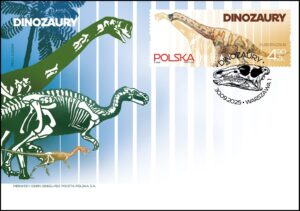
Dinozaury
Dinosaurs
www.poczta-polska.pl
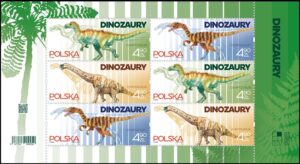
2025-09-30 … Nominał znaczka: 4.90 zł … Autor projektu: Andrzej Gosik; Ilość znaczków w emisji: 1; Format arkusik: 76,5×31,25 mm; Technika druku / Papier: Offset / fluorescencyjny; Nakład:90 000 szt.; Arkusz sprzedażny: 6.
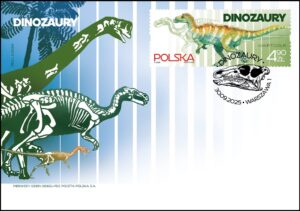
2025-09-30 … Denomination: 4.90 PLN … Author of the stamp design: Andrzej Gosik; Number of stamps in issue: 1; Sheet size: 76,5×31,25 mm; Paper: Fluorescent; Printing techniques: Offset; Sales sheet: 6 (3×2); Print run: 90 000 pcs.
75-lecie Polskiego Związku Filatelistów
75th Anniversary of the Polish Philatelic Union
www.poczta-polska.pl
2025-09-30 … Nominał znaczka: 4.90 zł … Autor projektu: Agnieszka Sancewicz; Ilość znaczków w emisji: 1; Format znaczka: 40,5×40,5 mm; Technika druku: offset z rastrem stochastycznym; Papier: fluorescencyjny; Nakład:116 000 szt.; Arkusz sprzedażny: 5 znaczków + przywieszka.
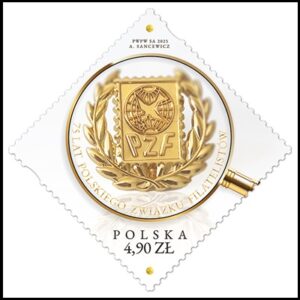
Z okazji 75-lecia Polskiego Związku Filatelistów (1950–2025), Poczta Polska wydała okolicznościowy znaczek oraz kopertę FDC, celebrującą dorobek najstarszej i najbardziej zasłużonej organizacji filatelistycznej w Polsce. Emisja ta jest wyrazem uznania dla pasji kolekcjonerskiej, tradycji oraz wkładu PZF w rozwój kultury i edukacji filatelistycznej. Na znaczku przedstawiono odznakę Członka Honorowego Polskiego Związku Filatelistów – złotą, otoczoną wieńcem laurowym, z charakterystycznym symbolem Związku umieszczonym centralnie. W tle widoczna jest lupa, która symbolizuje dociekliwość i precyzję filatelistów. Koperta FDC zawiera archiwalną fotografię sztandaru Polskiego Związku Filatelistów, ufundowanego przez Ministerstwo Łączności w 1980 roku. Sztandar ten jest symbolem tożsamości, tradycji i jedności środowiska filatelistycznego w Polsce.
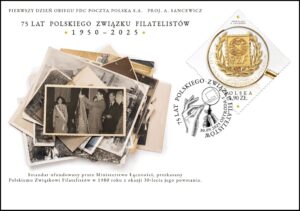
2025-09-30 … Denomination: 4.90 PLN … Author of the stamp design: Agnieszka Sancewicz; Number of stamps in issue: 1; Sheet size: 40,5 x 40,5 mm; Paper: Fluorescent; Printing techniques: Offset; Sales sheet: 5 stamps + tag; Print run: 116 000 pcs.
To commemorate the 75th anniversary of the Polish Philatelic Union (1950–2025), Poczta Polska (Polish Post) has issued a special stamp and FDC envelope celebrating the legacy of one of Poland’s oldest and most distinguished philatelic organizations. This release honors the passion for stamp collecting, tradition, and the Union’s contribution to philatelic culture and education. The stamp features the Honorary Member badge of the Polish Philatelic Union (PZF) – a gold emblem surrounded by a laurel wreath, with the distinctive Union’s symbol at its center. In the background, a magnifying glass highlights the badge, symbolizing the precision and curiosity of philatelists. The FDC envelope includes an archival photograph of the PZF banner, which was donated by the Ministry of Communications in 1980. The banner represents the identity, tradition, and unity of the philatelic community in Poland.
XIX Międzynarodowy Konkurs Pianistyczny
im. Fryderyka Chopina
19th International Fryderyk Chopin Piano Competition
www.poczta-polska.pl
2025-10-02 … Nominał znaczka: 4.90 zł … Autor projektu: Agata Tobolczyk; Ilość znaczków w emisji: 1; Format arkusik: 40,5×40,5 mm; Technika druku / Papier: Offset / fluorescencyjny; Nakład:100 000 szt.; Arkusz sprzedażny: 5 znaczków + przywieszka.
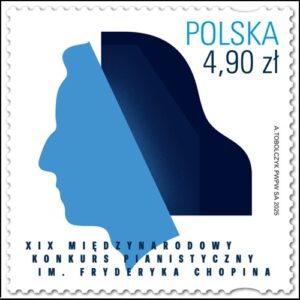
XIX Międzynarodowy Konkurs Pianistyczny im. Fryderyka Chopina, 2-23 października 2025 … Międzynarodowy Konkurs Pianistyczny im. Fryderyka Chopina jest najważniejszym wydarzeniem muzycznym w Polsce i jednym z najważniejszych konkursów muzycznych na świecie. Obok olbrzymiej roli jaką pełni już od prawie 100 lat w popularyzacji muzyki Fryderyka Chopina, odkrywa największe talenty pianistyczne zapewniając młodym muzykom najskuteczniejszy start w międzynarodowej karierze. Jest źródłem wielokulturowej polaryzacji, którą świat obserwuje w różnorodnych interpretacjach muzyki genialnego kompozytora. Najbliższa, XIX edycja Międzynarodowego Konkursu Pianistycznego im. Fryderyka Chopina odbędzie się w dniach 2 – 23 października 2025 roku w Filharmonii Narodowej w Warszawie.
Proces kwalifikacji do udziału w październikowym Konkursie zgodnie z dotychczasową tradycją przebiegał będzie dwuetapowo. Pierwszym etapem jest nadesłanie przez pianistów nagrań audio-video z zarejestrowanym wykonaniem wybranych kompozycji Fryderyka Chopina. Nagrania te oceni Komisja Kwalifikacyjna, wyłaniając ok. 160 pianistów, którzy wezmą udział w etapie Eliminacji do Konkursu.
Oficjalne rozpoczęcie XIX Międzynarodowego Konkursu Pianistycznego im. Fryderyka Chopina zaplanowane jest na 2 października 2025 roku, uroczystym koncertem inauguracyjnym w wykonaniu zwycięzców Konkursu z poprzednich lat. Przesłuchania w październiku będą trwać 3 tygodnie ‒ 20 października poznamy nowego zwycięzcę Konkursu, a dzień później odbędzie się gala wręczenia nagród i pierwszy z trzech koncertów laureatów. Przed finałem konkursu, w dniu 17 października zaplanowane są uroczystości związane z obchodami 176. rocznicy śmierci Fryderyka Chopina.
W Jury Konkursu jak zawsze zasiądą wybitni chopiniści: byli laureaci Konkursu, pedagodzy, a także znawcy życia i twórczości Fryderyka Chopina. Przesłuchania Konkursu odbędą się publicznie, w trzech etapach i finale. Do II etapu zostanie dopuszczonych w zasadzie 40 uczestników, do III etapu w zasadzie 20 uczestników, a do finału nie więcej niż 10 finalistów.
Konkurs Chopinowski od zawsze wyróżniał się na tle innych podobnych wydarzeń m.in. swoją monograficznością – pianiści wykonują podczas Konkursu utwory tylko jednego kompozytora. Ta cecha Konkursu Chopinowskiego pozostaje niezmienna od samego początku. W przyszłym roku usłyszymy tradycyjnie reprezentatywną część twórczości polskiego kompozytora.
I etap Konkursu, który odbędzie się w dniach 3-7 października zakłada wykonanie wybranych etiud, nokturnu, walca, ballady lub innej dłuższej formy, jak barkarola czy fantazja. W II etapie Konkursu, w dniach9-12 października pianiści wykonają ok. 40-50-minutowe recitale, w programie których znaleźć się muszą wybrane preludia, jeden z następujących polonezów: Andante spianato i Wielki Polonez Es-dur op. 22; Polonez fis-moll op. 44; Polonez As-dur op. 53 albo oba polonezy z op. 26, a także inny, dowolny utwór lub utwory Fryderyka Chopina. W III etapie Konkursu (14-16 października) 20 uczestników zaprezentuje około godzinne (45-55 minutowe) recitale obejmujące wykonanie wybranej sonaty, cyklu mazurków oraz inne, wybrane przez siebie kompozycje naszego kompozytora. Ostatecznym sprawdzianem dla finalistów Konkursu będzie wykonanie Poloneza-Fantazji op. 61 oraz wybranego Koncertu fortepianowego Fryderyka Chopina w towarzystwie Orkiestry Filharmonii Narodowej w Warszawie (18-20 października).
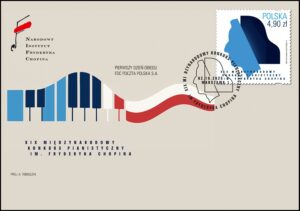
2025-10-02 … Denomination: 4.90 PLN … Author of the stamp design: Agata Tobolczyk; Number of stamps in issue: 1; Sheet size: 40,5×40,5 mm; Paper: Fluorescent; Printing techniques: Offset; Sales sheet: 5 stamps + tag; Print run: 100 000 pcs.
19th International Fryderyk Chopin Piano Competition, 2-23 October 2025 … The International Fryderyk Chopin Piano Competition is the most important musical event in Poland and one of the most important competitions in the world. In addition to the enormous role it has played for almost 100 years in popularising the music of Fryderyk Chopin, it discovers the greatest pianistic talents, providing young musicians with the most effective start in their international careers. It is a source of multicultural polarisation, which the world observes in various interpretations of the brilliant composer’s music. The forthcoming 19th edition of the Fryderyk Chopin International Piano Competition will be held from 2 to 23 October 2025 at the National Philharmonic Hall in Warsaw.
The qualification process for the October Competition will, in line with tradition, proceed in two stages. The first stage is for pianists to send in audio-video recordings of their performances of selected works by Fryderyk Chopin. These recordings will be assessed by the Qualifying Committee, which will select approximately 160 pianists to take part in the Preliminaries to the Competition.
The 19th International Fryderyk Chopin Piano Competition is scheduled to officially begin on 2 October 2025 with an inaugural concert performed by the winners of the Competition from previous years. The auditions in October will last three weeks – on 20 October, the new winner of the Competition will be announced. On 21 October there will be the award gala and the first of three laureates’ concerts. Prior to the Competition finals, a celebration of the 176th anniversary of the death of Fryderyk Chopin is planned for 17 October.
As always, the Jury of the Competition will be composed of eminent Chopinists: former winners of the Competition, pedagogues, and experts on the life and works of Fryderyk Chopin. The Competition auditions will be held in public, in three stages and a final. In principle 40 participants will be admitted to Stage II, 20 participants to Stage III, and no more than 10 pianists to the final.
The Chopin Competition has always been distinguished from other similar events by, among other things, its monographic character – pianists perform works by only one composer during the Competition. This feature of the Chopin Competition has remained unchanged since its inception. Next year we will, traditionally, a representative part of the Chopin’s oeuvre.
Stage I of the Competition, to be held from 3-7 October, involves the performance of selected etudes, a nocturne, a waltz, a ballad or another longer form, such as the barcarolle or the fantasia. In the second stage of the Competition, on 9-12 October, pianists will perform ca. 40-50-minute recitals, the programme of which must include selected preludes, one of the following polonaises: Andante spianato and Grande Polonaise in E flat major, Op. 22; Polonaise in F sharp minor, Op. 44; Polonaise in A flat major, Op. 53 or both polonaises from Op. 26, as well as any other piece or pieces by Fryderyk Chopin. In Stage III of the Competition (14-16 October), 20 participants will present approximately one-hour (45-55 minute) recitals comprising a performance of a selected sonata, a cycle of mazurkas and other compositions by our composer of their choice. The final test for the finalists of the Competition will be a performance of the Polonaise-Fantaisie, Op. 61 and a selected piano concerto by Fryderyk Chopin accompanied by the Warsaw Philharmonic Orchestra (18-20 October).
Historia monety polskiej –
3 grosze Księstwa Warszawskiego
www.nbp.pl
Narodowy Bank Polski jest centralnym bankiem państwa odpowiadającym za politykę pieniężną i stabilność cen. Jego funkcje określa Konstytucja Rzeczypospolitej Polskiej i ustawa o NBP. NBP ma wyłączne prawo emisji pieniądza. Jako bank centralny nie prowadzi rachunków bankowych obywateli, nie przyjmuje od nich lokat, nie udziela kredytów. Prowadzi natomiast obsługę budżetu państwa, a także podmiotów sektora finansów publicznych. Gromadzi rezerwy walutowe państwa i zarządza nimi. Pełni funkcję banku banków, tworząc warunki do działania systemu bankowego. Jest również jednym z najważniejszych ośrodków naukowo-analitycznych w dziedzinie ekonomii i rynków finansowych.
Emisja wartości kolekcjonerskich stanowi okazję do upamiętniania ważnych historycznych rocznic i postaci oraz do rozwijania zainteresowań polską kulturą, nauką i tradycją. 21 sierpnia 2025 roku Narodowy Bank Polski wprowadził do obiegu srebrną monetę o nominale 20 zł „Historia monety polskiej” – „3 grosze Księstwa Warszawskiego”.
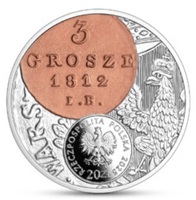
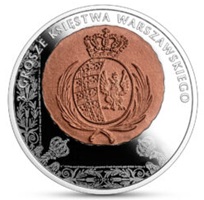
Nominał: 20 zł … metal: Ag 925/1000; stempel: lustrzany, selektywne platerowanie; średnica: 38,61 mm; masa: 28,28 g; brzeg (bok): gładki; nakład: do 10 000 szt.; Projektantka: Dominika Karpińska-Kopiec; Emitent: NBP Na zlecenie NBP monety wyprodukowała Mennica Polska SA.
Na awersie nowej monety kolekcjonerskiej przedstawiono rewers trojaka z nominałem 3 GROSZE, datą 1812 i literami I.B. Jest to sygnatura Jakuba Benika, który w latach 1811–1827 był intendentem mennicy. We współczesnym źródle zapisano, że on „zarządza całą manipulacją robienia pieniędzy”. Poniżej rewersu trojaka umieszczono okrąg z wizerunkiem orła ustalonym dla godła Rzeczypospolitej Polskiej, napisem: Rzeczpospolita Polska, rokiem emisji i nominałem. Tło całej kompozycji stanowi fragment odcisku pieczęci Rady Najwyższej Księstwa Warszawskiego. Odwzorowano tu sylwetkę ukoronowanego orła, który dobrze koreluje z orłem Rzeczypospolitej Polskiej ze wspomnianego okręgu.
Na rewersie monety kolekcjonerskiej motywem dominującym jest awers tej samej monety Księstwa Warszawskiego o nominale 3 grosze. Widać tu ukoronowaną, owalną tarczę herbową Księstwa (herby saski i polski). Tłem jest dolna część okładki Konstytucji Księstwa Warszawskiego. W górnej części otoku monety umieszczono napis: 3 GROSZE KSIĘSTWA WARSZAWSKIEGO. S
Kiedy w 1795 r. Polska utraciła niepodległość, na obszarach, które potem weszły w skład Księstwa Warszawskiego dominował pieniądz pruski. Mennica Warszawska została zamknięta niedługo po ostatnim rozbiorze. Uruchomiono ją ponownie dopiero w 1810 r., choć Księstwo istniało już od trzech lat. Jej działalność, z krótką przerwą, trwała około pięciu lat (1810–1815). A więc niemal tyle samo, ile istniało samo Księstwo (1807–1813). Paradoksalnie daty te tylko częściowo się pokrywają. Mennicę otwarto bowiem dopiero trzy lata po zawarciu w 1807 r. pokoju w Tylży, na mocy którego ustanowiono Księstwo. Przeszkoda tkwiła w tym, że mennica była prywatną własnością króla Stanisława Augusta. Dopiero po jej wykupie od spadkobiercy króla – księcia Józefa Poniatowskiego – mogły ruszyć prace mennicze. Bito dukaty, talary, 1/3 talara (2 zł), 1/6 talara (1 zł), monety bilonowe o nominałach 5 i 10 groszy oraz miedziane trojaki (3 gr) i grosze. Działalność mennicy nie ustała jednak nawet po upadku Księstwa w 1813 r. Decyzją nowych władz rosyjskich po krótkiej przerwie wznowiono prace mennicze pod starymi stemplami i takie monety bito aż do początku 1815 r. W serii monet kolekcjonerskich „Historia monety polskiej” Księstwo Warszawskie jest reprezentowane przez popularną monetę miedzianą o nominale 3 grosze, czyli trojak z 1812 r. Był to okres wielkiej wojny Napoleona z Rosją i jednocześnie intensywnej pracy mennicy. Wybito wówczas 20,5 mln monet, w tym ponad 13 mln monet miedzianych. Informacja: Stanisław Suchodolski.
History of the Polish Coin –
3-grosz coin of the Duchy of Warsaw
www.nbp.pl
Narodowy Bank Polski is the central bank of the State, responsible for its monetary policy and price stability. The Bank’s functions are described in the Constitution of the Republic of Poland and the Act on NBP. NBP holds the exclusive right to issue the currency of the Republic of Poland. As the central bank, it does not provide accounts for the general public, accept deposits from or extend loans to individuals. It acts as a banker to the State budget and public sector entities. NBP also holds and manages the foreign exchange reserves of the State. Finally, it functions as a banker to banks, creating conditions for the operation of the Polish banking system. Narodowy Bank Polski is one of the most important research and analytical centres in the fields of economics and financial markets.
Issuing collector items is an occasion to commemorate important historic figures and anniversaries, as well as to develop the interest of the public in Polish culture, science and tradition. On 21 August 2025, Narodowy Bank Polski issued into circulation a silver coin of the series “History of the Polish Coin” – “3-grosz coin of the Duchy of Warsaw”, with a face value of 20 złoty.
Face value: 20 zł … Metal: Ag 925/1000; Finish: standard, selective plating; Diameter: 38.61 mm; Weight: 28.28 g; Edge (side): plain; Mintage: up to 10,000 pcs; Designer: Dominika Karpińska-Kopiec; Issuer: Narodowy Bank Polski; The coins, commissioned by Narodowy Bank Polski, were struck by Mennica Polska SA.
The obverse of the new collector coin features the reverse of the trojak coin with the face value of 3 GROSZ, the date 1812, and the letters I.B. This is the signature of Jakub Benik, who served as the mint’s administrator from 1811 to 1827. A contemporary source notes that he “manages the entire money-making operation.” Below the reverse of the trojak coin there is a circle with the image of the Eagle established as the state emblem of the Republic of Poland, the inscription: Rzeczpospolita Polska (Republic of Poland), the year of issue, and the face value. The background of the entire composition is a fragment of the imprint of the seal of the Supreme Council of the Duchy of Warsaw. The silhouette of a crowned eagle is reproduced here, which corresponds well to the Eagle of the Republic of Poland from the aforementioned circle.
On the reverse of the collector coin, the dominant motif is the obverse of the same 3-grosz coin of the Duchy of Warsaw. It features the crowned oval escutcheon of the Duchy (Saxon and Polish coats of arms). The background is the lower part of the cover of the Constitution of the Duchy of Warsaw. The upper part of the coin along the rim bears the inscription: 3 GROSZE KSIĘSTWA WARSZAWSKIEGO (3-grosz coin of the Duchy of Warsaw).
When Poland lost its independence in 1795, the Prussian currency dominated in the areas that later became part of the Duchy of Warsaw. The Warsaw mint was closed shortly after the last partition. It was only reopened in 1810, although the Duchy had already existed for three years. The mint’s operations, with a short break, lasted about five years, from 1810 till 1815, almost as long as the Duchy itself (1807–1813). Paradoxically, these dates only partly coincide as the mint was opened only three years after the conclusion of the Peace of Tilsit in 1807, which established the Duchy. The problem was the fact that the mint was privately owned by King Stanisław August. It was only after it was bought out from the king’s heir – Prince Józef Poniatowski – that minting work could begin.
Ducats, thalers, 1/3 thaler (2 złoty) coins, 1/6 thaler (1 złoty) coins, 5- and 10-grosz coins, as well as copper 3-grosz (trojak) coins and grosz coins were minted. However, the mint’s operations did not cease even after the fall of the Duchy in 1813. By decision of the new Russian authorities, after a short interval, minting work was resumed under the old stamps and such coins were minted until the beginning of 1815. In the “History of the Polish Coin” series of collector coins, the Duchy of Warsaw is represented by a popular copper coin with a face value of 3 grosz, i.e. the trojak from 1812. This was the period of Napoleon’s Great War with Russia and, at the same time, of intensive work of the mint. At that time, 20.5 million coins had been struck, including more than 13 million copper coins. Info: Stanisław Suchodolski.
W Polskę wierzę – Pieśń „Rota”
www.nbp.pl
Narodowy Bank Polski jest centralnym bankiem państwa odpowiadającym za politykę pieniężną i stabilność cen. Jego funkcje określa Konstytucja Rzeczypospolitej Polskiej i ustawa o NBP. NBP ma wyłączne prawo emisji pieniądza. Jako bank centralny nie prowadzi rachunków bankowych obywateli, nie przyjmuje od nich lokat, nie udziela kredytów. Prowadzi natomiast obsługę budżetu państwa, a także podmiotów sektora finansów publicznych. Gromadzi rezerwy walutowe państwa i zarządza nimi. Pełni funkcję banku banków, tworząc warunki do działania systemu bankowego. Jest również jednym z najważniejszych ośrodków naukowo-analitycznych w dziedzinie ekonomii i rynków finansowych.
Emisja wartości kolekcjonerskich stanowi okazję do upamiętniania ważnych historycznych rocznic i postaci oraz do rozwijania zainteresowań polską kulturą, nauką i tradycją. 10 września 2025 roku Narodowy Bank Polski wprowadził do obiegu srebrną monetę kolekcjonerską o nominale 10 zł z serii „W Polskę wierzę” – „Pieśń »Rota«”
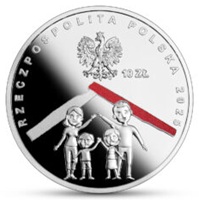
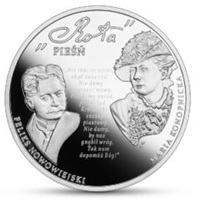
Nominał: 10 zł … metal: Ag 925/1000; stempel: lustrzany, druk UV; średnica: 32,00 mm; masa: 14,14 g; brzeg (bok): gładki; nakład: do 9000 szt.; Projektantka: Urszula Walerzak; Emitent: NBP; Na zlecenie NBP monety wyprodukowała Mennica Polska SA.
Na rewersie monety przedstawiono wizerunki Marii Konopnickiej i Feliksa Nowowiejskiego oraz fragment tekstu „Roty”. Na awersie zaprezentowano postacie rodziców z dziećmi w stylistyce dziecięcego rysunku, a nad nimi – przedstawiony symbolicznie dach domu w kolorach polskiej flagi.
Maria Konopnicka (1842–1910) napisała słowa do pieśni Rota na przełomie 1907 i 1908 r., poruszona ówczesnymi wydarzeniami w zaborze pruskim, mającymi na celu zniemczenie żyjącej tam ludności. Jawna germanizacja narodu polskiego, brutalne zdławienie strajku wrzesińskich dzieci (1901–1902), które przeciwstawiły się wprowadzeniu języka niemieckiego na lekcje religii, oraz wykup polskiej ziemi przez pruską Komisję Kolonizacyjną i rugowanie polskości przez Hakatę (Niemiecki Związek Marchii Wschodniej – radykalną organizację nacjonalistyczną), wzmogły postawy patriotyczne księży, warstw oświeconych i włościan z tych terenów. Sama autorka wraz z innymi działaczami walczyła o prawo dzieci do nauki języka ojczystego. Konopnicka pamiętając o udziale swego męża w powstaniu styczniowym, świadomie wpisywała się w tradycję romantyczną. Przez słowa Roty chciała wzmocnić opór przeciwko germanizacji, głównie Wielkopolan: Nie rzucim ziemi, skąd nasz ród, Nie damy pogrześć mowy! Polski my naród, polski lud, Królewski szczep piastowy. Nie damy, by nas zniemczył wróg.
Tak nam dopomóż Bóg! Autorka, chcąc nadać tekstowi ogólnopolski wymiar, w miejsce określenia „zniemczył” wprowadziła słowo „gnębił” i ta wersja przyjęła się jako bardziej uniwersalna. Rota bardzo szybko zyskała miano naszego drugiego hymnu narodowego. Wkrótce też słowa pieśni stały się powszechnie znane we wszystkich zaborach. Z okazji 500. rocznicy bitwy pod Grunwaldem 15 lipca 1910 r. w Krakowie odsłonięto pomnik, którego fundatorem był Ignacy Jan Paderewski (1860–1941). Ceremonia odbyła się w obecności tłumów, a podczas uroczystości po raz pierwszy odśpiewano publicznie Rotę.
Muzykę napisał znany kompozytor Feliks Nowowiejski (1877–1946). Czterozwrotkowy utwór wykonał chór złożony z Polaków pochodzących ze wszystkich trzech zaborów. Powszechna znajomość pieśni przetrwała przez kolejne pokolenia – śpiewano ją podczas niemieckiej okupacji, w czasie sowieckiej dominacji, a także w trakcie strajków okresu PRL-u: Do krwi ostatniej kropli z żył Bronić będziemy Ducha – polskiego ducha, polskiej wiary i tożsamości – Tak nam dopomóż Bóg! Przez kolejne dekady Polacy byli zmuszani do przelewania własnej krwi i walki o to, by dzisiejsze dzieci mogły zdobywać wiedzę o Polsce i jej kulturze w języku ojczystym. Informacja: Jan Żaryn.
In Poland I Believe – the “Rota” Anthem
www.nbp.pl
Narodowy Bank Polski is the central bank of the State, responsible for its monetary policy and price stability. The Bank’s functions are described in the Constitution of the Republic of Poland and the Act on NBP. NBP holds the exclusive right to issue the currency of the Republic of Poland. As the central bank, it does not provide accounts for the general public, accept deposits from or extend loans to individuals. It acts as a banker to the State budget and public sector entities. NBP also holds and manages the foreign exchange reserves of the State. Finally, it functions as a banker to banks, creating conditions for the operation of the Polish banking system. Narodowy Bank Polski is one of the most important research and analytical centres in the fields of economics and financial markets.
Issuing collector items is an occasion to commemorate important historic figures and anniversaries, as well as to develop the interest of the public in Polish culture, science and tradition. On 10 September 2025, Narodowy Bank Polski issued into circulation a silver collector coin of the series “In Poland I Believe” – “the ‘Rota’ Anthem”, with a face value of 10 złoty.
Face value: 10 zł … Metal: Ag 925/1,000; Finish: proof, UV printing; Diameter: 32.00 mm; Weight: 14.14 g; Edge (side): plain; Mintage: up to 9,000 pcs; Designer: Urszula Walerzak; Issuer: Narodowy Bank Polski; The coins, commissioned by Narodowy Bank Polski, were struck by Mennica Polska SA.
The reverse of the coin features images of Maria Konopnicka and Feliks Nowowiejski, and a fragment of the lyrics of “Rota”. The obverse presents figures of parents with children rendered in the style of a child’s drawing, with a symbolic image of a house roof in the colours of the Polish flag above them.
Maria Konopnicka (1842–1910) wrote the lyrics of the “Rota” anthem at the turn of 1907 and 1908, moved by the contemporary incidents in the Prussian partition aimed at teutonising the local population. The blatant Germanisation of the Polish people, the brutal suppression of the children’s strike in Września (1901–1902) against German being the language of instruction in religion lessons, the buyout of Polish land by the Prussian Colonisation Committee and the eradication of the Polish national identity by Hakata (the German Eastern Marches Society – a radical nationalist organisation) ignited patriotic feelings among the local clergy, enlightened strata and peasants. The author herself and other activists struggled for children’s right to learn Polish at school. Konopnicka, who cherished the memory of her husband’s participation in the January Uprising, consciously subscribed to the romantic tradition.
Through the lyrics of “Rota”, she wanted to reinforce the opposition against Germanisation, mostly among the inhabitants of Greater Poland: “We won’t forsake the land we came from; we won’t let our speech be buried! We are the Polish nation, the Polish people, From the royal line of Piast, We won’t let the enemy Germanise us …” – “So help us God!” The author, with the intention of giving the text a nationwide dimension, replaced the word “Germanise” with “oppress”, and this version has caught on as more universal. “Rota” very soon came to be recognised as the second Polish national anthem. Also the lyrics soon became widely known across the partitions. On 15 July 1910 – the 500th anniversary of the Battle of Grunwald – a monument funded by Ignacy Jan Paderewski (1860–1941) was unveiled in Kraków.
Crowds gathered for the ceremony and “Rota” was then sung in public for the first time. The music was written by the well-known composer Feliks Nowowiejski (1877–1946). The four-verse song was performed by a choir of Poles from all the three partitions. The anthem was passed on from one generation to the next – it was sung during the German occupation, the Soviet domination and the strikes in the period of the Polish People’s Republic: “To the last drop of blood in our veins we will defend our Spirit” – the Polish spirit, faith and identity – “So help us God!” For decades Poles were forced to shed blood and fight so that today’s children can learn about Poland and its culture in their native language. Info: Jan Żaryn.
Internment: booklet of 6 Permanent™ stamps
www.canadapost.ca
This stamp issue explores the history of civilian internment in Canada, in which many thousands of civilians were unjustly interned in camps across the country during both world wars – and even peacetime. Canada Post hopes to raise awareness about this history and the resilience of the people and communities whose lives were profoundly affected by this forced displacement, confinement and hardship. This stamp issue reminds us of our responsibility to learn from the past and build a future rooted in compassion and justice. It honours the many lives and communities impacted by internment.
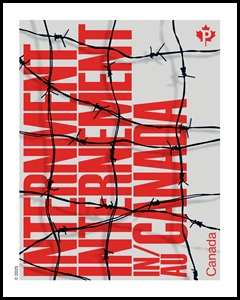
Internment in Canada … During past international conflicts – and even in peacetime – Canada confined or detained thousands of people in camps across the country. Internees were denied their civil liberties in the stated interest of domestic security. This internment was often accompanied by forced labour and mostly targeted immigrant communities. During the First World War and following the armistice, Canada interned more than 8,500 people, including more than 200 women and children who voluntarily chose to stay with their male relatives. At least 100 detainees died. In the Second World War, Canada interned thousands more civilians, confiscating property and imposing forced labour.
In both world wars, tens of thousands of people were forced to register with and regularly report to the authorities. These measures mainly affected immigrants from states legally at war with Britain and its allies, as well as their Canadian-born children. They had to adhere to restrictions on their freedom of speech, movement and association. These restrictions could apply to anyone that Canada mistrusted, including homeless people, conscientious objectors and other “subversives.” Efforts to achieve official recognition for these abuses and injustices continue today.
About the design … Bilingual vertical text in red features against a grey background, with barbed wired providing depth of perspective and seeming to imprison the typeface. The colour palette captures the grey gloom of the internment camps, with the bold red typography representing Canada and the civilians interned during two world wars and in peacetime. The stamp emphasizes themes of separation, displacement and the hope for freedom. Stamp Designer: Underline Studio; Quantity Produced: 100,000 booklets of six Permanent™ stamps; Issue Date: July 17, 2025.
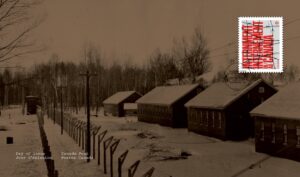
Official First Day Cover, cancelled in Petawawa, Ontario, where civilian internment operations were carried out during both world wars. The cover of the OFDC features a photograph of the Camp 33 internment camp near Petawawa, Ontario, in 1940. Civilian internment operations were carried out at Petawawa during both world wars. Stamp Designer: Underline Studio; Quantity Produced: 5,000; Issue Date: July 17, 2025.
2025 … $20 Fine Silver Remembrance Day
www.mint.ca
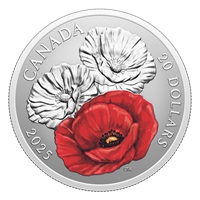
Join us in honouring the sacrifice and service of Canadians. The red poppy carries a deep and powerful meaning that inspires reverence and gratitude—it is the embodiment of our everlasting esteem for those who died in defence of freedom. The 2025 Remembrance Day coin honours them through its reverse design, which features a realistic rendering of poppies—including one bright-red standout—resembling those that inspired the immortal poem of Remembrance, In Flanders Fields, written by Canadian John McCrae 110 years ago.
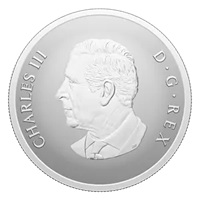
Face Value: $20 … Composition: 99.99% pure silver with selective colour; Mintage: 7,500; Weight: 31.39 g; Diameter: 38 mm; Edge: Serrated; Finish: Proof; Artist: Lisa Thomson-Khan (reverse), Steven Rosati (obverse); Packaging: Black clamshell with black beauty box.
DID YOU KNOW? … It was John McCrae’s poem In Flanders Fields, written in May 1915 during the First World War, that first inspired the tradition of wearing a poppy, which was adopted as a formal symbol of Remembrance in 1921. McCrae, who was born in Guelph, Ontario, and his iconic poem were honoured on a series of Canadian coins issued in 2015.
The reverse design by artist Lisa Thomson-Khan features an engraved arrangement of three poppies that have been realistically rendered and presented in a loose, organic style. Selective colour highlights the poppy in the foreground, where the flower of Remembrance’s bold red petals and black centre pays homage to those who are foremost in our thoughts each Remembrance Day. The obverse features the effigy of His Majesty King Charles III by Steven Rosati.
Lisa Thomson-Khan, Artist … “As the product of men and women who fought and died for our freedoms, Remembrance Day is very meaningful to me and my family. I am the granddaughter of a decorated Second World War veteran pilot who flew an incredible 53 missions and received the Distinguished Flying Cross for outstanding flying under fire, an act of bravery recognized for saving the lives of his eight-man flight crew. I wanted to pay homage to his contributions using the poppy as a symbol of his bravery, and created this design that also conveys beauty and reverence.”
Heart Diamond –
Pure Gold Diamond-Shaped Coin
www.mint.ca
The fifth and final diamond shape in this show-stopping series is truly a labour of love, for the heart-cut shape is one of the most difficult and complex shapes to achieve. Its two symmetrical lobes and sharp cleft form the classic symbol of our tenderest feelings, but a heart diamond’s sparkling allure depends on a facet arrangement that is precisely cut to optimize brilliance and fire. That distinctive diamond cut and shape are magnificently reproduced on this 99.99% pure gold coin; graded by the De Beers Institute of Diamonds, the 0.23 carat Ideal Cut Heart Diamond adorning this coin is sure to leave a lasting impression, as the series comes to a close. Heart: The final diamond shape in this series.

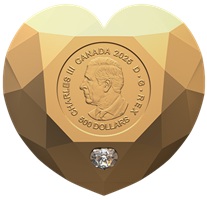
Face Value: $500 … Composition: 99.99% pure gold with a 0.23 ct. Ideal Cut Heart Diamond; Mintage: 150; Weight: 145.4 g; Dimensions Length: 30.1 mm; Width: 32.0; mm Height: 19.8 mm; Edge: Plain; Finish: Matte Proof; Artist: RCM Engravers (reverse), Steven Rosati (obverse); Packaging: Black clamshell with black beauty box.
DID YOU KNOW?… ***While the heart diamond cut is centuries old, today, it is the most expensive diamond cut due to the amount of work and careful cuts required to achieve a symmetrical shape.
A reproduction of a patented trademark diamond cut from Cross works Manufacturing, your coin’s distinctive shape and multi-faceted design were inspired by the 0.23 ct. Ideal Cut Heart Diamond graded by the De Beers Institute of Diamonds and embedded in one of the crown main facets. The year (“2025”), denomination (“500 DOLLARS”) and the effigy of His Majesty King Charles III by Canadian artist Steven Rosati appear on the largest facet (the table).
Heart Diamond –
Fine Silver Diamond-Shaped Coin
www.mint.ca
The fifth and final diamond shape in this extraordinary series is truly a labour of love, for the heart-cut shape is one of the most difficult and complex shapes to achieve. Its two symmetrical lobes and sharp cleft form the classic symbol of our tenderest feelings, but a heart diamond’s sparkling allure depends on a facet arrangement that is precisely cut to optimize brilliance and fire. That distinctive diamond cut and shape are reproduced on this 99.99% pure silver coin; graded by the De Beers Institute of Diamonds, the dazzling 0.23 carat Ideal Cut Heart Diamond adorning this coin is sure to leave a lasting impression, as the series comes to a close. Heart: The final diamond shape in this series.
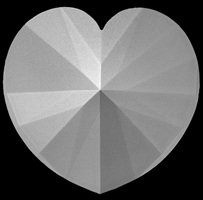
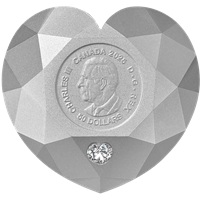
Face Value: $50 … Composition: 99.99% pure silver with a 0.23 ct. Ideal Cut Heart Diamond; Mintage: 600; Weight: 78.95 g; Dimensions: Length: 30.1 mm; Width: 32.0 mm; Height: 19.8 mm; Edge: Plain; Finish: Matte Proof; Artist: RCM Engravers (reverse), Steven Rosati (obverse); Packaging: Black clamshell with black beauty box.
DID YOU KNOW? … ***While the heart diamond cut is centuries old, today, it is the most expensive diamond cut due to the amount of work and careful cuts required to achieve a symmetrical shape.
A reproduction of a patented trademark diamond cut from Crossworks Manufacturing, your coin’s distinctive shape and multi-faceted design were inspired by the 0.23 ct. Ideal Cut Heart Diamond graded by the De Beers Institute of Diamond and embedded in one of the crown main facets. The year (“2025”), denomination (“50 DOLLARS”) and the effigy of His Majesty King Charles III by Canadian artist Steven Rosati appear on the largest facet (the table).
Allegories of Justice and Truth –
$20 Fine Silver Coin
www.mint.ca
There can be no justice without truth, so combining allegorical representations of both into one design is a fitting way to pay tribute to the Supreme Court of Canada on its 150ᵗʰ anniversary. This 1 oz. 99.99% pure silver coin shares a design with the 2025 $50 Allegories of Justice and Truth coin, but instead of being rendered in 3D form, the gold-plated figures of Justice and Truth have been carefully engraved and finely sculpted on this coin’s reverse, demonstrating that both concepts work in tandem to ensure justice and equity for all. Same allegorical design, different execution.
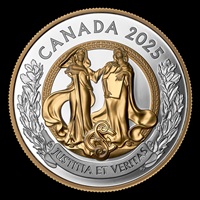
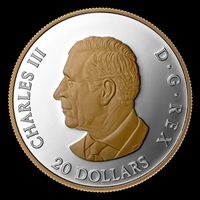
Face Value: $20 … Composition: 99.99% pure silver with selective yellow gold plating; Mintage: 7,500; Weight: 31.39 g; Diameter: 38 mm; Edge: Serrated; Finish: Proof; Artist: Rebecca Yanovskaya (reverse), Steven Rosati (obverse); Packaging: Black clamshell with black beauty box.
DID YOU KNOW? … ***The Supreme Court of Canada was created in 1875, more than a century after the first courts were established in what is now Canada. It eventually became the final court of appeal in Canada, and it is the world’s only bilingual (English and French), bijural (common and civil law) top court.
The coin’s reverse is an engraved version of the 3D allegorical representations of Justice and Truth featured on the 2025 $50 Allegories of Justice and Truth coin designed by Canadian artist Rebecca Yanovskaya. Inspired by Walter S. Allward’s statues Ivstitia (Justice) and Veritas (Truth) located in front of the Supreme Court of Canada building in Ottawa, the gold-plated figures of Justice and Truth are surrounded by a laurel wreath while standing on a podium marked with the letters “SC” (for “Supreme Court”)—a nod to the Cormier Emblem, the Supreme Court’s historic badge, on the institution’s 150ᵗʰ anniversary. The emblem also inspired the laurel wreath that encircles Justice and Truth, who has extended her arm to support Truth while holding forth the Sword of Justice. On the outer ring, laurel branches unfurl around the figures, protecting and emboldening them to fulfill their purpose, while a scroll banner bears the words “JUSTITIA ET VERITAS”—the name of the allegories, but also the Court’s motto. The obverse features the gold-plated effigy of His Majesty King Charles III by Canadian artist Steven Rosati.
Matthew Porter, Sculptor-Engraver-3D Graphics … “Working with the finished 3D cast model for the $50 fine silver coin, I made a bas-relief version for this $20 coin. I focused on adding more details in the face and hands, taking advantage of the opportunity to achieve greater precision and clarity in the engraved format, while trying to stay true to the original concept laid out in Rebecca’s drawing.
Allegories of Justice and Truth –
Multidimensional Fine Silver Coin
www.mint.ca
For 150 years, the Supreme Court of Canada has upheld the rule of law and fostered public trust through its role as the highest court in Canada. For 2025, this dual-sided allegory design is a celebration of the institution’s rich history and its deep commitment to Justitia et Veritas, Justice and Truth, both of which are personified on this piece inspired by the statues that stand vigil outside the Court’s building in Ottawa. Cast in 99.99% pure silver and plated with yellow gold, Justice stands beside Truth, who provides stabilizing support, as they work together to ensure a fair and safe environment for all. Justice and Truth – your allegories for 2025.
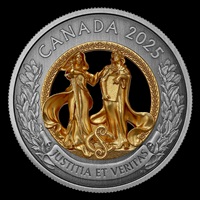
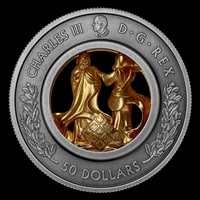
Face Value: $50 … Composition: 99.99% pure silver with a gold-plated embellishment cast in 99.9% pure silver; Mintage: 1,800; Weight: 104.63 g (99.99% pure silver outer ring); 39.57 g (99.99% pure silver cast); Diameter: 65.25 mm; Edge: Serrated; Finish: Proof; Artist: Rebecca Yanovskaya (reverse), Steven Rosati (obverse); Packaging: Black clamshell with black beauty box.
DID YOU KNOW? … ***The Supreme Court of Canada was established in 1875, more than a century after the first courts were established in what is now Canada. It eventually became the final court of appeal in Canada, and it is the world’s only bilingual (English and French), bijural (common and civil law) top court.
Inspired by Walter S. Allward’s statues Ivstitia (Justice) and Veritas (Truth) that stand vigil over the front steps of the Supreme Court of Canada building in Ottawa, this coin design by Canadian artist Rebecca Yanovskaya features 3D allegorical personifications of Justice and Truth standing on a podium with the letters “SC” (for “Supreme Court”)—a nod to the Cormier Emblem, the Supreme Court’s historic badge, on the institution’s 150ᵗʰ anniversary. The emblem also inspired the laurel wreath along the inner ring that encircles Truth and Justice, with Justice extending her arm to support Truth while holding forth the Sword of Justice. On the outer ring, laurel branches unfurl around the figures, protecting and emboldening them to fulfill their purpose. A scroll banner bears the words “JUSTITIA ET VERITAS”—the Court’s motto and the name of the allegories, which are also visible on the obverse, where the diamond shape formed by nine lozenges (each bearing a maple leaf) represents the Court of nine judges, and is inspired by the Court’s badge. The obverse also features laurel branches and the effigy of His Majesty King Charles III by Canadian artist Steven Rosati.
Rebecca Yanovskaya, Artist … “Forefront in my mind was continuity with the original guardian statues. These small-scale versions, therefore, take forward positions, embodying an active (not passive) defence; their poses, gestures, and even gazes were carefully designed to this end. Though their iconic garments have been battered by a tumultuous modern era, they continue to stand as a united bulwark against the enemies of Truth and Justice. The original figures stand vigil at the Courthouse, while these coins are sent out into the world to become miniature ambassadors in our homes and public areas, where such reminders are increasingly necessary.”
Alicia Cook Sapene, Product Manager … “This coin raises the bar of craftsmanship by introducing two allegorical figures that symbolize the balance between truth and justice, reflecting the dual ideals the Supreme Court upholds, while also honouring Walter S. Allward’s profound contribution to our nation’s artistic heritage.”
Matthew Porter, Sculptor-Engraver-3D Graphics … “Each allegory came with unique challenges, and for this one, it was fitting two figures into the ring. I took the same approach as with the last two allegories, only this time there were two of us working on the figures that form both halves of a whole. I started out by completing a base model of ‘Justitia’ in our 3D sculpting software before focusing on the clothes, sword and all the other fine details. We then used different sized gauges to ensure both our models, mine and Julien’s model of ‘Veritas,’ were within the casting and metal volume specs, and that they were a perfect fit.”
Julien Duguay, 3D Artist-Engraver … “Like Matt, prior to working as an engraver, my background was 3D sculpture. When I got to model the ‘Veritas’ character for our new coin, Matt guided me through the process. I learned a lot about preparing models for small-scale casting, and I’m excited for more projects like this in the future when the opportunity arises.”
2025 Special Edition Proof Silver Dollar –
50th Anniversary of the Beaver as an Official Symbol
www.mint.ca
Canada’s beaver emblem turns 50: Celebrate with a Special Edition Proof Dollar. Officially recognized as a Canadian symbol in 1975, Castor canadensis—better known as the beaver—has long symbolized Canada’s pioneering spirit and our deep connection to this land. Throughout our history, it has evolved from being a vital economic asset to becoming a proud emblem of Canadian sovereignty. In 2025, the 50th anniversary of the National Symbol of Canada Act (1975) serves as a moment to reflect on the beaver’s incredible legacy. Its likeness is captured on this Special Edition Proof Dollar, where it is surrounded by branches of maple leaves that reflect the beaver’s importance to our nation’s story and identity. Own a milestone marker and a piece of Canadian history.
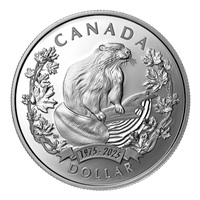
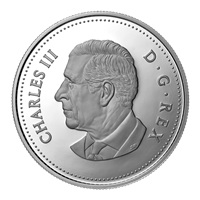
Face Value: $1 … Composition: 99.99% pure silver; Mintage: 15,000; Weight: 23.17 g; Diameter: 36 mm; Edge: Serrated; Finish: Proof; Artist: Steve Hepburn (reverse), Steven Rosati (obverse); Packaging: Black clamshell with black beauty box.
DID YOU KNOW? … ***The beaver is one of the only mammals (other than humans) known to manufacture its own environment, and as an ecosystem engineer, its building and logging activities are key to maintaining the health of our wetlands.
To mark the 50th anniversary (“1975-2025”) of Castor canadensis becoming an official emblem of Canada, the reverse design by Canadian artist Steve Hepburn features a beaver with its broad tail wrapped around its body as it sits on a piece of wood. The Canadian icon is framed by twisting branches bearing sugar maple (Acer saccharum) leaves. The obverse features the effigy of His Majesty King Charles III by Canadian artist Steven Rosati.
Steve Hepburn, Artist … “I love the beaver as one of Canada’s iconic symbols, because it represents both our history and our character. These amazing creatures were central to the fur trade, which helped shape early Canada and its economy. Their ability to build dams and change their environment reflects the hardworking and creative nature of this very unique-looking mammal. Having the beaver on our coins really shows how much we value this animal, and what an awesome part of our heritage it is.”
Maple Tree of Life – $50 Fine Silver Coin
www.mint.ca
Enjoy this uniquely Canadian spin on a classic motif. An enduring motif in many cultures around the world, the tree of life beautifully symbolizes growth and strength, as well as the cyclical nature and inter – connectedness of all living things. This 5-oz. 99.99% pure silver coin puts a uniquely Canadian spin on that classic image by incorporating Canada’s national arboreal emblem, the maple (g. Acer). Backed by an impressive landscape and highlighted with yellow gold, this inspiring maple tree is hardy and resilient and full of life, its roots digging deep to provide a secure foundation for the branches that stretch up and out, and for the maple leaves that shine with golden sunlight. Canada’s arboreal emblem reimagined as the tree of life.

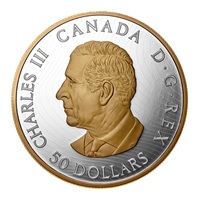
Face Value: $50 … Composition: 99.99% pure silver with selective yellow gold plating; Mintage: 1,750; Weight: 157.6 g; Diameter: 65.25 mm; Edge: Serrated; Finish: Proof; Artist: Steve Hepburn (reverse), Steven Rosati (obverse); Packaging: Black clamshell with black beauty box.
DID YOU KNOW?… ***The tree of life can also be interpreted as a collective family tree that represents the ties that bind us all—not just the links between our past, present and future, but our connection to each other, as individuals, citizens and humans.
Designed by Canadian artist Steve Hepburn, the coin’s reverse features an artistic interpretation of Canada’s national arboreal emblem, the maple (g. Acer), reimagined as a tree of life and plated with yellow gold. The tree’s curled roots dig deep into the ground to provide a solid foundation for the twisting trunk, the strong branches that stretch up and out, and the sugar maple leaves that are bathed in golden sunlight. Behind the tree, the engraved background combines various land features—mountain ranges, rivers and forests—to showcase the many majestic landscapes that Canada has to offer. The rim on both sides is also plated with yellow gold, while the obverse features a wave pattern and the gold-plated effigy of His Majesty King Charles III by Canadian artist Steven Rosati.
Steve Hepburn, Artist … “This design provided the unique challenge of working with a complex image in a way that was both realistic and abstract. To me, the tree of life represents interconnectedness, growth, and the cyclical nature of life. The organic leaves and trunk above ground contrast with highly stylized roots below. The twisting, ornate roots can symbolize the complexity of our connections to one another, to nature, and to our own journeys.”
Tree of Life – $10 Fine Silver Coin
www.mint.ca
A powerful, enduring motif found in many cultures around the world, the tree of life is both beautifully rendered and selectively gold-plated on this ½-oz. 99.99% pure silver coin, where it symbolizes the cyclical nature and interconnectedness of all living things. In nature, the parts of the tree may be different from one another, but all are essential, each contributing to the whole in its own unique way; and on this coin, the curling branches and the silvery leaves are just as vital to this golden tree as the roots that ground it. Celebrate strength and connection through this tree of life.
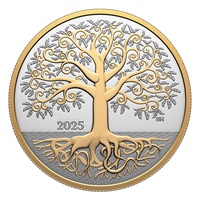
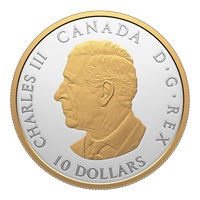
Face Value: $10 … Composition: 99.99% pure silver with selective yellow gold plating; Mintage: 12,000; Weight: 15.87 g; Diameter: 34 mm; Edge: Serrated; Finish: Proof; Artist: Steve Hepburn (reverse), Steven Rosati (obverse); Packaging: Black clamshell with black beauty box.
DID YOU KNOW? … Family, community, knowledge, diversity, unity, divine connections, and even the cycle of life and death – these are a few additional meanings that are associated with the tree of life concept in different cultures.
The reverse design by Canadian artist Steve Hepburn features an intricate, artistic representation of the tree of life motif, selectively plated with yellow gold. Buried in the earth that grounds it, the entangled roots provide a solid foundation for the trunk and the leaf-bearing branches that reach up towards the sky. The rim on both sides is also plated with yellow gold, while the obverse features the gold-plated effigy of His Majesty King Charles III by Canadian artist Steven Rosati.
Steve Hepburn, Artist … “The essence of life’s intricate beauty is captured through this stylized tree of life, every delicate swirl of the branches and twist of the roots carefully and lovingly composed. There is an intentional fluidity to the design including the small, ornate leaves that gently cluster along the limbs, symbolizing how even the smallest elements play an essential role in the grand scheme.”