
TROYAK EXECUTIVE TEAM is informing all members, colleagues, collectors, and Polonia at large, that Club meetings taking place at John Paul II Polish Cultural Centre, 4300 Cawthra Rd. (just south of Hwy. 403), Mississauga, Ontario. The new members are always welcome. www.polishculturalcentre.ca
ADRES SPOTKAÑ KLUBOWYCH ! Zarząd Główny Klubu “Troyak” informuje wszystkich członków kolekcjonerów, sympatyków oraz całą Polonię, że spotkania klubowe odbywają się w Polskim Centrum Kultury im. Jana Pawła II, przy 4300 Cawthra Rd. (na południe od autostrady 403), Mississauga, Ontario. Zapraszamy nowych członków do prężnego. Klubu “Troyak”. www.polishculturalcentre.ca
“TROYAK” CLUB NEXT MEETINGS …
NASTĘPNE SPOTKANIA KLUBU “TROYAK” …

TROYAK CLUB @
Roncesvalles Polish Festival 2025


Saturday – September 13th 2025
Festival hours: 11:00 am to 11:00 pm
Sunday – September 14th, 2025
Festival hours: 11:00 am to 7:00 pm
https://polishfestival.ca www.kazimierz.org
St. Casimir’s Church
Parish Hall … 156 Roncesvalles Ave. Toronto, Ontario

Stamp Exhibit … Pope John Paul II on World Stamps
and Displays of Coins, Stamps, Collectibles
by Troyak Club Members.
Roncesvalles Polish Festival
www.troyakclub.com
Sunday 28th September 2025 @ 4:30 p.m.
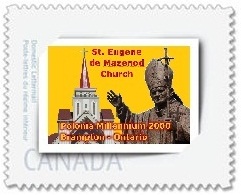
26th October 2025
23rd November 2025
Sunday – 30th November 2025 @ 9:00 a.m. to 4:00 p.m.
Mississauga Coin & Stamp Show

December 2025 … Happy Holidays!
Sunday 11th January 2026 AGM
Sunday 25th January 2026
Sunday 22nd February 2026
Sunday 29th March 2026
Sunday 26th April 2026
Sunday 31st May 2026
Sunday 21st June 2026
July & August 2026 –
Summer break … Letnie wakacje …
Polska Zobacz Więcej
Poland See More
www.poczta-polska.pl
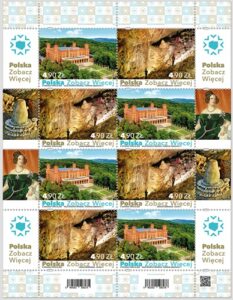
2025-06-27 … Nominał znaczka: 4.90 zł … Autor projektu: Roch Stefaniak; Ilość znaczków w emisji: 1; Format arkusik: 51×39,5 mm; Technika druku / Papier: Offset / fluorescencyjny; Nakład:120 000 szt.; Arkusz sprzedażny: 8.
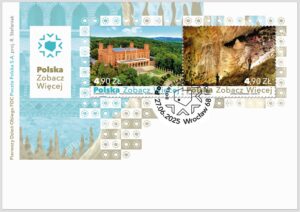
2025-06-27 … Denomination: 4.90 PLN … Author of the stamp design: Roch Stefaniak; Number of stamps in issue: 1; Sheet size: 51×39,5 mm; Paper: Fluorescent; Printing techniques: Offset; Sales sheet: 8 (4×2); Print run: 120 000 pcs.
1. Dywizja Pancerna – Odyseja Wolności
1st Armored Division – Odyssey of Freedom
www.poczta-polska.pl
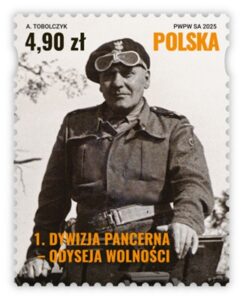
2025-08-07 … Nominał znaczka: 4.90 zł … Autor projektu: Agata Tobolczyk; Ilość znaczków w emisji: 1; Format znaczka: 31,25×39,5 mm; Technika druku / Papier: Offset / fluorescencyjny; Nakład:114 000 szt.; Arkusz sprzedażny: 12 znaczków (4×3) w układzie tête-bêche.
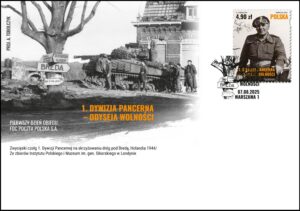
2025-08-07 … Denomination: 4.90 PLN … Author of the stamp design: Agata Tobolczyk; Number of stamps in issue: 1; Sheet size: 31,25×39,5 mm; Paper: Fluorescent; Printing techniques: Offset; Sales sheet: 12 (4×3) in a tête-bêche arrangement; Print run: 114 000 pcs.
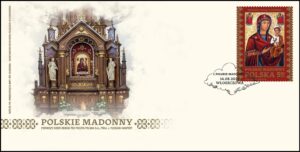
Polskie Madonny
Polish Madonnas
www.poczta-polska.pl
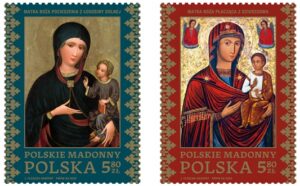
2025-08-14 … Nominał znaczka: 5.80 zł … Autor projektu: Joanna Fleszar-Haspert; Ilość znaczków w emisji: 1; Format znaczka: 40,5×54 mm; Technika druku / Papier: Rotograwiura / fluorescencyjny; Nakład:90 000 szt.; Arkusz sprzedażny: 9 znaczków (3×3).
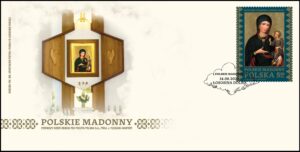
2025-08-14 … Denomination: 5.80 PLN … Author of the stamp design: Joanna Fleszar-Haspert; Number of stamps in issue: 1; Sheet size: 40,5×54 mm; Paper: Fluorescent; Printing techniques: Rotograwiura; Sales sheet: 9 stamps (3×3); Print run: 90 000 pcs.
100 lat Polskiego Radia
100 years of Polish Radio
www.poczta-polska.pl
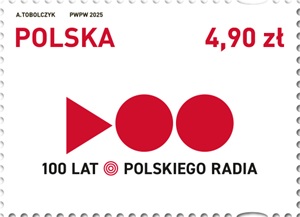
2025-08-18 … Nominał znaczka: 4.90 zł … Autor projektu: Agata Tobolczyk; Ilość znaczków w emisji: 1; Format znaczka: 43×31,25 mm; Technika druku / Papier: Offset / fluorescencyjny; Nakład:90 000 szt.; Arkusz sprzedażny: 9 znaczków.
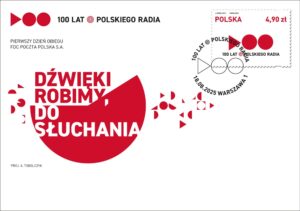
2025-08-18 … Denomination: 4.90 PLN … Author of the stamp design: Agata Tobolczyk; Number of stamps in issue: 1; Sheet size: 43×31,25 mm; Paper: Fluorescent; Printing techniques: Offset; Sales sheet: 9 stamps; Print run: 90 000 pcs.
W Polskę wierzę – Jasna Góra –
duchowa stolica Polski
www.nbp.pl
Narodowy Bank Polski jest centralnym bankiem państwa odpowiadającym za politykę pieniężną i stabilność cen. Jego funkcje określa Konstytucja Rzeczypospolitej Polskiej i ustawa o NBP. NBP ma wyłączne prawo emisji pieniądza. Jako bank centralny nie prowadzi rachunków bankowych obywateli, nie przyjmuje od nich lokat, nie udziela kredytów. Prowadzi natomiast obsługę budżetu państwa, a także podmiotów sektora finansów publicznych. Gromadzi rezerwy walutowe państwa i zarządza nimi. Pełni funkcję banku banków, tworząc warunki do działania systemu bankowego. Jest również jednym z najważniejszych ośrodków naukowo-analitycznych w dziedzinie ekonomii i rynków finansowych.
Emisja wartości kolekcjonerskich stanowi okazję do upamiętniania ważnych historycznych rocznic i postaci oraz do rozwijania zainteresowań polską kulturą, nauką i tradycją. 27 maja 2025 roku Narodowy Bank Polski wprowadził do obiegu srebrną monetę kolekcjonerską o nominale 10 zł z serii „W Polskę wierzę” – „Jasna Góra – duchowa stolica Polski”.
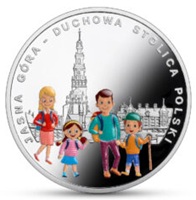
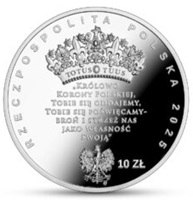
Nominał: 10 zł … metal: Ag 925/1000; stempel: lustrzany, druk UV; średnica: 32,00 mm; masa: 14,14 g; brzeg (bok): gładki; nakład: do 9000 szt.; Projektantka: Urszula Walerzak; Emitent: NBP; Na zlecenie NBP monety wyprodukowała Mennica Polska SA.
Rewers monety przedstawia rodzinę w stylistyce dziecięcego rysunku, w tle zaprezentowano wizerunek klasztoru na Jasnej Górze od strony wschodniej. Na awersie umieszczono wizerunek korony Maryi z obrazu Matki Bożej Jasnogórskiej, ofiarowanej przez Świętego Jana Pawła II, a także fragment cytatu z Aktu biskupów polskich ponownego obrania Matki Bożej Królową Polski w 1920 r.
Strona odwrotna (rewers): u dołu postacie: kobiety, dziewczynki, mężczyzny i chłopca – całość w stylistyce kolorowego dziecięcego rysunku; w tle wizerunek klasztoru na Jasnej Górze od strony wschodniej. W otoku, od lewej strony ku górze, napis: JASNA GÓRA – DUCHOWA STOLICA POLSKI.
Strona przednia (awers): u góry wizerunek korony Maryi z obrazu Matki Bożej Jasnogórskiej, ofiarowanej przez Świętego Jana Pawła II, poniżej tekst o treści: „KRÓLOWO / KORONY POLSKIEJ, / TOBIE SIĘ ODDAJEMY, / TOBIE SIĘ POŚWIĘCAMY – / BROŃ I STRZEŻ NAS / JAKO WŁASNOŚĆ / SWOJĄ”, u dołu wizerunek orła ustalony dla godła Rzeczypospolitej Polskiej, pod orłem, po prawej stronie, znak mennicy: m / w oraz z prawej strony orła napis: 10 ZŁ. W otoku, od lewej strony ku górze, napis: RZECZPOSPOLITA POLSKA 2025.
Sanktuarium Matki Bożej na Jasnej Górze to od ponad sześciu stuleci wyjątkowe miejsce kultu maryjnego na ziemiach polskich. Początki Jasnej Góry wiążą się z fundacją klasztoru paulinów dokonaną przez księcia Władysława Opolczyka w 1382 r. na wzgórzu w pobliżu Częstochowy. Dwa lata później fundator przywiózł z Rusi już wówczas otoczony kultem obraz Matki Bożej z Dzieciątkiem i przekazał go zakonnikom pod opiekę. Sprowadzenie tego niezwykłego wizerunku jest prawdopodobnie związane z przybyciem z Węgier do Polski młodej Jadwigi Andegaweńskiej, koronowanej w 1384 r. na króla Polski. Według źródeł od 1388 r. ośrodek sakralny zaczęto nazywać Jasną Górą.
Król Władysław Jagiełło w 1393 r., w imieniu swoim i małżonki Jadwigi, dokonał powtórnej fundacji klasztoru jasnogórskiego. Sfinansował także renowację cudownego obrazu, uszkodzonego w 1430 r. przez sprawców napaści na klasztor. Sława tego miejsca ciągle wzrastała, a pod opieką władców z dynastii Jagiellonów i Wazów sanktuarium było rozbudowywane i upiększane. Zygmunt III i Władysław IV wznieśli wokół klasztoru fortyfikacje, dzięki którym obiekt zyskał miano Fortalitium Marianum. Od czasów sławnej obrony klasztoru przed Szwedami w 1655 r. Jasna Góra nabrała wyjątkowego znaczenia jako duchowa stolica narodu polskiego. Król Jan Kazimierz we Lwowie 1 kwietnia 1656 r. ogłosił Matkę Bożą Królową Polski i oddał pod jej opiekę mieszkańców Rzeczypospolitej. Za symboliczny tron Maryi Królowej Polski uznano sanktuarium jasnogórskie.
Niezwykle doniosłym wydarzeniem w dziejach sanktuarium była, pierwsza poza terenem Włoch, koronacja cudownego obrazu Matki Bożej koronami papieskimi dokonana 8 września 1717 r. W okresie rozbiorów Jasna Góra, nadal otaczana przez Polaków wielkim kultem, była miejscem niosącym otuchę i nadzieję. W XX w. znaczącą rolę w historii duchowej stolicy kraju odegrała posługa prymasa Polski, bł. kard. Stefana Wyszyńskiego, który za podstawę całego programu duszpasterskiego dla ojczyzny obrał kult Matki Bożej Jasnogórskiej, oraz pontyfikat papieża, św. Jana Pawła II, który w czasie podróży apostolskich do ojczyzny aż sześciokrotnie pielgrzymował do częstochowskiego sanktuarium. Jasna Góra – co roku odwiedzana przez miliony pielgrzymów nie tylko z Polski, lecz także z wielu krajów świata – jest jednym z największych obiektów kultu maryjnego w całym Kościele. Informacja: o. dr Grzegorz Prus OSPPE.

In Poland I Believe – Jasna Góra –
the Spiritual Capital of Poland
www.nbp.pl
Narodowy Bank Polski is the central bank of the State, responsible for its monetary policy and price stability. The Bank’s functions are described in the Constitution of the Republic of Poland and the Act on NBP. NBP holds the exclusive right to issue the currency of the Republic of Poland. As the central bank, it does not provide accounts for the general public, accept deposits from or extend loans to individuals. It acts as a banker to the State budget and public sector entities. NBP also holds and manages the foreign exchange reserves of the State. Finally, it functions as a banker to banks, creating conditions for the operation of the Polish banking system. Narodowy Bank Polski is one of the most important research and analytical centres in the fields of economics and financial markets.
Issuing collector items is an occasion to commemorate important historic figures and anniversaries, as well as to develop the interest of the public in Polish culture, science and tradition. On 27 May 2025, Narodowy Bank Polski issued into circulation a silver collector coin of the series “In Poland I Believe” – “Jasna Góra – the Spiritual Capital of Poland”, with a face value of 10 złoty.
Face value: 10 zł … Metal: Ag 925/1,000; Finish: proof, UV printing; Diameter: 32.00 mm; Weight: 14.14 g; Edge (side): plain; Mintage: up to 9,000 pcs; Designer: Urszula Walerzak; Issuer: Narodowy Bank Polski; The coins, commissioned by Narodowy Bank Polski, were struck by Mennica Polska SA.
The reverse of the coin features an image of a family in the style of a child’s drawing and an image of the Monastery on Jasna Góra from the east side in the background. The obverse bears an image of Mary’s crown from the painting of Our Lady of Jasna Góra, donated by Saint John Paul II, as well as a fragment of the quotation from the Act of Re-election of Our Lady as the Queen of Poland by Polish Bishops in 1920.
Back side (reverse): at the bottom, figures of a woman, girl, man and boy – all in the style of a child’s coloured drawing; in the background, an image of the Jasna Góra Monastery from the east. Along the rim, from the left to the top, the inscription: JASNA GÓRA – DUCHOWA STOLICA POLSKI (Jasna Góra – the Spiritual Capital of Poland).
Front side (obverse): at the top, an image of Virgin Mary’s crown from the painting of Our Lady of Jasna Góra, donated by Saint John Paul II; below it, the following text: “KRÓLOWO / KORONY POLSKIEJ, / TOBIE SIĘ ODDAJEMY, / TOBIE SIĘ POŚWIĘCAMY – / BROŃ I STRZEŻ NAS / JAKO WŁASNOŚĆ / SWOJĄ” (Queen of the Polish Crown, we surrender ourselves to you, we commit ourselves to you – defend and protect us as your property); at the bottom, the image of the Eagle established as the state emblem of the Republic of Poland; below the Eagle, on the right, the Mint mark: m / w, and to the right of the Eagle, the inscription: 10 ZŁ. Along the rim, from the left to the top, the inscription: RZECZPOSPOLITA POLSKA (Republic of Poland) 2025.
The Shrine of Our Lady on Jasna Góra has served as a unique site of the Marian cult in the Polish land for over six centuries. The origins of Jasna Góra go back to the foundation of the Pauline Monastery by Duke Vladislaus II of Opole in 1382 on a hill near Częstochowa. Two years later, the founder brought a painting of Our Lady with the Christ Child – already an object of veneration then – from Ruthenia, and committed it to the monks’ care. The introduction of this extraordinary image was probably associated with the arrival, from Hungary to Poland, of young Jadwiga of Angevin, who was crowned king of Poland in 1384. According to sources, it was in 1388 that the sacral centre began to be called Jasna Góra (Luminous Mountain).
In 1393, King Ladislas Jagiełło, on behalf of his wife Jadwiga and himself, re-founded the Jasna Góra Monastery. He also funded the renovation of the miraculous painting, damaged during a raid on the monastery in 1430. The fame of the site kept growing and during the reign of the Jagiełło and Vasa dynasties the shrine was enlarged and embellished. Sigismund Vasa and Ladislas Vasa erected fortifications surrounding the monastery, owing to which the site became known as Fortalitium Marianum. After the famous defence of the monastery against the Swedes in 1655, Jasna Góra took on a special meaning of the spiritual capital of the Polish nation. On 1 April 1656 in Lviv, King John Casimir Vasa proclaimed Our Lady the Queen of Poland and commended the inhabitants of the Republic of Poland to her protection. The Jasna Góra Shrine was established as the symbolic throne of Mary the Queen of Poland.
A truly momentous event in the history of the shrine took place on 8 September 1717. It was the first coronation of the miraculous image of Our Lady with papal crowns to be performed outside the territory of Italy. During the partitions, Jasna Góra, still keenly venerated by the Poles, was a place where they sought consolation and hope. In the 20th century, the history of the country’s spiritual capital was strongly influenced by the ministry of Primate of Poland, Blessed Cardinal Stefan Wyszyński, who made the cult of Our Lady of Jasna Góra the core of the entire pastoral programme for the country, and by the pontificate of the Pope, Saint John Paul II, who pilgrimised to the Shrine of Częstochowa six times during his apostolic travels. Jasna Góra – visited each year by millions of pilgrims from Poland and numerous countries of the world – is today one of the biggest sites of the Marian cult in the Church at large. Info: Father Grzegorz Prus.
Hetmani Rzeczypospolitej – Stanisław Żółkiewski
www.nbp.pl
Narodowy Bank Polski jest centralnym bankiem państwa odpowiadającym za politykę pieniężną i stabilność cen. Jego funkcje określa Konstytucja Rzeczypospolitej Polskiej i ustawa o NBP. NBP ma wyłączne prawo emisji pieniądza. Jako bank centralny nie prowadzi rachunków bankowych obywateli, nie przyjmuje od nich lokat, nie udziela kredytów. Prowadzi natomiast obsługę budżetu państwa, a także podmiotów sektora finansów publicznych. Gromadzi rezerwy walutowe państwa i zarządza nimi. Pełni funkcję banku banków, tworząc warunki do działania systemu bankowego. Jest również jednym z najważniejszych ośrodków naukowo-analitycznych w dziedzinie ekonomii i rynków finansowych.
Emisja wartości kolekcjonerskich stanowi okazję do upamiętniania ważnych historycznych rocznic i postaci oraz do rozwijania zainteresowań polską kulturą, nauką i tradycją. 12 czerwca 2025 roku Narodowy Bank Polski wprowadził do obiegu złotą monetę o nominale 500 zł oraz srebrną monetę o nominale 10 zł z serii „Hetmani Rzeczypospolitej” – „Stanisław Żółkiewski”.
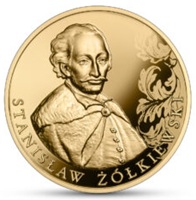
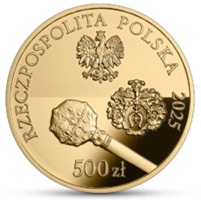
Nominał: 500 zł … metal: Au 999,9/1000; stempel: lustrzany, wysoki relief; średnica: 32,00 mm; masa: 31,10 g; brzeg (bok): gładki; nakład: do 1000 szt.; Projektantka: Dobrochna Surajewska.
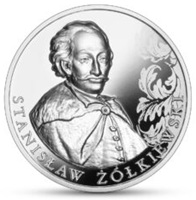
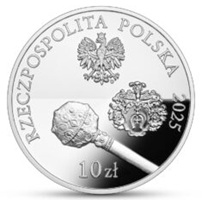
Nominał: 10 zł … metal: Ag 999/1000; stempel: lustrzany, wysoki relief; średnica: 32,00 mm; masa: 31,10 g; brzeg (bok): gładki; nakład: do 8000 szt.; Projektantka: Dobrochna Surajewska; Emitent: NBP Na zlecenie NBP monety wyprodukowała Mennica Polska SA.
Na rewersach monety złotej i srebrnej został umieszczony wizerunek hetmana Stanisława Żółkiewskiego. Na awersach – poza stałymi elementami monety: napisem „Rzeczpospolita Polska”, rokiem emisji, nominałem oraz wizerunkiem orła ustalonym dla godła Rzeczypospolitej Polskiej – widnieją także buława oraz herb Stanisława Żółkiewskiego – Lubicz.
Stanisław Żółkiewski był jednym z największych polskich wodzów, który znalazł poczesne miejsce w panteonie bohaterów narodowych. Szlify wojenne zdobywał przy swoim mentorze Janie Zamoyskim. To u jego boku walczył przeciwko carowi Iwanowi IV Groźnemu podczas wojen inflanckich i przeciwko arcyksięciu Maksymilianowi Habsburgowi pod Byczyną. W bitwie tej został ciężko ranny, wskutek czego utykał do końca życia. Za swoją odwagę i poświęcenie otrzymał buławę polną koronną w 1588 roku. W następnych latach z powodzeniem toczył boje przeciwko Mołdawianom, Kozakom i Szwedom. Po śmierci Zamoyskiego Żółkiewski co prawda stanął po stronie Zygmunta III Wazy podczas rokoszu Zebrzydowskiego, ale niechęć do bratobójczej wojny spowodowała, że król nie darzył hetmana zbytnim zaufaniem.
Żółkiewski udowodnił jednak swoją lojalność i zademonstrował umiejętności podczas wojny z państwem moskiewskim. 4 lipca 1610 roku pod Kłuszynem, mając tylko ok. 6,5 tysiąca żołnierzy, rozbił ponad 30-tysięczną armię Dymitra Szujskiego i zdobył twierdzę Carowe Zajmiszcze. To pozwoliło mu wyruszyć na Moskwę, która otworzyła przed nim bramy. Przestraszeni bojarzy ofiarowali królewiczowi Władysławowi tron carski. Król Zygmunt III nie zaakceptował jednak tych warunków i konflikt trwał. Sukcesowi militarnemu, jakim było zdobycie Moskwy, towarzyszyła niezwykła uroczystość. Zezwolono Żółkiewskiemu na odbycie triumfalnego wjazdu do Warszawy oraz przyprowadzenie przed oblicze króla i Sejmu pojmanego cara Wasyla IV Szujskiego (był to tzw. hołd Szujskich).
Ostatnie lata życia hetmana upłynęły na obronie południowo-wschodnich kresów Rzeczypospolitej i tłumieniu buntów kozackich. Buławę wielką, a wkrótce pieczęć większą kanclerską, otrzymał dopiero w 1618 roku. Był już wówczas schorowany i zmęczony ciągłymi wojnami. W 1620 roku na czele armii koronnej wyprawił się przeciwko siłom turecko-tatarskim. Starcie pod Cecorą zakończyło się zupełną klęską polskiej armii. Żółkiewski poległ w walce na polu bitwy. Rycerska śmierć starego hetmana zapewniła mu nieśmiertelną sławę, tak jak odniesione zwycięstwa oraz utwory literackie jego autorstwa. Wzniesiona zaś przez niego kolegiata w Żółkwi, w której wisiał wielkoformatowy obraz „Bitwa pod Kłuszynem”, przez wieki była świątynią pamięci o wielkim hetmanie. Informacja: Wojciech Kalwat.
Hetmans of the Polish–Lithuanian Commonwealth
– Stanisław Żółkiewski
www.nbp.pl
Narodowy Bank Polski is the central bank of the State, responsible for its monetary policy and price stability. The Bank’s functions are described in the Constitution of the Republic of Poland and the Act on NBP. NBP holds the exclusive right to issue the currency of the Republic of Poland. As the central bank, it does not provide accounts for the general public, accept deposits from or extend loans to individuals. It acts as a banker to the State budget and public sector entities. NBP also holds and manages the foreign exchange reserves of the State. Finally, it functions as a banker to banks, creating conditions for the operation of the Polish banking system. Narodowy Bank Polski is one of the most important research and analytical centres in the fields of economics and financial markets.
Issuing collector items is an occasion to commemorate important historic figures and anniversaries, as well as to develop the interest of the public in Polish culture, science and tradition. On 12 June 2025, Narodowy Bank Polski issued into circulation a gold coin with a face value of 500 złoty and a silver coin with a face value of 10 złoty of the series “Hetmans of the Polish-Lithuanian Commonwealth” – “Stanisław Żółkiewski”.
Face value: 500 zł … Metal: Au 999.9/1000; Finish: proof, high relief; Diameter: 32.00 mm; Weight: 31.10 g; Edge (side): plain; Mintage: up to 1,000 pcs; Designer: Dobrochna Surajewska.
Face value: 10 zł … Metal: Ag 999/1000; Finish: proof, high relief; Diameter: 32.00 mm; Weight: 31.10 g; Edge (side): plain; Mintage: up to 8,000 pcs; Designer: Dobrochna Surajewska; Issuer: Narodowy Bank Polski; The coins, commissioned by Narodowy Bank Polski, were struck by Mennica Polska SA.
The reverses of the gold and silver coins feature an image of Hetman Stanisław Żółkiewski. Apart from the regular elements of the coin such as the inscription: Rzeczpospolita Polska (Republic of Poland), year of issue, face value and the image of the Eagle established as the state emblem of the Republic of Poland – their obverses also bear Stanisław Żółkiewski’s mace and coat of arms – Lubicz.
Stanisław Żółkiewski was one of the greatest Polish commanders, who found a prominent place in the pantheon of national heroes. He earned his military skills from his mentor Jan Zamoyski. It was side by side with Zamoyski that he fought against Tsar Ivan the Terrible during the Livonian Wars and against Archduke Maximilian of Habsburg at Byczyna. In this battle, he was severely wounded, resulting in a limp for the rest of his life. For his courage and dedication, he was awarded the crown field mace in 1588. In the following years, he successfully fought battles against the Moldavians, Cossacks and Swedes. After Zamoyski’s death, although Żółkiewski sided with Sigismund Vasa during the Zebrzydowski rebellion, his aversion to fratricidal warfare meant that the king did not have much trust in the hetman.
However, Żółkiewski proved his loyalty and demonstrated his skills during the war with the Muscovite state. On 4 July 1610, at Klushino, with only about 6,500 soldiers, he smashed Dmitry Shuysky’s army of more than 30,000 and captured the fortress of Tsaryovo-Zaymishche. This allowed him to set out for Moscow, which opened the gates to him. The frightened boyars offered the Tsar’s throne to Prince Ladislas. However, King Sigismund did not accept these terms, and the conflict continued. The military success of conquering Moscow was accompanied by an extraordinary ceremony. Żółkiewski was allowed to make a triumphal entry into Warsaw and bring the captured Tsar Vasyly IV Shuysky before the king and the Sejm (this was the so-called Shuysky Tribute).
The last years of the hetman’s life were spent defending the south-eastern borderlands of the Commonwealth and suppressing Cossack rebellions. He received the great mace, and soon afterwards the greater chancellor’s seal, only in 1618. By then he was already ailing and tired of constant wars. In 1620, he set off against Turkish-Tartar forces at the head of the Crown army. The clash at Cecora ended in the complete defeat of the Polish army. Żółkiewski fell on the battlefield. The old hetman’s chivalrous death gave him immortal fame, as did the victories he won and his literary works. The collegiate church he had built in Żółkiew, where a large-format painting of the ‘Battle of Klushino’ used to hang, was a shrine to the memory of the great hetman for centuries. Info: Wojciech Kalwat.
2025 Places of Pride:
Permanent™ domestic rate stamps
www.canadapost.ca
Places of Pride takes us to sites across Canada that 2SLGBTQIA+ people fought to make their own: places of celebration and freedom to be fully oneself, and spaces that nurtured a sense of solidarity that became a catalyst for change. This issue proudly celebrates the spaces and places across the country that in some way shaped the present and can inspire the future. It highlights the resilience, courage and achievements of 2SLGBTQIA+ communities that have contributed to Canada’s ongoing journey toward inclusivity and equality.
About the issue … These stamps recognize four vital places for 2SLGBTQIA+ in Canada, from early meeting spots to safe spaces for community organizing. These spaces were often the backdrop to pivotal demonstrations and hosted events that shaped 2SLGBTQIA+ communities across the country.
About Places of Pride … ***Considered Calgary’s first gay bar, Club Carousel opened in 1970. Its innovative members-only policy created a space where patrons could feel safe from homophobia, repression and intimidation. ***Toronto’s Hanlan’s Point Beach hosted the 1971 Gay Day Picnic, considered the first major gathering of queer people in Canada and an early example of what we now know as Pride. ***A 1977 police raid at Montréal gay bar Truxx led to the adoption of the first law in Canada prohibiting discrimination based on sexual orientation. ***The term “Two-Spirit” was introduced at the 3rd North American Native Gay & Lesbian Gathering near Beausejour, Manitoba, in 1990, marking a pivotal moment for queer Indigenous people in North America.
About the design … This issue, designed by Kelly Small at Intents & Purposes Inc. and illustrated by Tim Singleton, captures four landmark locations in rich colour illustration. Each stamp captures a moment that played a role in advancing 2SLGBTQIA+ rights or recognition. Stamp Designer: Kelly Small | Intents & Purposes Inc.; Stamp Illustrator: Tim Singleton; Quantity Produced: 120,000 booklets of 8 Permanent™ stamps; Issue Date May 30, 2025.
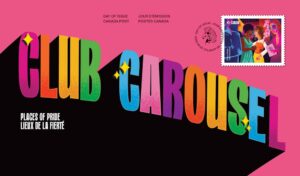
2025 Places of Pride: Club Carousel – Official First Day Cover … About Club Carousel … Places of Pride takes us to sites across Canada that 2SLGBTQIA+ people fought to make their own – places of celebration and freedom such as Club Carousel, considered Calgary’s first known gay bar. A formative queer space for Calgary, Club Carousel opened in 1970. The club’s goal was innovative and transformative – to be an openly gay space for queer people in Calgary. Members of the local gay community worked together to acquire, clean and repair the space. Lesbians were founding members of the club, alongside gay men, which was significant for the times. The club’s lesbian-edited newsletter, Carousel Capers, informed members about events happening throughout the Prairies and featured relevant news, as well as poetry and fiction.

Club Carousel is considered the first space in Calgary where members could feel safe from homophobia, repression and intimidation. Its members-only policy and non-profit charter offered protection from police raids and harassment from the outside world. A beacon for queer people in Calgary and beyond, the club’s membership model was quickly emulated across the Prairies. Club Carousel brought together community builders, activists and members to work toward collective goals.
About the design … This issue, designed by Kelly Small at Intents & Purposes Inc. and illustrated by Tim Singleton, captures four landmark locations in rich colour illustration. Each OFDC in this issue is designed and illustrated in a style reminiscent of travel postcards. The cancel mark depicts a carousel horse, which was painted near the club’s dance floor and appeared on the cover of the club’s Carousel Capers newsletter. Cancellation Site: Calgary, Alberta; Stamp Designer: Kelly; Small | Intents & Purposes Inc.; Stamp Illustrator Tim Singleton; Issue Date May 30, 2025.
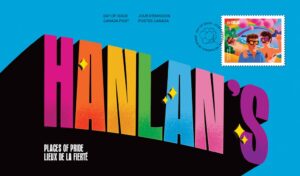
2025 Places of Pride: Hanlan’s Point Beach – Official First Day Cover … About Hanlan’s Point Beach … Places of Pride takes us to sites across Canada that 2SLGBTQIA+ people fought to make their own – places of celebration and freedom such as Toronto’s Hanlan’s Point Beach, which hosted the pivotal 1971 Gay Day Picnic. Located on the west side of Toronto Island Park, Hanlan’s Point Beach is thought to be one of the oldest continuously queer spaces in Toronto and Canada.

In the early 20th century, it became the locus of a supportive community and a refuge for gay people to retreat from persecution. On August 1, 1971, the beach was the site of the Gay Day Picnic, believed to be the first major gathering of queer people in Canada. Aimed at advancing queer rights and celebrating queer identity, the picnic was an early example of what we now know as Pride. The event was also a staging ground for the We Demand rally, a transformative gay rights demonstration held later that month in Ottawa. Hanlan’s Point Beach was recognized as a Historically Queer Space by the City of Toronto in 2023.
About the design … This issue, designed by Kelly Small at Intents & Purposes Inc. and illustrated by Tim Singleton, captures four landmark locations in rich colour illustration. Each OFDC in this issue is designed and illustrated in a style reminiscent of travel postcards. The cancel mark depicts balloons, reminiscent of those seen in archival photographs from Gay Day Picnics held at Hanlan’s Point Beach in the 1970s and 80s. Cancellation Site: Toronto, ON; Stamp Designer: Kelly Small | Intents & Purposes Inc; Stamp Illustrator: Tim Singleton; Quantity Produced: 4,000; Issue Date: May 30, 2025.
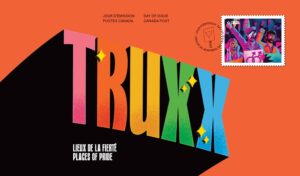
2025 Places of Pride: Truxx – Official First Day Cover … About Truxx … Places of Pride takes us to sites across Canada that 2SLGBTQIA+ people fought to make their own – places of celebration and freedom such as Truxx, a gay bar in Montréal. To “clean up” Montréal in preparation for the 1976 Olympic Games, authorities increased the number of raids on gay and lesbian meeting places. These operations continued even after the Games. On the night of October 21-22, 1977, some 50 armed police officers raided Truxx. More than 100 men were arrested that night for being found in a common bawdy house, making it the largest mass arrest since the October Crisis in 1970.

This resulted in a protest organized mainly by the Association pour les droits des gai(e)s du Québec. More than 2,000 2SLGBTQIA+ people and allies expressed their outrage and faced brutal police repression. In the wake of these events, Quebec’s National Assembly passed Bill 88 on December 15, 1977. It amended the Quebec Charter of Human Rights and Freedoms to prohibit discrimination on the basis of sexual orientation. As a result, Quebec became the first province in Canada to provide that type of civil protection.
About the design … This issue, designed by Kelly Small at Intents & Purposes Inc. and illustrated by Tim Singleton, captures four landmark locations in rich colour illustration. Each OFDC in this issue is designed and illustrated in a style reminiscent of travel postcards. The cancel mark depicts a protest placard with pink triangle, a symbol of the 2SLGBTQIA+ community. Cancellation Site: Montréal, Quebec; Stamp Designer: Kelly Small | Intents & Purposes Inc.; Stamp Illustrator: Tim Singleton; Quantity Produced: 4,000; Issue Date: May 30, 2025
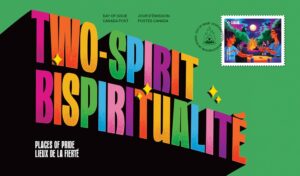
2025 Places of Pride: 3rd North American Native Gay & Lesbian Gathering – Official First Day Cover … Places of Pride takes us to sites across Canada that 2SLGBTQIA+ people fought to make their own: places of celebration and freedom to be fully oneself, and spaces that nurtured a sense of solidarity that became a catalyst for change. This issue proudly celebrates the spaces and places across the country that in some way shaped the present and can inspire the future. It highlights the resilience, courage and achievements of 2SLGBTQIA+ communities that have contributed to Canada’s ongoing journey toward inclusivity and equality.
About the 3rd North American Native Gay & Lesbian Gathering … Places of Pride takes us to sites across Canada that 2SLGBTQIA+ people fought to make their own – places of celebration and freedom such as the 3rd North American Native Gay & Lesbian Gathering, held in the summer of 1990. Now known as the Annual International Two-Spirit Gathering, the 1990 event took place near Beausejour, Manitoba, at what is today the Sandy-Saulteaux Spiritual Centre. One of the organizers, Elder Albert McLeod, was a co-founder of the Winnipeg-based Nichiwakan Native Gay Society (now 2Spirit Manitoba), which was among the first groups for 2SLGBTQIA+ Indigenous Peoples in Canada.

This transformative gathering marked a pivotal moment for queer Indigenous people in North America. Here, the term “Two-Spirit” was introduced by Dr. Myra Laramee, a member of Fisher River Cree Nation, who said it came to her in a vision. “Two-Spirit” refers to diverse Indigenous understandings of gender, relationships with the spiritual realm, ancestors, and love and support from family and community members. It can describe someone’s sexual, gender and/or spiritual identity. The Annual International Two-Spirit Gathering remains a powerful example of decolonization and queer liberation.
About the design … This issue, designed by Kelly Small at Intents & Purposes Inc. and illustrated by Tim Singleton, captures four landmark locations in rich colour illustration. Each OFDC in this issue is designed and illustrated in a style reminiscent of travel postcards. The cancel mark depicts the sacred fire around which ceremonies were conducted at the 3rd North American Native Gay & Lesbian Gathering in 1990. Cancellation Site: Beausejour, Manitoba; Stamp Designer: Kelly Small | Intents & Purposes Inc.; Stamp Illustrator: Tim Singleton; Quantity Produced: 4,000; Issue Date: May 30, 2025.
Crown Jewels Series: Williamson Diamond Brooch
– Pure Gold Coin with Pink Tourmaline and Diamonds
www.mint.ca
One of Queen Elizabeth II’s most iconic brooches, the flower-shaped Williamson Diamond Brooch has a Canadian connection: its gorgeous pink diamond, one of the largest and finest of its kind, was a wedding gift from Canadian geologist John Thoburn Williamson. The extraordinary jewel was cut and set into a platinum-and-diamond brooch completed in 1953, the year of Queen Elizabeth II’s coronation, and was frequently worn throughout her seven-decade reign, appearing in family portraits, at State occasions and momentous celebrations — including the Silver Jubilee Service in 1977, and the weddings of two of her children.
The intricate shape of the Williamson Diamond Brooch is on full display for all to admire on this 99.99% pure gold coin, the second in our Crown Jewels series. On your coin’s reverse, the brooch’s five-petalled flower is adorned with a pink tourmaline gemstone and 28 round-cut diamonds, all set in a platinum plated mount, which extends its luxurious shine to the floral elements on the reverse and the effigy on the obverse.
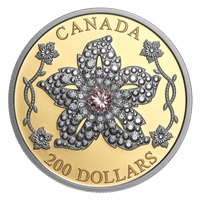
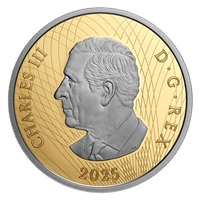
Face Value: $200 … Composition: 99.99% pure gold with a platinum-plated silver mount with 28 round-cut diamonds and a pink tourmaline; Mintage: 225; Weight: 60.08 g; Diameter: 38 mm; Edge: Serrated; Finish: Proof; Artist: Trevor Tennant (reverse), Steven Rosati (obverse); Packaging: Wood case.
DID YOU KNOW? … ***Discovered in Tanzania, the Williamson Diamond was a 54.5-carat rough stone that was cut into a 23.6-carat brilliant diamond, then placed at the centre of a platinum brooch composed of an additional 203 white diamonds.
The coin’s reverse features an interpretation of the Williamson Diamond Brooch frequently worn by Queen Elizabeth II throughout her seven-decade reign. Re-creating the look of the original brooch, an engraved five-petalled jonquil flower is adorned with a silver-and-platinum-plated mount consisting of a 0.50-carat round-cut pink tourmaline gemstone and 28 round-cut diamonds (0.41 carat total weight). The stylized floral accents engraved on both sides of the sparkling centrepiece are also inspired by the royal brooch and are plated with platinum. The obverse features the effigy of His Majesty King Charles III by Canadian artist Steven Rosati.
Cecily Mok, Engraver … To capture the look of this distinctive royal brooch, I focused on the movement of the flower petals and the natural flow within this floral design. You’ll notice the petals aren’t flat, there’s a natural curl to them. Also, the original brooch has the appearance of symmetry, but when you look more closely, those petals are not, in fact, identical; as a result, I treated the petals like the blades of a windmill, sculpting each one individually, and then I applied a similar approach to the floral accents on the side. The diamonds on the petals are also faceted to bring out the shine, and it took considerable work to get all of the relief to reflect light in a way that embodies the elegance and sparkle of the royal statement piece it represents.
Crown Jewels Series: Williamson Diamond Brooch
– $20 Fine Silver Coin
www.mint.ca
One of Queen Elizabeth II’s most iconic brooches, the flower-shaped Williamson Diamond Brooch has a Canadian connection: its gorgeous pink diamond, one of the largest and finest of its kind, was a wedding gift from Canadian geologist John Thoburn Williamson. The extraordinary jewel was cut and set into a platinum-and-diamond brooch completed in 1953, the year of Queen Elizabeth II’s coronation, and was frequently worn throughout her seven-decade reign, appearing in family portraits, at State occasions and momentous celebrations — including the Silver Jubilee Service in 1977, and the weddings of two of her children.
The second coin in the Crown Jewels series takes a closer look at the Williamson Diamond Brooch. The brooch’s jonquil flower on this 99.99% pure silver coin is adorned with dazzling crystals on a rhodium plated setting, while a coloured glass stone stands in for the royal jewel’s priceless pink diamond.
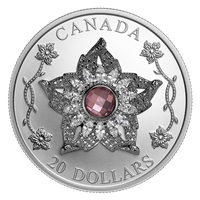
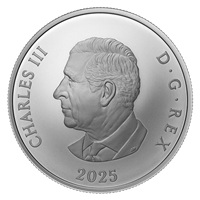
Face Value: $20 … Composition: 99.99% pure silver adorned with crystals and a coloured glass stone on a rhodium plated setting; Mintage: 6,000; Weight: 31.39 g; Diameter: 38 mm; Edge: Serrated; Finish: Matte Proof; Artist: Mint Engravers (reverse), Steven Rosati (obverse); Packaging: Black clamshell with black beauty box.
DID YOU KNOW? … ***Discovered in Tanzania, the Williamson Diamond was a 54.5-carat rough stone that was cut into a 23.6-carat brilliant diamond, then placed at the centre of a platinum brooch composed of an additional 203 white diamonds.
The coin’s reverse features an interpretation of the Williamson Diamond Brooch frequently worn by Queen Elizabeth II throughout her seven-decade reign. Flanked by engraved floral accents inspired by the brooch’s shape, the jewel’s five-petalled flower is a rhodium-plated setting adorned with crystals and a pink-coloured glass stone at its centre. The obverse features the effigy of His Majesty King Charles III by Canadian artist Steven Rosati.
Cecily Mok, Engraver … The brooch at the centre of the coin’s reverse is unquestionably the star here, but don’t overlook the details that make up the floral accents on each side. Everything on this coin is slightly faceted to play up the shine and reflect light across the surface of the coin, creating that jewel-like sparkle.
Tall Ships: Three-masted Schooner
– Pure Gold Coin
www.mint.ca
Unlike the topsail schooner (Coin 3), the type of vessel depicted on this fourth 99.99% pure gold Tall Ships coin doesn’t carry square topsails; instead, a three-masted (or tern) schooner’s sails are fitted in a fore-and-aft line that enables the ship to have a better windward performance. Between 1880 and 1920, hundreds of tern schooners were launched from shipyards throughout Atlantic Canada. Built with a high carrying capacity and smaller crew requirements, the terns supplanted the square-rigged ships as the backbone of the coastal trade by the end of the 19th century, when these were the wind-powered equivalent to the freight trucks of today.
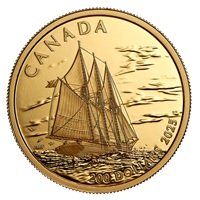
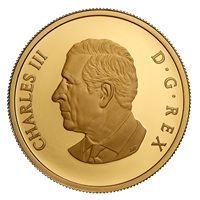
Face Value: $200 … Composition: 99.99% pure gold; Mintage: 800; Weight: 15.43 g; Diameter: 29 mm; Edge: Serrated; Finish: Proof; Artist: John M. Horton (reverse), Steven Rosati (obverse); Packaging: Black clamshell with black beauty box.
DID YOU KNOW? … ***The Royal Canadian Navy had only 13 vessels in service at the outbreak of the Second World War, including one sailing vessel: HMCS Venture, a tern schooner that was commissioned as a training ship in 1937. Designed by Bluenose architect W. J. Roué, Venture survived the war but was lost in an explosion in 1951.
The reverse design by Canadian marine artist John M. Horton features a starboard quarter view of a three-masted (tern) schooner under full sail on a close reach in a smart breeze, with the starboard side lifting as the ship rolls to port. A full cargo of lumber is stowed on the deck of this coastal freighter, while a patent log is towed astern to measure speed and distance run. The obverse features the effigy of His Majesty King Charles III by Canadian artist Steven Rosati.
John Horton, Artist … I chose the starboard quarter view of the three-masted tern schooner because it shows the power of the vessel driving through a rough sea under a full press of canvas. These vessels were true workhorses, either transporting lumber coastwise, between ports, or across the Atlantic Ocean. On long hauls, they would stream a patent log to measure speed and distance run, so a dead reckoning position could be calculated. I have always enjoyed painting working vessels through the ages, and the hard-working terns are another fine example of how world trade was conducted.
Commemorating 150 Years
of the Supreme Court of Canada
www.mint.ca www.canadapost.ca
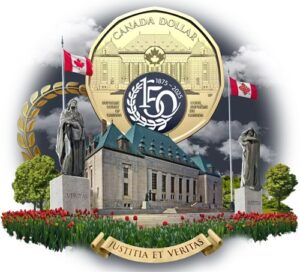
On April 8, the Royal Canadian Mint issued a $1 circulation coin commemorating the 150th anniversary of the Supreme Court of Canada. In honour of the 150th anniversary of the Supreme Court of Canada, the new $1 circulation coin serves as a shining tribute to its unwavering dedication to the rule of law, and its service to Canadians—past, present, and future.
The reverse of this coin, designed by Kingston, Ontario-based artist Silvia Pecota, features the façade of the Supreme Court of Canada, whose front steps are overlaid with the Court’s 150th anniversary logo. On the coloured coin, the logo appears as a blue circle bearing the inscription “150” in white in the centre, framed by a white laurel branch at the bottom left it and the dates “1875–2025” at the top right. The inscriptions “SUPREME COURT OF CANADA” and “COUR SUPRÊME DU CANADA” appear on either side of this image. The obverse features the effigy of His Majesty King Charles III, designed by Steven Rosati.
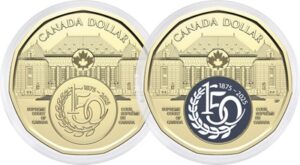
Guardian of our constitution. Protector of our rights and freedoms. Since 1875, the Supreme Court of Canada has been making important decisions that affect the lives of all Canadians. From civil rights to social policies and personal freedoms, its independent and impartial rulings have a profound impact on our nation and provide the legal foundation for the strong and democratic country we know today. On its 150th anniversary, we honour Canada’s highest court with the new commemorative $1 circulation coin—a shining tribute to 150 years of upholding the rule of law, building public trust, and serving our community. By rendering fair and impartial judgments, the Supreme Court of Canada’s decisions have shaped, and will continue to shape, our country and democratic society.
The Supreme Court of Canada sits at the top of the country’s judicial branch and is the court of final appeal—meaning it is the ultimate authority on all legal matters. It operates separately from other government branches, and in doing so the Court maintains judicial independence and impartiality—fundamental to the framework of a democratic society. As the last stop on a case’s journey through the legal system, the Court hears appeals from lower provincial, territorial, and federal courts. By interpreting the Constitution, including the Charter of Rights and Freedoms, and following the rule of law in a fair and consistent manner, the Court’s resulting decisions set a precedent for all lower courts to follow—ensuring stability and consistency in the judicial system nationwide.
RCMP Musical Ride – $20 Fine Silver Coin
www.mint.ca
Pennons flapping in the wind, hooves stepping in time with the music, and riders in the Red Serge moving in formation – this is the time-honoured tradition of the world-famous Royal Canadian Mounted Police (RCMP) Musical Ride. Each public performance is a colourful sight to behold, as the troop of up to 32 riders, all regular members of Canada’s national police force, complete a series of carefully coordinated cavalry drills and choreographed manoeuvres set to music.
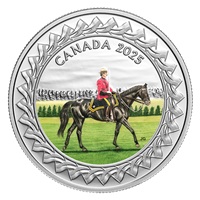
Recognized at home and abroad, the RCMP Musical Ride is a cherished Canadian tradition. This selectively coloured 99.99% pure silver coin celebrates that tradition through its depiction of the Officer in Charge leading the salute, and pays tribute to the riders and horses who proudly represent not only the RCMP, but all Canadians across the country.
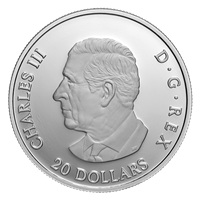
Face Value: $20 … Composition: 99.99% pure silver with selective colour; Mintage: 8,500; Weight: 31.39 g; Diameter: 38 mm; Edge: Serrated; Finish: Proof; Artist: Janet Griffin (reverse), Steven Rosati (obverse); Packaging: Black clamshell with black beauty box.
DID YOU KNOW? … ***Performed in communities across Canada and internationally, the RCMP Musical Ride traces its roots back to the force’s predecessor, the North-West Mounted Police (NWMP) founded in 1873. As a break from their daily drills and duties, members would compete amongst themselves and perform tricks on horseback, and some of those maneuvers were presented at Fort Macleod, Alta., in 1876, in what was likely the first known performance of what would eventually evolve into the RCMP Musical Ride.
Designed by artist Janet Griffin, your coin’s reverse pays tribute to the RCMP Musical Ride, a Canadian symbol of tradition and honour. The selectively coloured centre portion depicts the Officer in Charge atop a black Hanoverian horse and holding a sword while leading the Salute, which takes place at the beginning and end of each performance. An engraved nod to the troop’s 32 riders and their horses, the pennons atop the lance carried by each rider form a ring around the centre image, where they speak to the precision and pageantry of the RCMP Musical Ride. The obverse features the effigy of His Majesty King Charles III by Canadian artist Steven Rosati.
Janet Griffin, Artist … I am a life-long horse owner, a trainer, breeder, competition rider, and an instructor for young riders. For 40 years, I have made my living in art and photography, specializing in the horse industry; to me, the RCMP horses and riders are the epitome of breeding, elegance, trainability, athleticism and class. I have seen the Musical Ride at least 20 times, and each time, seeing the intricacy and energy of the performance fills me with so much happiness and Canadian pride. I set out to capture the elegance of the Salute, with the leading rider and his/her sword, through a watercolour/gouache painting done in a realism style. I paid careful attention to making the art as accurate as humanly possible, and I was filled with wonder to see it brought to life on this coin. It was truly an amazing experience to be selected for this high honour, and this wonderful project is so close to my heart!
Kevin Lawton, RCMP Foundation Executive Director … The RCMP Musical Ride embodies the rich heritage and enduring spirit of Canada, showcasing precision, discipline, and unity. This exquisite coin captures the essence of our iconic Mounties, with the rider in Red Serge atop a majestic black Hanoverian horse, symbolizing the timeless tradition and unwavering dedication of the RCMP to our nation. It’s a testament to the Musical Ride’s role as a beloved cultural ambassador, continuing to inspire pride and awe in Canadians and audiences worldwide.
Murano Monarch Butterfly –
Half Kilo Fine Silver Coin
www.mint.ca
A monarch butterfly’s orange-and-black colouration and stained-glass-like wings never fail to catch the eye as it flits by on the breeze, nature’s own fluttering work of art. The monarch butterfly on this half-kilo coin is also impossible to miss: it’s our biggest Murano glass butterfly yet. Sourced from Murano, Italy, where master glassmakers honour a centuries-old process that produces the colours and complexity for which Murano glass is renowned, each of these colourful glassworks is handcrafted – and no two Murano monarchs are alike. It is truly unique to your selectively gold-plated coin, which, from start to finish, celebrates art in its many forms – from the original water colour painting that the design is based on (as seen on the accompanying art card), to the delicate butterfly that is sure to inspire.

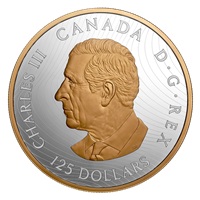
Face Value: $125 … Composition: 99.99% pure silver with selective gold plating; Mintage: 800; Weight: 502.5 g; Diameter: 85.52 mm; Edge: Serrated; Finish: Proof; Artist: Caren Heine (reverse), Steven Rosati (obverse); Packaging: Dome capsule, wood base display case with black set up box.
DID YOU KNOW? … ***Home to the glassmakers of Venice since 1291, Murano, Italy, is one of the world’s most prominent centres of glassmaking, and its handcrafted glass artworks are renowned for their vibrant colours and highly intricate designs. There’s no paint involved – those captivating colours are achieved by mixing colourless glass with minerals and oxides, such as zinc for white.
Enhanced with selective gold plating, the reverse design is an engraved rendition of an original water colour painting by Canadian artist Caren Heine. It features two monarch butterflies — an engraved one, and a handblown Murano glass butterfly crafted by master glassmaker Vio Col Vetro in Murano, Italy. The engraved botanical-themed backdrop focuses on the monarch’s host plant, milkweed, its leaves, flowers and seed pods mixing with spikes of delphinium flowers to form an enticing environment for these important pollinators. The obverse features the effigy of His Majesty King Charles III by Canadian artist Steven Rosati.
Caren Heine, Artist … The monarch butterfly is an amazing and exquisite jewel of nature. I enjoyed trying to capture its beauty in this design, where it is set among its favourite plant, the milkweed, which I planted successfully in my garden! The painting that I submitted was a natural progression, as I have been a water colour artist for many years and I loved the challenge of depicting the vibrancy of the delicate wings. I am honoured to be a part of this celebration of a rare and endangered treasure.
Mélanie Luis, Product Manager … We’re so pleased to bring back Murano glass, last seen on the 2020 Murano Holiday Cookies coin. To ensure both authenticity and quality, we sourced these glass artworks directly from Murano, Italy, where, for centuries now, artisans have produced some of the world’s most coveted glass art. I hope collectors will appreciate the uniqueness of their Murano butterfly – it’s been handcrafted by a master glassmaker, so no two pieces are exactly alike. As for the engraving, while we typically ask artists to submit coin designs in greyscale, we requested a water colour painting for this one. The accompanying art card is our way of sharing this original work of art with coin collectors, to be admired by a wider audience instead of being tucked away in the archives.
Cecily Mok, 3D Artist-Engraver … With stylized art, engravers have a little more freedom to adapt details to the coin size or sculpting technique. But this design is so beautifully realistic that I needed to take things slow and try to re-create all the details from the original painting, and it proved to be a laborious and painstaking process. Generally speaking, a larger coin size allows for more noticeable relief height variations, and a half-kilo certainly provides the space for the flowers to bloom. Laying out the canvas by breaking the design down into stacked shapes and layers gave me a better understanding of how every leaf, every petal, interacts with one another. I started by sculpting the middle section before moving on to the left side, allowing the model to build and grow from the bottom leaf up to the flowers at the top. And then there’s the butterfly layer, which features small height differentiations to represent colours (higher for black, lower for white), so the frostings aren’t doing all of the heavy lifting. I’m very detail-oriented, and when working with this much detail, I strive to capture it all. And given that no two Murano butterfly are the same, I couldn’t risk an unsightly gap in the engraving if the butterfly’s base turned out to be smaller, or its wings angled differently. In the end, I feel all of that care, patience, and even endurance have resulted in, I think, a magical design that really does the original artwork justice.
Legacy of the Crown – $50 Fine Silver Coin
www.mint.ca
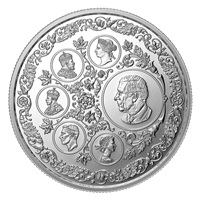
Bridging the past and present, this 5 oz. 99.99% pure silver coin features six well-known effigies, one for each of the reigning monarchs whose likenesses have appeared on post-Confederation Canadian coinage. Surrounded by stately botanical emblems, these royal portraits are portals into the past (and present), and each one represents change: from the Queen Victoria diadem portrait seen on the first coins issued by the Dominion of Canada 155 years ago, to the first image of Queen Elizabeth II’s historically long reign, and the effigy introduced in 2023 – that of His Majesty King Charles III.
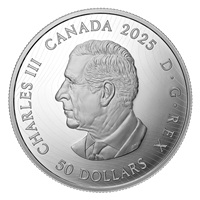
Face Value: $50 … Composition: 99.99% pure silver; Mintage: 1,900; Weight: 157.6 g; Diameter: 65.25 mm; Edge: Serrated; Finish: Proof; Artist: Anna Bucciarelli (reverse), Steven Rosati (obverse); Packaging: Black clamshell with black beauty box.
DID YOU KNOW? … ***A longstanding tradition, each new monarch’s effigy typically faces in the opposite direction to that of their immediate predecessor. In January 1936, George V (whose portrait faces left) was succeeded by Edward VIII, who broke with tradition by insisting on a left-facing portrait, but no coins with his effigy were issued during his 326-day reign. His brother and successor, George VI (His Majesty’s grandfather), opted to have his portrait facing left, as if Edward VIII’s would have faced right according to protocol, and the tradition continues today.
The reverse design by artist Anna Bucciarelli features a circular arrangement of current and historical effigies, one for each reigning monarch whose likeness has graced Canada’s coins since Confederation (from top, counter-clockwise): the effigy of Queen Victoria (1870-1901) by L. C. Wyon; the effigy of King Edward VII (1902-1910) by G. W. De Saulles; the effigy of King George V (1911-1936) by Sir E. B. Mackennal; the effigy of King George VI (1937-1952) by T. H. Paget; the effigy of Queen Elizabeth II (1953-1964) by Mary Gillick; and the effigy of His Majesty King Charles III (2023-present) by Steven Rosati. This collection of royal portraits is surrounded by the emblems of the United Kingdom (Tudor rose, shamrock, thistle and daffodil) and Canada (maple leaf), and elegantly bordered by flourishes of acanthus leaves. The obverse features the effigy of His Majesty King Charles III by Canadian artist Steven Rosati.
Anna Bucciarelli, Artist … The design concept of this newly minted coin is rooted in circular symmetry, symbolizing continuity and the enduring legacy of the monarchy. At the heart of the design is the new effigy of His Majesty King Charles III, facing left, which will now be permanently displayed on the obverse of all newly minted Canadian coins. Surrounding this central effigy are smaller portraits of previous reigning monarchs, dating back to Queen Victoria, arranged in a semi-circle. This semi-circular arrangement not only balances the composition but also represents the unbroken lineage of the monarchy—a full circle of continuity, tradition, and heritage that links the past to the present and the future. Each monarch has played a significant role in shaping the history of the Crown, and their inclusion in this design honours their contributions while symbolizing the enduring nature of the monarchy. The edge of the coin is adorned with an elegant decorative border—a continuous circular wreath featuring acanthus leaves intertwined with traditional royal heraldic symbols. These plant badges—the rose for England, the thistle for Scotland, the shamrock for Ireland, and the daffodil for Wales—are also repeated within the coin’s interior design, accompanied by the iconic Canadian maple leaves. This intricate border not only enhances the visual appeal of the coin but also serves to connect Canada’s national identity with its historical ties to the United Kingdom, highlighting the shared heritage of the Commonwealth realms.
Mélanie Luis, Product Manager … I am grateful to have been involved in the process of creating His Majesty’s Canadian effigy, it was a tremendous honour to be a witness to that historical moment. With this 2025 collectible, I was pleased to have the opportunity to re-visit other effigies that represent so much of this nation’s history since Confederation, images that have cemented the legacy of the Canadian Crown on our coins.
Great Hunters: Grey Wolf –
$200 Pure Gold Ultra High Relief Coin
www.mint.ca
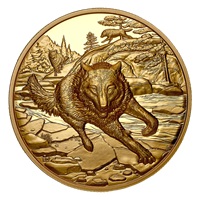
Teamwork, persistence and adaptability—these are the traits that assure a wolf pack’s survival, and they have helped cement the grey wolf’s reputation as one of the Great Hunters. Unlike ambush predators such as the cougar (Coin #2 in this series), the grey wolf (Coin #3) is a pursuit predator, capable of chasing its prey over long distances and adjusting its tactics as circumstances change. The hunt itself is a coordinated group effort, as illustrated from the prey’s perspective on this 99.99% pure gold Ultra High Relief (UHR) coin, with each pack member contributing to a common goal—an inspiring example of the complexity and wonder of the Canadian wilderness.
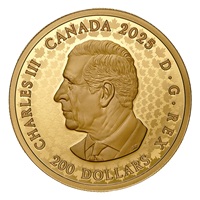
Face Value: $200 … Composition: 99.99% pure gold; Mintage: 400; Weight: 33.17 g; Diameter: 30 mm; Edge: Interrupted serrations; Finish: Proof; Artist: Emily Damstra (reverse), Steven Rosati (obverse); Packaging: Black clamshell with black beauty box.
DID YOU KNOW? … ***Wolves are highly intelligent. They track and observe their prey, often targeting individuals that show signs of weakness or illness, while also assessing how the terrain and weather conditions might be used to their advantage.
Engraved in Ultra High Relief (UHR), the reverse design by artist Emily Damstra brings the viewer face-to-face with the grey wolf (Canis lupus) in the Canadian wilderness. The wolf in the foreground leads the chase and is trailed by other members of the pack as it moves swiftly across the rocky forest terrain, even making a hairpin turn while closing in on its fleeing prey. The obverse features the effigy of His Majesty King Charles III by Canadian artist Steven Rosati.
Emily Damstra, Artist … I chose to show the wolf mid-pivot because it was a pose that demonstrates the animal’s agility, and allows the viewer to see the wolf’s body while it gazes directly at the viewer. Whatever it is chasing had better watch out! The rocky backdrop enabled me to show two other members of the pack from different angles, and it, along with the water, provides a good contrast to the textures of the foreground wolf.
Konrad Wachelko, Engraver … It’s easy to let your creativity flow when interpreting a design like this. The challenge, as with any Ultra High Relief coin, is striking the right balance between aesthetic and technical considerations as you work simultaneously in the worlds of art and engineering. It’s a very fine line, and it involves a lot of back and forth between Engraving and Engineering to ensure everything flows perfectly. As an engraver, you also need to think several steps ahead and look at everything as a whole: can the CNC machine actually cut this small, carefully sculpted detail? Will the relief withstand the finishes and frostings? You have to anticipate the different steps and tools that will be required, and if you do, the design will be perfect all the way through.